Pilot whales having to ‘shout’ over increasing ocean noise
New research reveals that one of the world’s busiest waterways is now so loud that critically endangered pilot whales can no longer hear their own pods.
Endangered pilot whales are struggling to communicate over ocean noise that can be as loud as standing next to a vacuum cleaner, researchers have discovered.
Researchers from Aarhus University, Denmark, and colleagues from Spain, Portugal, the United Kingdom and the US studied the Strait of Gibraltar – a strip between the Atlantic and Mediterranean considered one of the busiest waterways on the planet.
The stretch sees over 60,000 ships passing through it each year. It is also home to a population of long finned pilot whales which, within the area, are critically endangered.
After recording and listening to the whales in their natural environment, they observed that these pilot whales may be struggling to call loud enough over the ship noise when trying to relocate their pod after deep dives.
Between 2012 to 2015 the team used 6-metre poles to attach suction-cup recorders to 23 whales. These recorders measured the movement and depth of the whales and recorded the noise under the water before popping off and floating to the surface 24 hours later.
After studying their observations, they divided the pilot whale calls up into four different categories: short, pulsed calls; high frequency calls; low-frequency calls, and two-component calls.
The latter two are thought to be the loudest among the calls, and vital for finding and reuniting with members of the pod.

In other news

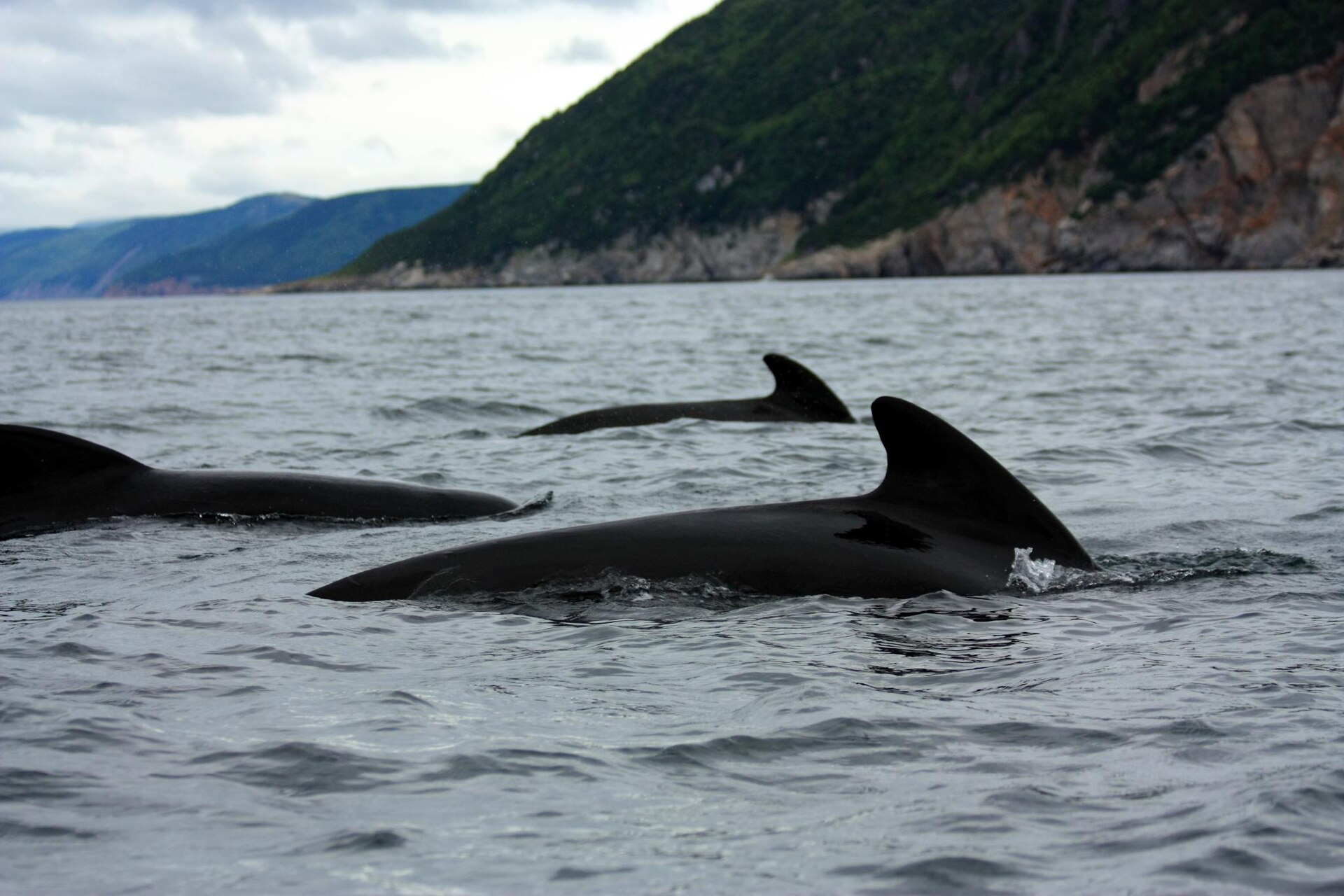
They also recorded background noise, ranging from 79 to 144 DB – similar to the sound range found in a noisy restaurant, to standing next to a vacuum cleaner.
Researchers noticed that when the background noise increased, so too did the volume of the whale’s communication. This was problematic for the low-frequency calls and two-component calls where the whales are already communicating as loud as possible.
As a result, when ship traffic is busy and ocean noise at its higher range, pilot whales may struggle to relocate their pods after diving for food, or find breeding mates from other pods.
“Increasing noise essentially decreases the effective communication range, making it harder for distant animals to find each other,” Frants Jensen, one of the lead researchers, said.


"*" indicates required fields
Printed editions
Current issue
Back issues
Enjoy so much more from Oceanographic Magazine by becoming a subscriber.
A range of subscription options are available.
