Questions raised over €1.5 million humpback rescue mission
The botched mission to save 'Timmy' raises questions over whether high-priced rescue attempts are expensive diversions from the underlying, and preventable, cause – better protection from fishing gear and entanglement
A humpback whale released into a Danish shipping lane last month after a botched €1.5 million rescue operation remains missing, sparking calls for an investigation and renewed pressure on governments to enforce marine protections.
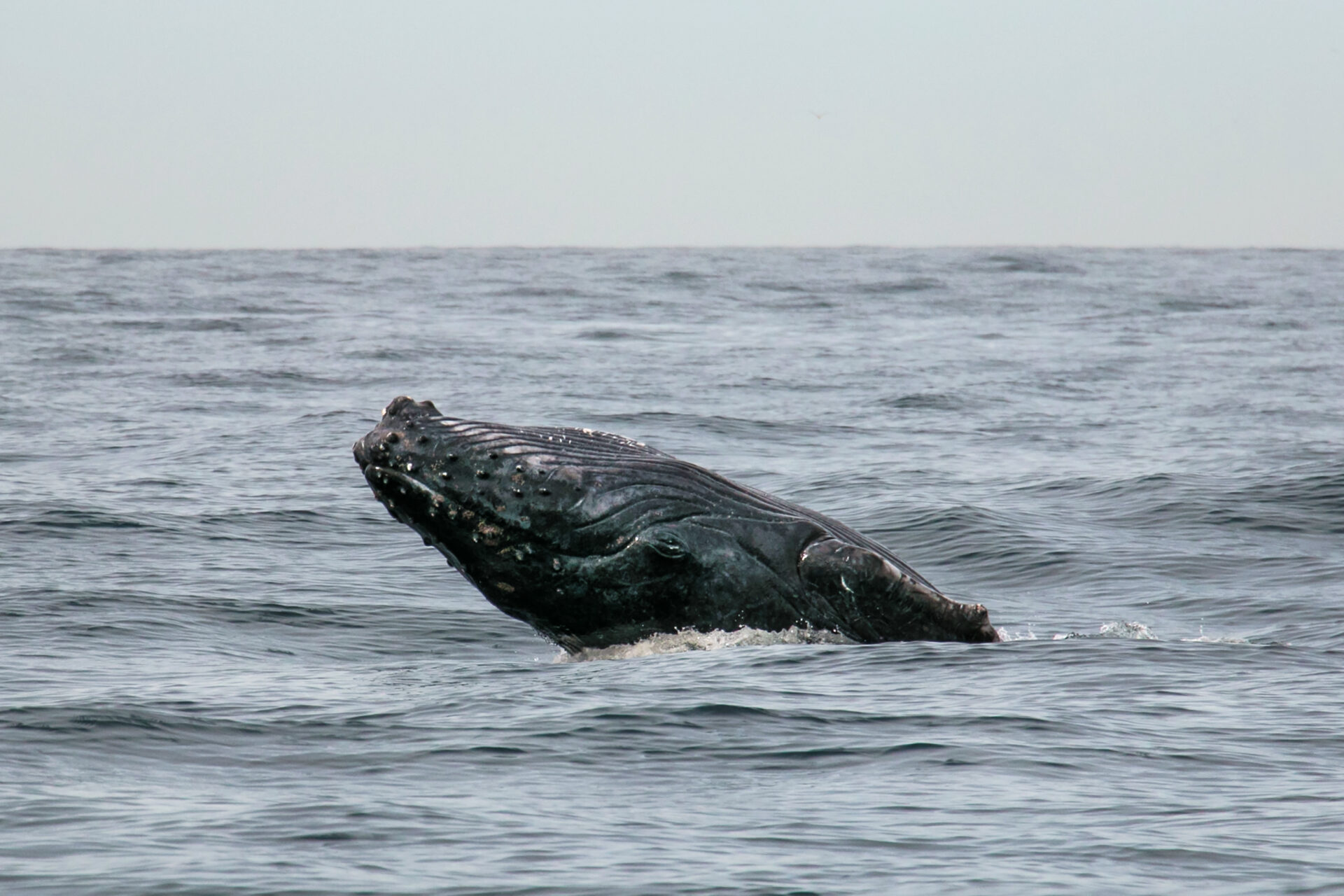
The saga began in early March when the whale was spotted in the Baltic Sea near Wismar, entangled in fishing gear. After weeks of struggling, the whale beached itself near Timmendorfer Strand. The whale (sex unknown) was therefore dubbed “Timmy,” and its plight quickly became a national obsession.
Entanglement is a leading cause of death for large whales, and Timmy was no exception. Without the buoyancy of the open ocean, its 12-tonne weight began crushing its organs, while the low-salinity Baltic water left Timmy’s skin cracked and yellow.
The rescue efforts were a chaotic mix of experimental tactics. The German Federal Coast Guard attempted to use their speed boats to create wakes to lift him, but only pushed him closer to shore. A suction dredge failed to move the dense Baltic sand. When a special excavator was brought in to dig a trench, its metal bucket is thought to have accidentally pierced Timmy’s skin – footage of the rescue showed a red in the surrounding waters.
As its condition worsened, marine experts from the German Oceanographic Museum and the International Whaling Commission (IWC) warned that further intervention amounted to torture. They recommended “palliative care”: keeping the animal wet and calm until the end.
Till Backhaus, German Minister for Agriculture, Environment and Consumer Protection announced: “I have decided to let this majestic animal pass away peacefully.”
However, social media momentum was building. The public baked cakes, composed songs, and even tattooed themselves with Timmy’s image.
Under this pressure, the government U-turned. Funding poured in from private moguls, including MediaMarkt co-founder Walter Gunz, and the mission was handed to a team that included a Peruvian “whale whisperer” and a far-right influencer.
“We benefit so much from the animal world,” Gunz said. “We can give something back.”
In other news
On April 28, the most ambitious – and final – rescue attempt began. Timmy was loaded into a water-filled transport barge for a journey toward the North Sea. Experts warned the metal walls would reflect the whale’s sonar, causing extreme stress; drone footage later confirmed Timmy was thrashing against the sides.
The plan was to release Timmy in the open North Sea, but instead the whale was dropped 70 kilometres north of Skagen, Denmark, directly into a busy shipping lane.
Despite being fitted with a tracker, today Timmy’s location and fate is unknown.
Burkard Baschek, Director of the Ocean Museum Germany has stated there is a “strong possibility” Timmy has already died and is lying 700 metres down in the Skagerrak.
Public opinion has slowly soured, and the aftermath of the €1.5 million mission has devolved into finger-pointing with questions being raised over the secrecy of the tracking data and the handling of the whale onboard the rescue mission.
A petition has now been raised to ‘demand accountability for Timmy’s rescue failures’.
The captain of the tugboat Robin Hood expressed regret, noting that his company, once hailed as heroes, is now labelled “animal abusers.”
In a joint statement, Walter-Mommert and her co-financier, Walter Gunz, one of the founders of a leading electronics chain, distanced themselves from the manner of the whale’s release.
“We hereby expressly distance ourselves from the events and the manner in which the whale was abandoned,” they wrote, calling for “any consequences” to be borne “by the owner, the operators, and any crew members of the ships Fortuna B and Robin Hood”.
“I’ve never seen anything like this before,” Fabian Ritter, a marine biologist and whale researcher at M.E.E.R., a non-governmental organisation, told The Guardian.
While the public focused on the spectacle of the rescue, some experts have argued the real failure is systemic.
Director of Transformation Policy & Economics at WWF Germany, Heike Vesper, has called on politicians to do more to enforce protection in the German and North sea, to make the area a healthy and safe habitat for marine life.
“45 per cent of the German North Sea and Baltic Sea are designated as marine protected areas and yet these seas are in a worryingly poor state. There is not a lack of instruments and protective measures, but rather a lack of ambition and enforcement of the protection goals,” he added.


"*" indicates required fields
Printed editions
Current issue
Back issues
Enjoy so much more from Oceanographic Magazine by becoming a subscriber.
A range of subscription options are available.
