Pristine Seas expedition sheds light on Colombia’s comb jellyfish
A new photographic inventory documents Colombia’s elusive comb jellyfish, recording 15 species - including six new national records - and showing how non-invasive imaging from scientific expeditions and citizen science is reshaping understanding of gelatinous plankton diversity and distribution.

Drifting like living prisms through tropical waters, ctenophores – also known as comb jellies, sea walnuts or Venus’s girdles – have long been a familiar sight to divers and fishers in Colombia. Yet despite their visibility, these fragile animals have remained largely absent from scientific collections, leaving major gaps in knowledge about their diversity and distribution in the region.
Now, a new inventory led by Colombian researchers and supported by National Geographic Pristine Seas is beginning to change that. Drawing on photographic evidence and in situ observations collected during a 2022 Pristine Seas expedition to the Colombian Pacific, alongside a review of existing records, scientists have compiled the country’s most comprehensive account to date of its ctenophore fauna – documenting 15 distinct forms across both the Pacific and Caribbean.
The inventory includes 13 species from the class Tentaculata and two from the class Nuda. Eight were identified to the species level, two to genus, and five classified as morphospecies. Crucially, six species – Beroe forskalii, Ocyropsis maculata, Ocyropsis maculata immaculata, Cestum veneris, Leucothea pulchra, and Thalassocalyce inconstans – are recorded in Colombia for the first time, establishing a new taxonomic baseline for this elusive group of gelatinous plankton.
Ctenophores occupy a unique place in the tree of life. They belong to one of the oldest known animal lineages – predating even sponges – and are found throughout the world’s oceans, from sunlit coastal waters to the deepest trenches. Composed of roughly 95% water, they are extraordinarily delicate; many collapse almost instantly when removed from their environment, making traditional net sampling ineffective or destructive.
That fragility has long hampered efforts to catalogue them. As a result, global collections of ctenophores are sparse, and much of what is known about their diversity relies on direct observation rather than preserved specimens. Advances in underwater imaging – from scientific diving to remotely operated vehicles – have transformed that picture, allowing intact animals to be documented in their natural setting.
“This paper beautifully illustrates what happens when scientific rigour meets the art of underwater photography,” shares Juan Mayorga, a Pristine Seas marine scientist and one of the authors of a new study detailing the findings. “These fragile organisms dissolve when collected in nets, so they can only be studied through images. Our team’s photography didn’t just document beauty; it enabled taxonomy and discovery, resulting in six new species records for Colombia.”

In other news
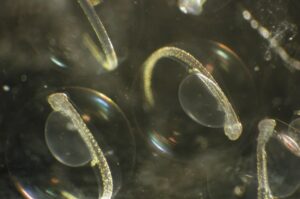
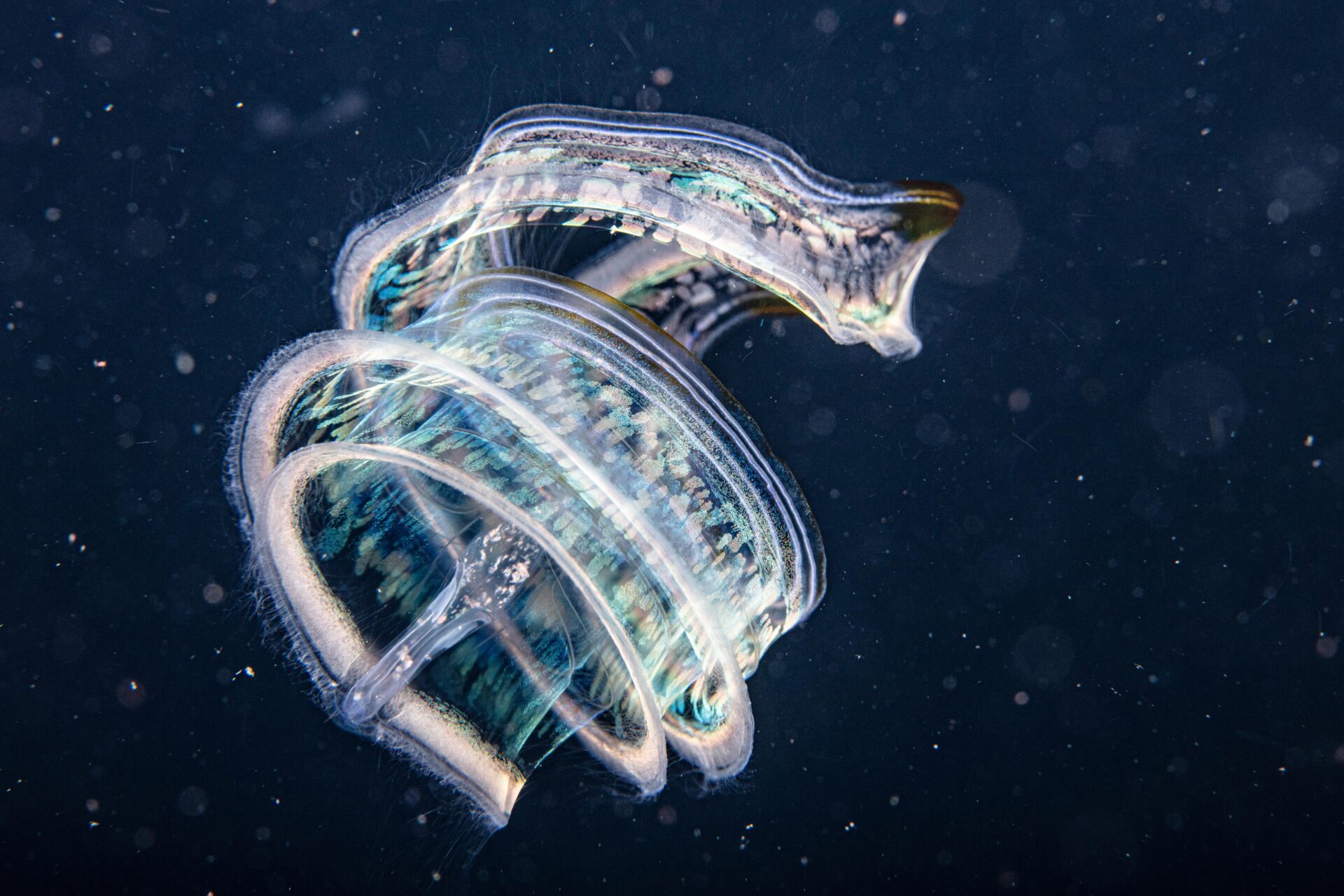
Beyond their ethereal appearance, ctenophores play an important ecological role. Propelled by rows of shimmering cilia that scatter light – and often glow blue or green through bioluminescence – they are active predators, feeding on zooplankton, crustacean larvae, and fish eggs.
In turn, they are preyed upon by turtles, crustaceans, and other marine animals, making them integral components of pelagic food webs.
Biogeographically, the new inventory also helps clarify Colombia’s position at the crossroads of two ocean systems. While some ctenophore species are predominantly Atlantic and Caribbean, others are characteristic of the Eastern Tropical Pacific, with distributions extending from Mexico to Chile and, in some cases, into deep waters thousands of metres below the surface.
Until now, Colombian records—particularly in the Caribbean—were scattered across grey literature and broad plankton surveys, often lacking species-level detail.
Cristina Cedeño-Posso, a researcher at Colombia’s marine research institute INVEMAR and lead author of the study, says the work fills a longstanding gap.
“Through images and direct observations made during the NatGeo Pristine Seas scientific expedition in 2022, the hidden diversity of ctenophores in Colombia is revealed, recording for the first time several species of these gelatinous organisms in Caribbean and Pacific waters. The results fill a historical information gap on a key group of gelatinous plankton and demonstrate the value of non-invasive methodologies and explorations in remote areas to strengthen knowledge of marine biodiversity.”
Much of the material underpinning the study was collected during the 2022 expedition to Colombia’s offshore Pacific waters, led by INVEMAR in collaboration with Pristine Seas. Additional records came from citizen science observations in the Caribbean, underscoring the growing role of community participation and visual documentation in expanding scientific understanding of hard-to-study marine life.
By establishing a national checklist and providing distribution data for ctenophores, the researchers have laid the groundwork for future ecological studies – particularly those exploring how oceanographic conditions, climate variability, and food-web dynamics shape gelatinous plankton communities.


"*" indicates required fields
Printed editions
Current issue
Back issues
Enjoy so much more from Oceanographic Magazine by becoming a subscriber.
A range of subscription options are available.
