Restored oyster reefs could be worth $12 trillion a year, study finds
The world's oyster reefs could deliver $12 trillion a year in ecosystem benefits, but 90% of sites would need restoring first
The world’s oyster reefs are a vastly underestimated and underused resource that could be worth trillions of dollars a year to planetary health and human wellbeing, if properly restored and protected, according to a new study.
Researchers calculated the reefs’ potential gross ecosystem product (GEP) – the ecological equivalent of gross domestic product – and found that fully restored reefs in ten “hotspot” countries could generate an estimated $12 trillion annually through food production, water filtration, carbon sequestration and shoreline protection.
“Here we estimate that fully restored oyster reefs in the top ten hotspot countries worldwide would yield a GEP of $12 trillion,” said Dr Matteo Convertino, an associate professor at Tsinghua University and corresponding author of the study, published in the journal Frontiers in Marine Science.
Oyster reefs, like other coastal ecosystems, are under growing pressure from overexploitation, pollution and climate change. An estimated 85% of the world’s reefs have been lost over the past century, with losses especially severe in estuaries and river deltas.
To assess their potential, the researchers imported thousands of geotagged oyster records from public databases and used a machine-learning model to predict where reefs could form worldwide, based on conditions including water temperature, salinity, light and nutrient levels. Areas scoring 65% or higher for habitat suitability were classed as suitable for reef development.

In other news



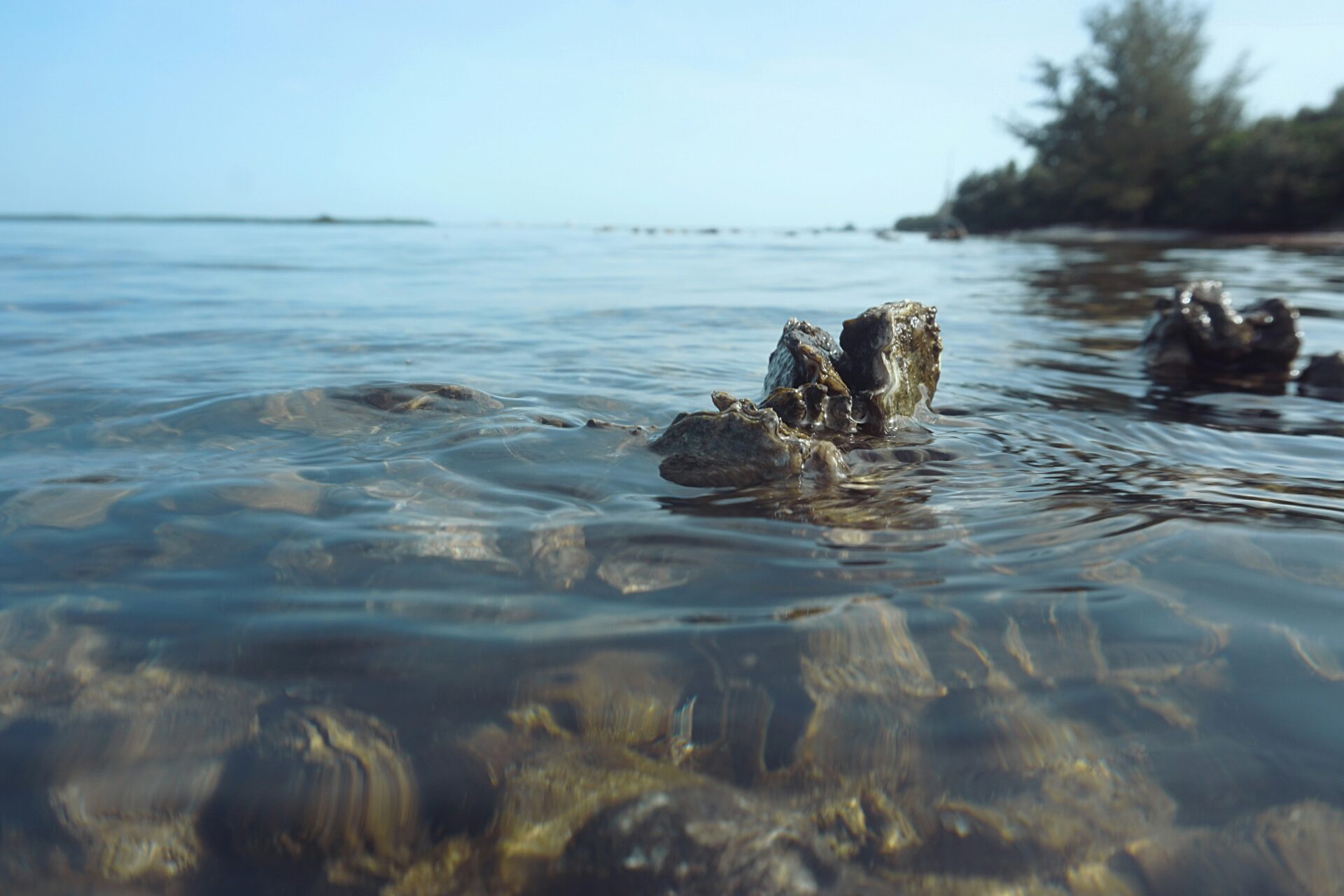
The analysis identified ten hotspot nations with the greatest potential: the United States, Australia, Chile, China, Japan, South Korea, Argentina, France, Germany and Italy. Across these countries, around 295,000 square kilometres – roughly 6% of their coastal zones – were found to be suitable for oyster reefs, yet reefs currently occupy only about 10% of that area. Just 23% of the suitable habitat falls within existing marine protected areas.
If fully developed, the researchers calculated that reefs in these countries could filter enormous volumes of water each year – 77.58 quadrillion litres in the US, 69.92 quadrillion litres in Australia and 46.58 quadrillion litres in Chile – while sequestering as much as 12.3 million metric tonnes of carbon annually. In the US alone, the combined value of nitrogen removal, carbon sequestration and water purification was estimated at $25.1 billion a year.
The authors stressed that these are scenario-based estimates built on global averages, and cautioned that unlocking this potential would require significant investment in restoration and protection.
“We estimated that 90% of sites suitable for oyster reefs require restoration, while 80% need protection through conservation efforts. In other words, the current oyster situation is very suboptimal but there is a huge opportunity, considering the benefits,” Convertino said.
He added that climate change was likely to erode much of that potential over time. “Because global warming generally decreases the habitat quality of oyster reefs, we expect that their global GEP will go down from the current potential value of $12 trillion. But some countries may see an expansion of reefs due to more favorable conditions for the growth and dispersal of oysters: in particular this could happen in Australia, Indonesia, South Korea, Japan, and France.”


"*" indicates required fields
Printed editions
Current issue
Back issues




Enjoy so much more from Oceanographic Magazine by becoming a subscriber.
A range of subscription options are available.
