Rats to reefs: Invasive species reshape Indian Ocean food webs
Invasive rats are rewiring coral reef food webs by decimating seabird populations and cutting off vital nutrient flows, creating winners and losers among the tiny creatures that form the foundation of reef ecosystems.
Invasive rats on tropical islands are disrupting coral reef ecosystems in ways that reach far deeper into the food web than previously understood – reshaping the communities of tiny creatures that form the foundation of reef productivity, and altering the pathways through which energy travels from the seafloor to the ocean’s top predators.
The findings come from a new study published in Ecology, led by researchers at Lancaster University and the University of Texas, in which scientists examine cryptofauna – the collective term for the small fish and invertebrates that live at the base of coral reef ecosystems.
Often overlooked and little studied, these creatures play a critical role in energy transfer on reefs, representing the first step in moving nutrients from primary producers to larger predatory fish. What the researchers found was that their communities look dramatically different around rat-infested islands compared to rat-free ones.
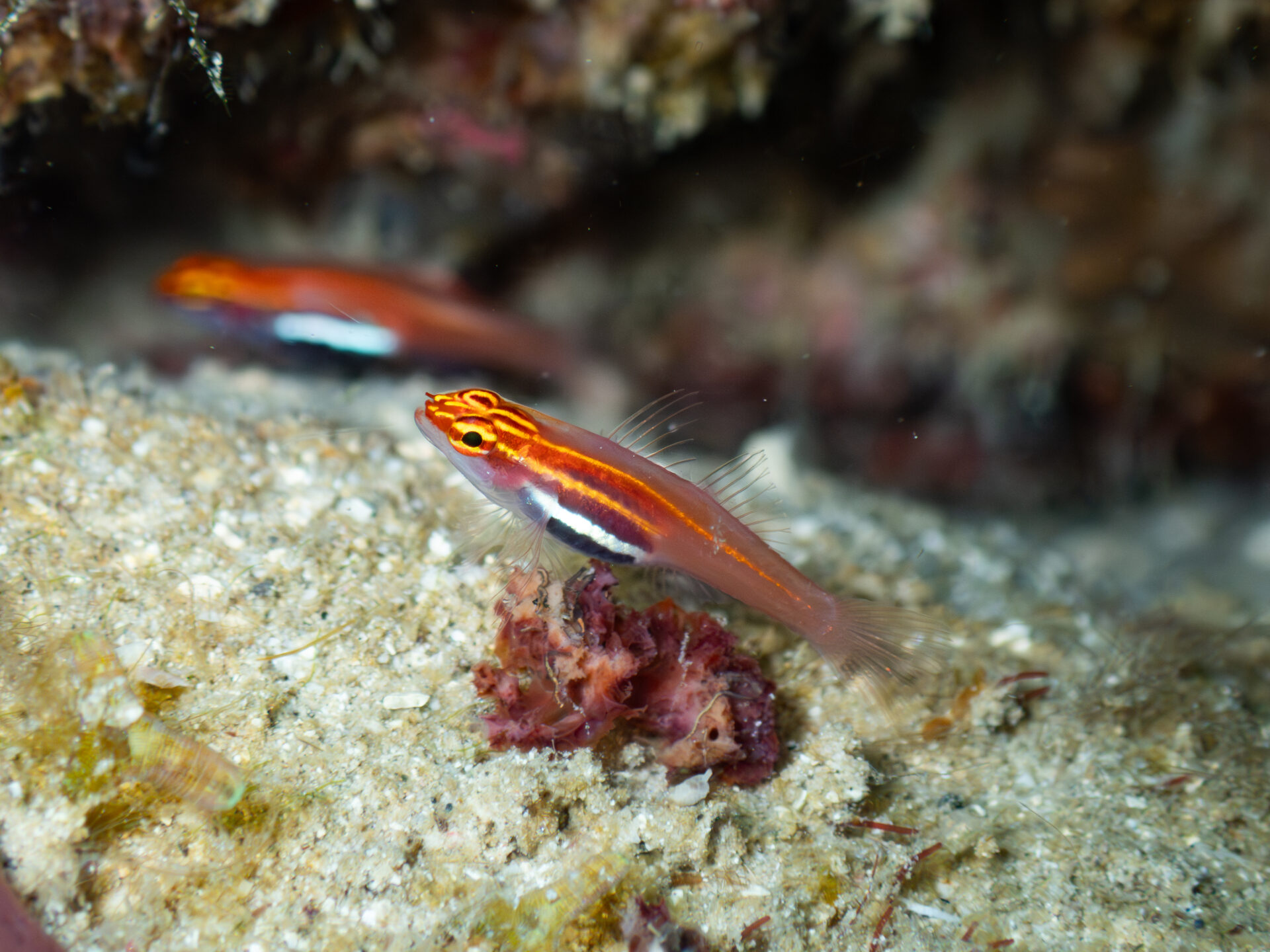
On rat-free islands, tiny cryptobenthic fish – species that include gobies, triplefins and their relatives – dominate, with biomass more than five times greater than that of small invertebrates. Around rat-infested islands however, that balance shifts markedly. Invertebrates such as coral crabs, porcelain crabs and snapping shrimps become far more prominent, with cryptobenthic fish and invertebrate biomass reaching near parity.
The study therefore suggests that the food web – in effect – is being rewired.
At the heart of this system of cause-and-effect are seabirds. Invasive rats, which arrived as stowaways on ships hundreds of years ago, have decimated seabird populations on the islands they have colonised – eating eggs, chicks and sometimes adult birds. On the rat-free islands within the study area, the density of seabird populations is 760 times greater. Those seabirds play a vital ecological role, transporting nutrients from the open ocean where they feed back to the islands where they roost and breed. Their guano, rich in nutrients, washes into surrounding coastal waters and acts as a natural fertiliser for the coral reef ecosystem below.
When rats remove seabirds from that equation, the nutrient supply to the reef is cut off – and the ripple effects travel all the way down to the smallest creatures on the seafloor.

In other news



However, contrary to expectation, the researchers have found that the ‘low-nutrient conditions’ that rats create do not negatively affect all reef organisms.
Laura-Li Jeannot, lead author of the study and PhD researcher at Lancaster University, said: “Nutrient-loss impacts are not uniform. There are winners and losers. The discovery of the role of cryptic invertebrates is interesting, as really very little is known about these critters, even less so than for cryptobenthic fishes. How they respond to disturbances or transfer energy through systems was almost entirely undocumented.”
The researchers believe that cryptobenthic fish thrive in nutrient-rich, seabird-fertilised environments because their biology demands it.
“Cryptobenthic reef fishes are characterised by extraordinarily high rates of growth and reproduction,” said Jeannot. “As a result, they have high nutrient and energy requirements, and those can be matched in nutrient-rich environments. This allows these fish populations to flourish and expand in favourable conditions – such as seabird-fertilised reefs.”
That expansion, the team found, actively displaces invertebrates. “Beyond chasing invertebrates away from their homes, they also outcompete them for food: our results show that cryptobenthic fish, when more abundant, likely drive invertebrates to seek alternate, less preferred resources.”
Invertebrates, conversely, benefit from the absence of that competitive pressure in nutrient-poor reef environments. Their lower metabolic rates give them an advantage when nutrients are scarce as they simply require less to sustain themselves.
The consequences for the wider food web are significant. Assistant Professor Dr Simon Brandl, from the University of Texas and co-principal investigator of the study, explained why the shift in cryptofaunal communities matters so much for the predators above them.
“Cryptobenthic fish are a nutrient-dense, protein-packed, highly digestible resource for predators; on the other hand, much of invertebrates’ mass is represented by a tough outer shell. In nutrient-rich environments, fish are also way more abundant than invertebrates, meaning they likely require less foraging. As a result, they represent a more energetically optimal prey near seabird islands for predators looking for a quick snack.”
The study’s result show that the main mode of seabird nutrients moving up the food web is through fish, which feed both specialised fish-eating predators as well as more generalise carnivores.
“As such, when seabird nutrients are added or taken away from ecosystems, there is a rewiring of how energy travels up food webs, and a reconfiguration of larger fish communities,” said Jeannot.
Professor Nick Graham of Lancaster University, co-principal investigator of the study, said the findings suggest that seabird nutrient flows do not just enhance reef productivity and health but influence the trophic structure, too.
“Therefore, invasive species like rats that cut off these nutrients can drive significant changes to the food webs of the reefs,” he concluded.
The study was conducted in the Chagos Archipelago in the remote Indian Ocean – a site that has become a living laboratory for understanding the relationship between island ecosystems and surrounding coral reefs, and where Lancaster University researchers have spent years investigating the cascading effects of invasive rats on marine environments.


"*" indicates required fields
Printed editions
Current issue
Back issues

Enjoy so much more from Oceanographic Magazine by becoming a subscriber.
A range of subscription options are available.
