Recovery time between global coral bleaching events is shrinking
The largest global coral reef assessment yet finds a 9.5% decline in coral cover since 2009. Australia's reefs remain relatively healthy but face shrinking recovery windows as bleaching events intensify.
Coral cover on reefs worldwide has declined by 9.5% since the 1980-2009 reference period, according to the largest and most comprehensive assessment of global coral reef health ever produced. Among them, Australia’s reefs remain in relatively good condition by global standards, but have not escaped the trend.
The Status of the World’s Coral Reefs: 2025 report – released by the Global Coral Reef Monitoring Network (GCRMN) – covers ten geographic regions worldwide, four of which recorded declines in coral cover. It’s the seventh such report produced by the network, and by far the most data-rich, with 21.1 million observations from almost 37,000 reef sites across 120 countries and territories – three times more data than in the previous edition.
Unsurprisingly, climate change-driven heat stress has become an increasingly dominant driver of coral loss, both in Australia and globally over the past decade. Yet the data also shows that recovery remains possible under the right conditions.
“Globally, there was a 6% relative increase in hard coral cover between 2017 and 2019 after the third Global Coral Bleaching Event, showing reefs still have the capacity to at least partially recover,” said Dr Manuel Gonzalez Rivero, global coordinator of the GCRMN and a researcher at the Australian Institute of Marine Science (AIMS).
“However, this recovery has been reversed by unprecedented loss from the recent fourth Global Coral Bleaching Event.”
The report does not yet include a full assessment of the fourth Global Coral Bleaching Event, meaning it does not capture the significant coral cover declines caused by the 2024 and 2025 mass bleaching events across the Great Barrier Reef and Western Australia Reefs.
Major disturbances on coral reefs once occurred roughly once every ten years, Gonzalez Rivero said. That interval has now shrunk to five or six years, leaving reefs less time to recover between events.

In other news

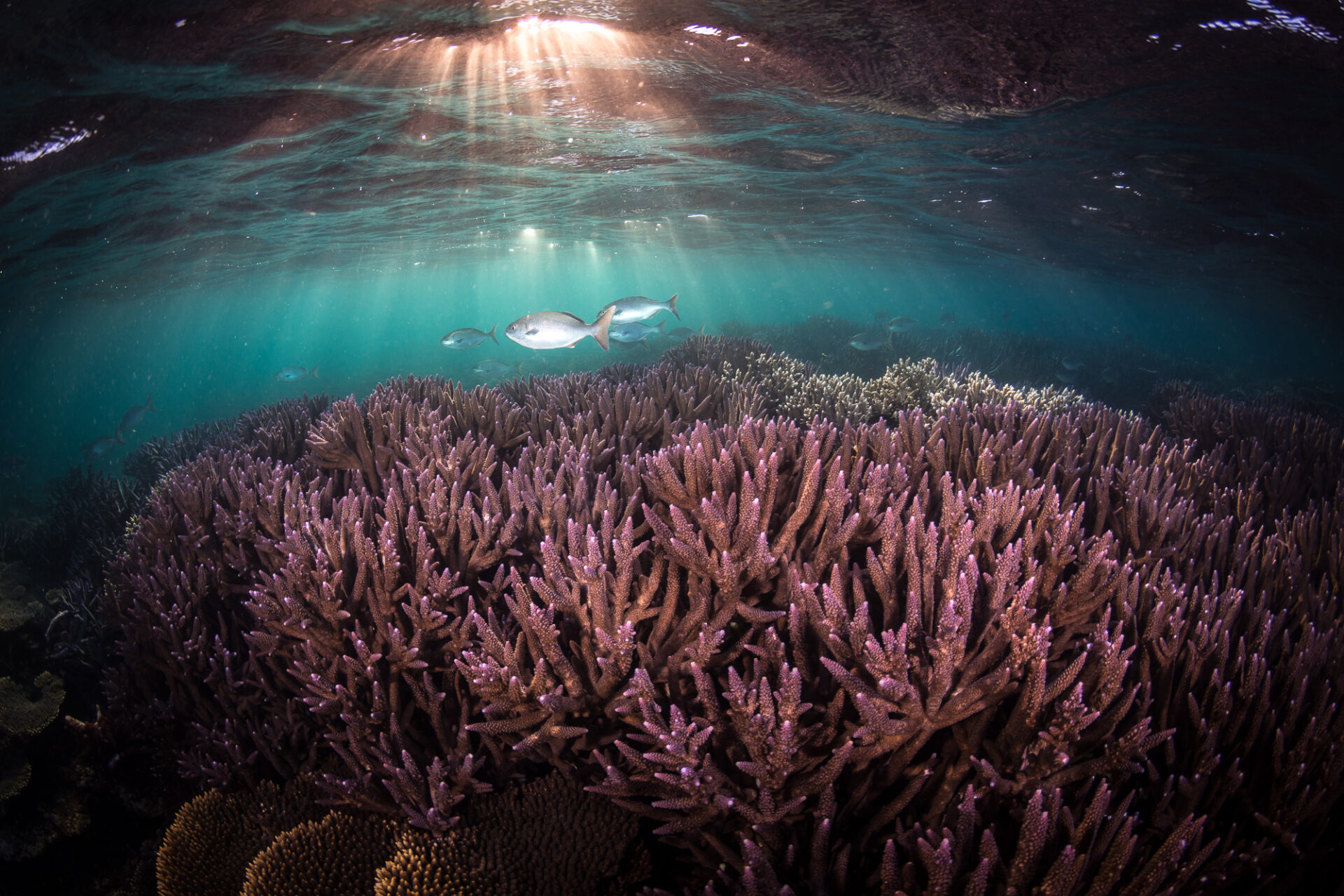
Average coral cover on Australian reefs fell from 30.2% in the 1980-2009 reference period to 26.8% in 2020-2024 – a 10.9% relative decline. Dr Mike Emslie, who leads AIMS’ Long Term Monitoring Programme on the Great Barrier Reef and co-authored the report’s Australian chapter, said the country’s reefs have generally shown resilience when given time to recover.
“But the condition of Australia’s coral reefs varies considerably across the country,” he said. “Some areas, like Scott Reef off the Northwest Shelf, have been documented to recover after disturbances like the 2016 mass bleaching event. Others, like some reefs in the Southern Great Barrier Reef and the Pilbara region of WA, have experienced recent major declines due to a series of disturbances.
“Despite these differences across Australia, we have still recorded a net loss of coral cover over this long time frame. Corals are getting less time to recover between disturbance events and are sometimes being hit by multiple issues in short timeframes.”
It remains uncertain whether the recovery patterns observed historically can continue as the climate warms further.
Dr Emma Kennedy, GCRMN report co-author and AIMS coral scientist, added: “Most frequent and widespread marine heatwaves leading to mass coral bleaching events are shortening the interval between disturbances and reducing the time available for reefs to recover. Historically, cyclones and crown-of-thorns starfish outbreaks were major causes of decline, particularly on the Great Barrier Reef, but mass bleaching has become increasingly prominent over the past decade.”
Australia’s coral reefs span at least 43,000-square-kilometres – roughly two-thirds the area of Tasmania – giving the country the largest coral reef extent of any nation. It is home to three coral reef World Heritage Areas – the Great Barrier Reef, Ningaloo Coast, and Lord Howe Island group – and its reefs hold deep cultural significance for Australia’s First Nations peoples. An estimated two million Australians benefit from healthy reefs through tourism, recreational and commercial fisheries, and science and management activities.
The GCRMN is the operational arm of the International Coral Reef Initiative (ICRI), and the report, published every five years, represents the most detailed evaluation of long-term coral reef trends and threats worldwide. AIMS has hosted and coordinated the GCRMN globally for 30 years.
“This report has analysed around 21.1 million observations from almost 37,000 reef sites across 120 countries and territories. It is an extraordinary effort from the 600 monitoring partners, who volunteer their contribution,” Gonzalez Rivero said. “This effort is enormous, but so valuable in improving our understanding of coral reefs across the globe and supporting policy makers and managers in how they target their efforts in each region.”
The full report is available online, and for the first time, the GCRMN will produce a Regional Summary for Policymakers for each of its ten regions, with tailored insights for decision-makers to be released over the coming months.


"*" indicates required fields
Printed editions
Current issue
Back issues

Enjoy so much more from Oceanographic Magazine by becoming a subscriber.
A range of subscription options are available.
