Robot submarine embarks on world first mission around the globe
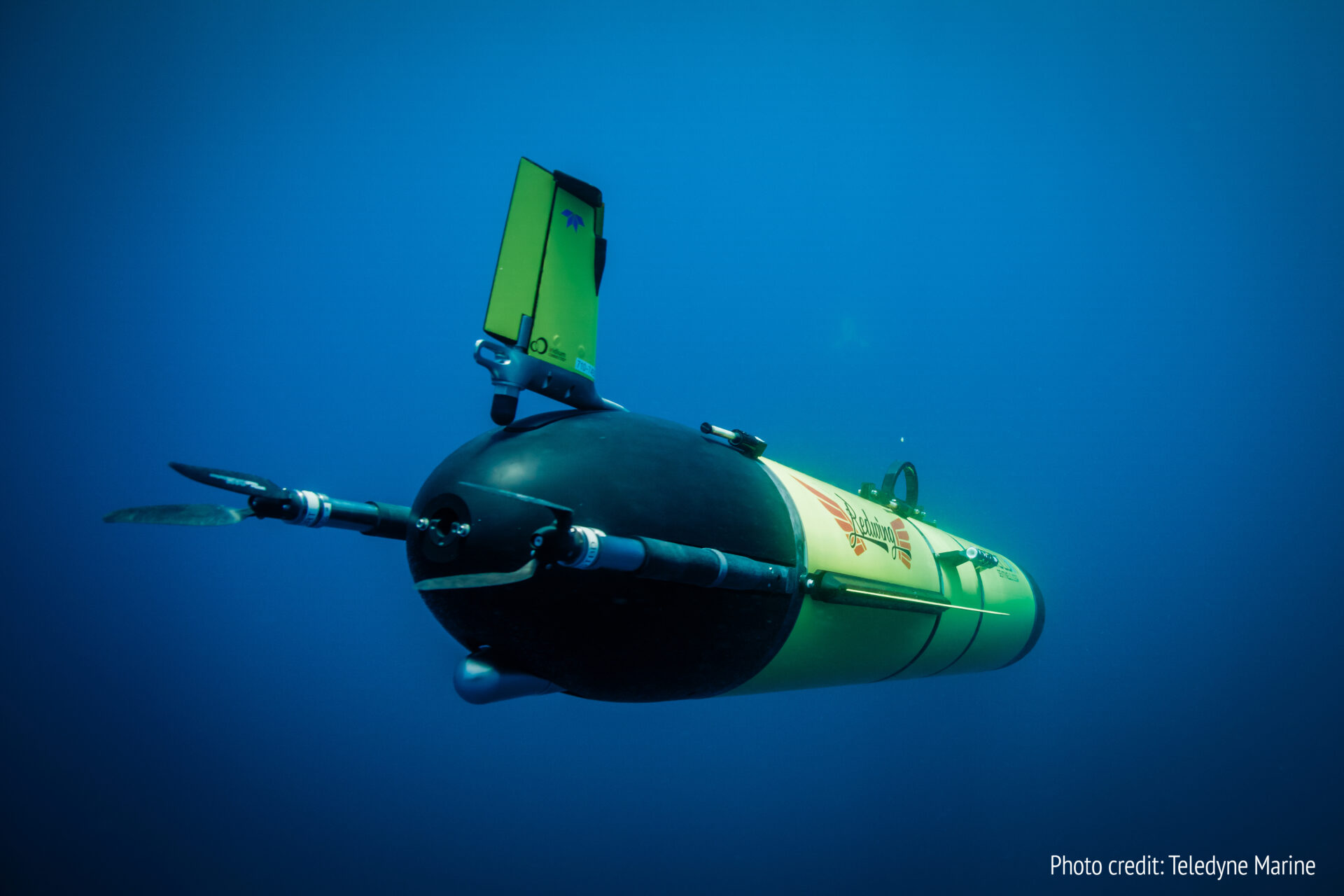
Called the Sentinel Mission, the five year expedition is the brainchild of Teledyne Marine and scientists at Rutgers University-New Brunswick. At the heart of the mission is Redwing - the most advanced commercial subsea glider ever developed.

In an historic leap for marine technology and global ocean monitoring, a first-of-its-kind autonomous underwater glider has been launched on a mission to circumnavigate the globe – a 73,000 kilometre voyage that promises to transform our understanding of the world’s ocean.
Called the Sentinel Mission, the five year expedition is the collaborative brainchild of Teledyne Marine and scientists at Rutgers University-New Brunswick. At the heart of the mission is Redwing – the most advanced commercial subsea glider ever developed.
The endeavour commenced on 10 October 2025, following a send-off ceremony at Woods Hole Oceanographic Institution (WHOI), home to the world’s second-largest fleet of ocean gliders. Redwing was deployed from the continental shelf south of Martha’s Vineyard.
Redwing – short for Research & Education Doug Webb Inter-National Glider – pays tribute to the celebrated engineer Doug Webb, whose pioneering work on autonomous ocean vehicles laid the foundation for this mission. Webb, who passed away in 2024 at the age of 94, first imagined the potential for long-range ocean gliders decades ago.
“This is a truly historic mission,” said Brian Maguire, COO at Teledyne Marine. “It will pave the way for a future global fleet of autonomous underwater vehicles capable of continuously sampling our oceans, delivering real-time data that will improve extreme weather forecasting and enhance climate science.”
Redwing is a next-generation Slocum Sentinel Glider, engineered specifically for ultra-long endurance missions. Powered by gravity and buoyancy alone, it travels in a slow sawtooth pattern, conserving energy while diving to depths of 1,000 metres. With a range of up to 15,000 kilometres per leg, Redwing is equipped to operate continuously for months at sea.
Its carbon fibre hull flexes subtly under pressure, and buoyancy is regulated through an oil-based pump and pitch system, allowing the glider to “surf” ocean currents rather than resist them – an energy-efficient design critical for long-term deployments.
Redwing will surface every eight to 12 hours to transmit data via satellite, relaying a constant stream of information on ocean temperature, salinity, density, current flow, and biological activity to the National Oceanic and Atmospheric Administration (NOAA) global monitoring network.
This real-time data will be publicly available to researchers, meteorologists, policy-makers, and educators around the world.
In other news


Redwing’s journey begins in the powerful Gulf Stream, with its first major stop in Gran Canaria, off the coast of Northwest Africa. From there, the glider will navigate to Cape Town, cross the Indian Ocean to Perth, then continue on to Wellington, New Zealand.
The longest and most challenging leg will see Redwing traverse the turbulent Antarctic Circumpolar Current en route to the Falkland Islands. Optional stops in Brazil and the Caribbean are planned before its return to Cape Cod.
This route will take Redwing through some of the least-sampled regions of the ocean, offering unprecedented insights into the role of ocean currents in weather systems and climate dynamics.
“As we move through different ocean layers – each flowing in distinct directions – we’ll be measuring temperature gradients, salinity, and even acoustic signals from tagged marine animals,” explained Shea Quinn, project lead for the Sentinel Mission and Slocum Glider Product Line Manager at Teledyne.
“This data will help refine hurricane intensity models and deepen our understanding of long-term ocean trends.”
The Sentinel Mission is an international endeavour, with partners and support from institutions in Spain, South Africa, Australia, New Zealand, Brazil, the UK, and the US.
A team of over 50 Rutgers University students, working through the Center for Ocean Observing Leadership (COOL), played a key role in developing the glider’s navigation software and will continue to monitor its progress in real time from a shared mission control centre.
“This is a pivotal moment for ocean science,” said Professor Scott Glenn of Rutgers’ Department of Marine and Coastal Sciences. “We’re deploying an autonomous glider that will travel the world’s oceans, collecting crucial data – and we’re doing it with students and international collaborators every step of the way.”
But the Sentinel Mission is more than just a technical milestone. As climate change accelerates, sustained ocean monitoring is no longer optional. Missions like this will play an essential role in understanding the Earth’s most dynamic and least-explored environments.


"*" indicates required fields
Printed editions
Current issue
Back issues


Enjoy so much more from Oceanographic Magazine by becoming a subscriber.
A range of subscription options are available.
