Scientists detail deep sea expedition to understand ‘dark oxygen’
Scientists, led by Professor Andrew Sweetman, will investigate “dark oxygen” on the deep seafloor in April, using ocean roamers to study its role in sustaining life, amid concerns over biodiversity impacts and ongoing commercial interest in valuable polymetallic nodules.
Yesterday scientists, in partnership with The Nippon Foundation, released the details of an upcoming expedition this April, to further investigate ‘dark oxygen’ and its role in sustaining sea life on the ocean floor.
Professor Andrew Sweetman, of the Scottish Association for Marine Science, Geobiologist and Mars Rover veteran Professor Jeffrey Marlow from Boston University, and renowned chemistry Professor Franz M Geiger of Northwestern University will lead the expedition.
Together, the team will launch two ocean roamers to gather information about the physical and microbial processes behind ‘dark oxygen’.
The phenomenon was first discovered in the Clarion Clipperton Zone (CCZ), when Professor Sweetman noticed increased oxygen levels despite being on the sunlight-deprived ocean floor. The readings were written off for nearly a decade as anomalous due to the existing scientific belief that oxygen could only be produced in the presence of light, through photosynthesis.
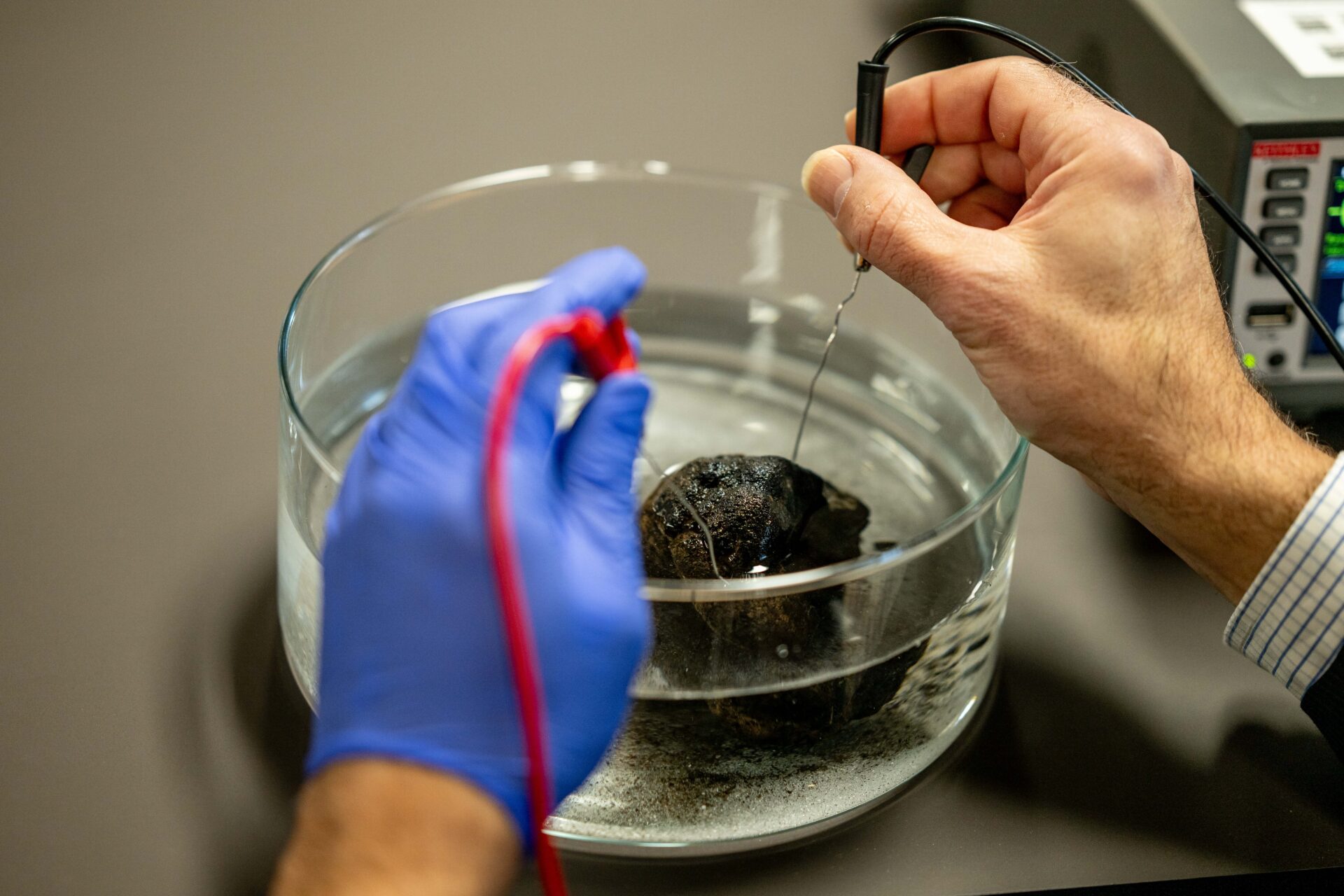
Scientists hypothesised that ancient polymetallic nodules, found on the ocean floor, were conducting a current that was splitting the water at the ocean floor, producing oxygen and hydrogen.
These same nodules, often dubbed the truffles of the ocean, contain high concentrations of battery grade metals, like manganese and cobalt – believed by some to be crucial for the development of green technology like electric vehicles and wind turbines.
The same spot where Professor Sweetman and his team will be running further experiments on dark oxygen, has already been earmarked by 17 mining contractors.

In other news
Funding for both of Sweetman’s missions appear entwined with commercial deep sea mining interests. His previous mission was partly funded by Canadian mining company, The Metals Company, who are now applying for licences in the CCZ. They have since sharply criticised his findings.
This mission is funded by The Nippon Foundation, who in 2024 – prior to Sweetman’s discovery – headed an expedition with the University of Tokyo, and uncovered the vast amounts of valuable nodules on the seafloor.
It made its plans to experiment with large scale extraction of metallic nodules from the deep seabed by 2025 and 2026. The Foundation has since claimed to have placed a moratorium on this particular project.
When pushed on what the impacts of their new research will be on the future of deep sea mining, The Nippon Foundation maintained a clear line that their research should provide objective evidence into the workings of the nodules, and their role within the deep sea ecosystem.
Mr Mitsuyuki Unno, Executive Director of The Nippon Foundation said that: “Even if we do find that dark oxygen exists, it does not mean that we would have to stop our deep mining projects altogether.”
“The scientific research will be able to come up with a new, sustainable way of doing things as a result,” he added.
While the deep sea was once thought to be a cold, barren and lifeless corner of the ocean, scientists have increasingly observed amazing biodiversity. Recently, researchers have discovered over 5,000 species that were entirely new to science.
Professor Sweetman said: “If commercial mining goes ahead then there will be quite widespread impacts.” He added: “These nodules are home to a variety of diverse fauna.”
At the same time, Sweetman emphasised that it was not the expedition’s intention to find something to stop deep-sea mining. Instead he wants to gather as much information to “minimise the impacts” of mining as is possible.”


"*" indicates required fields
Printed editions
Current issue
Back issues


Enjoy so much more from Oceanographic Magazine by becoming a subscriber.
A range of subscription options are available.