Scientists trace evolution of sperm whale dialects in the Mediterranean
Tracking changes in their dialects allows scientists to better understand these endangered whales' culture, which they said is critical for their conservation.
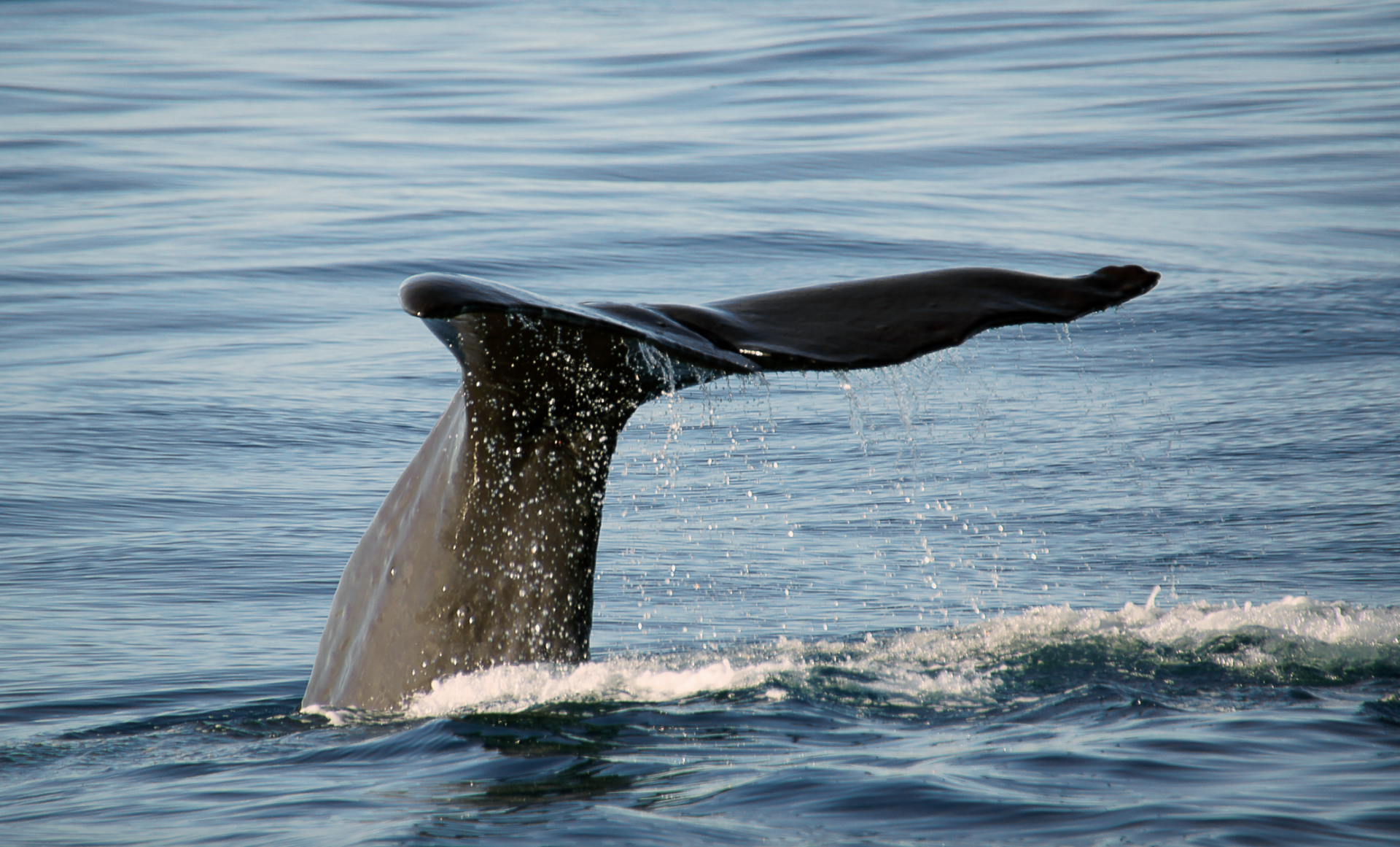
Scientists have documented sperm whale vocal culture changing over time in the Mediterranean Sea, offering an insight into how animal dialects develop and spread across generations.
An international research team, led by the University of St Andrews and including scientists from the University of Bristol, spent 20 years recording the clicks and calls of sperm whales living in the Mediterranean.
Their findings, published in Proceedings of the Royal Society B, reveal that whales in the eastern Mediterranean have developed a distinct, faster version of a vocal pattern shared across the wider population.
Sperm whales communicate using short, rhythmic patterns of clicks known as codas, which act as a kind of cultural identity marker.
All Mediterranean sperm whales were previously thought to share a single coda type: a pattern of three clicks followed by a pause before a fourth, known as the “3+1”. But whales living near the Hellenic Trench off the coast of Crete have developed a noticeably quicker version of this pattern.
Crucially though, these eastern whales haven’t forgotten the original. On some days, groups revert entirely to the slower, ancestral form, suggesting they carry both dialects and choose between them.
Lead author Dr Taylor Hersh described the findings as consistent with a gradual west-to-east occupation of the Mediterranean over thousands of years, culminating in a distinctive dialect emerging around the Hellenic Trench.

In other news



“What’s interesting is that the new dialect is clearly a modified version of the presumably ancestral slow 3+1 and groups in the east also clearly remember that dialect, as they have these ‘throwback’ days,” she said.
Dr Txema Brotons of Asociación Tursiops said the findings placed human and animal culture on an equal footing in the region.
“While the civilisations of the Mare Nostrum were developing their own languages, customs and identities, sperm whales were also passing down their vocal traditions from one generation to the next, ” Dr Brotons said.
The Mediterranean sperm whale population numbers only a few thousand animals and is considered endangered, facing serious threats from fishing gear entanglement and vessel strikes. Researchers say understanding their cultural structure is increasingly vital for conservation efforts.


"*" indicates required fields
Printed editions
Current issue
Back issues
Enjoy so much more from Oceanographic Magazine by becoming a subscriber.
A range of subscription options are available.
