Seas the Day: The youngest female team to conquer the Pacific
After 165 days at sea, British rowers Jess Rowe and Miriam Payne completed a record-setting, non-stop and unsupported 8,213-nautical-mile Pacific crossing from Peru to Australia, becoming the first female team to row mainland-to-mainland across the ocean under such conditions.

Late last year, after 165 days alone on the world’s largest ocean, British rowers Jess Rowe and Miriam Payne finally etched their names into maritime history, completing a record-setting, non-stop and unsupported crossing of the Pacific – an 8,213-nautical-mile odyssey powered by little more than muscle, grit, and a stubborn refusal to yield.
At 18:42 local time on Saturday, 18th October, the team’s nine-metre rowing boat Velocity slipped into harbour at Cairns Yacht Club, greeted by flares, cheers, and the kind of emotion that only follows half a year at sea. Landfall in Cairns marked the triumphant close of a voyage that began some six months earlier, on May 5th in Lima – and very nearly never happened at all, after a failed April attempt ended with rudder malfunction.
Rowe (28) and Payne (26), competing as the Seas the Day Ocean Rowing Team, are now the first female team in history to row mainland-to-mainland across the Pacific non-stop and unsupported. They are also the first pair, the first women’s team, and the youngest crew ever to conquer this particular trans-Pacific route under such uncompromising conditions.
For 165 days, the Pacific dictated the terms. The pair rowed in relentless two-hour shifts, day bleeding into night, night dissolving back into day. They averaged up to 16 hours of rowing daily, sometimes covering more than 80 nautical miles in 24 hours. Tropical heat scorched their backs. Salt sores burned into their skin. Sleep came in fractured snatches. Headwinds punished progress.
And then there were the failures.
By day six, systems began to unravel. Power outages. Burst pipes in their water-maker. Nine separate repairs to the vital desalination system. A battery fault forced them into what they called “ghost ship” mode — electronics largely offline, AIS beacon and chart plotter silenced. At times, Velocity drifted invisibly through shipping lanes, reliant on old-school seamanship and instinct rather than digital reassurance.
“We only made it to day six before things started to go wrong,” Payne reflected after landfall. “At one point we were limping along with barely any power, rationing everything.”
In other news

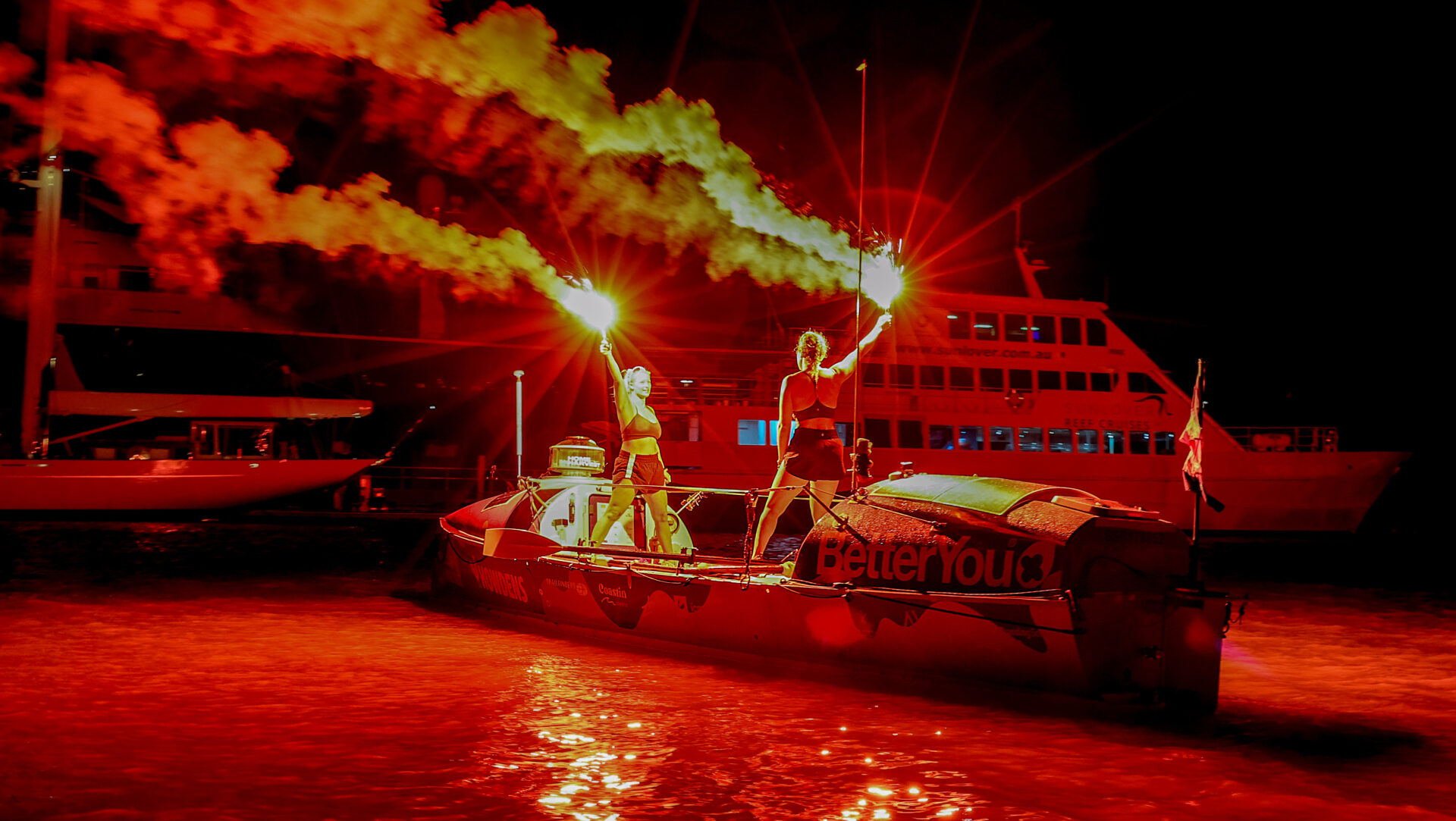
Yet the rhythm of the oars continued.
“It was tough,” she said, “but having Jess as a teammate made all the difference. We problem-solved together and never lost sight of why we were doing this.”
As the Queensland coastline finally materialised on the horizon, the drama was far from over. Strong winds threatened to push them off course in the final approach.
“We ended up outside the channel and thought we might have to swim to shore,” Rowe said, laughing in disbelief. “But somehow, we made it.”
On the dock, tears and saltwater blurred into one. After nearly half a year without touching dry land, the simple act of stepping ashore felt surreal.
“We still can’t quite believe it’s real,” Rowe admitted. “To finally see land — and to have this welcome — is beyond words.”
Beyond the records and the raw endurance, the crossing carried purpose. Throughout the expedition, the team raised funds for The Outward Bound Trust, supporting programmes that build confidence and resilience in young people through outdoor adventure. By the time they reached Australia, they had raised more than £86,000 — surpassing their original target.
An ocean crossed solely by human power is always a story of limits — tested, stretched, and redrawn. But this voyage also speaks to something larger: the rising tide of female-led exploration, and the enduring pull of the sea as both adversary and teacher.
As sunset settled over Cairns, the newly minted record-holders celebrated in suitably human fashion: “Hot pizza, a cold beer, and a real shower,” Rowe grinned.
Rest comes first. But already, somewhere beyond the reef line, another horizon waits.


"*" indicates required fields
Printed editions
Current issue
Back issues
Enjoy so much more from Oceanographic Magazine by becoming a subscriber.
A range of subscription options are available.
