Sperm whales blow bubbles to sleep floating vertically
They are the only whales that choose to sleep upright, but until now, scientists haven’t understood how it was possible due to their exceptionally buoyant heads.
Like humans, most whales sleep horizontally. Sperm whales however hang vertically in tight groups for short 10 to 15-minute naps.
It’s thought that this vertical sleeping enables them to sleep effectively by buffering them from surface wave action, while avoiding the expenditure of energy needed to dive to deeper depths.
The behaviour was first documented by naturalists in 2008, with the species being the only type of whale known to rest in a heads-up vertical position. But, researchers have long-been confused as to how these whales maintained their careful position, just below the sea surface.
New research from the University of St Andrews and Université de Neuchâtel has found that while resting, sperm whales release tiny gas bubbles to help them regulate their buoyancy.
Sperm whales are particularly buoyant due to large amounts of spermaceti oil in their heads.
They are also breath-hold divers, which means if they begin to slowly drift up while resting, the gas in their lungs will slowly expand, releasing bubbles that enable them to counteract the expanding diving gas and achieve neutral buoyancy.
Researchers collected data by placing small tags using suction cups on Sperm Whales off the Norwegian coast. They recorded the animal’s sound and 3D movements.
These tags picked up clear bubble sounds and animal movement data. They then created a simulation based on tissue density, dragging through the water and gas volumes in their body.

In other news


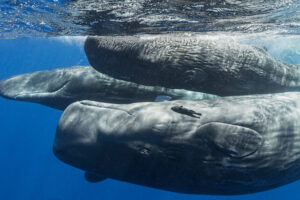

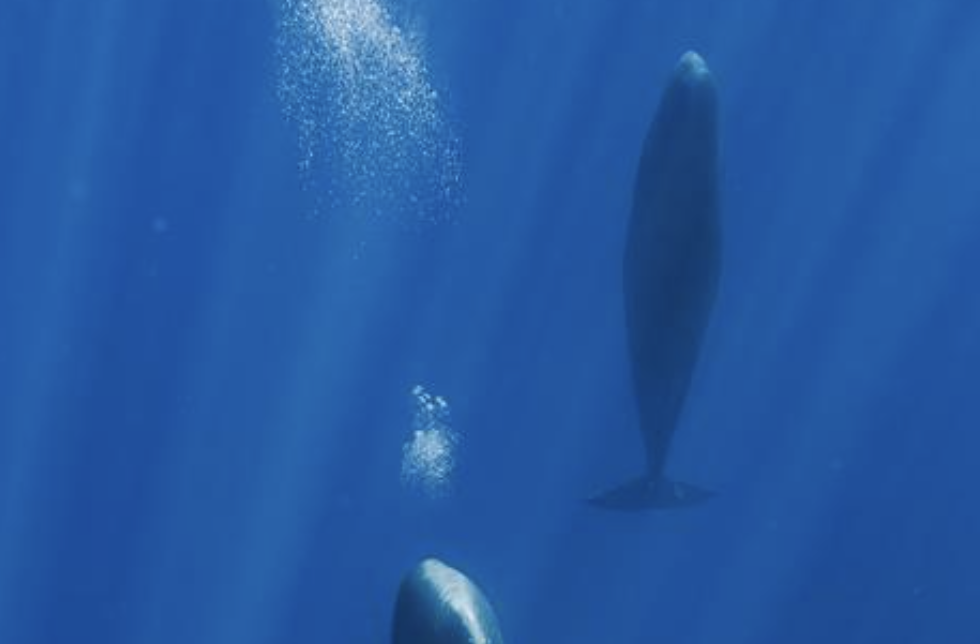
Results confirmed that release of bubbles functioned to reduce the whales’ positive buoyancy, enabling them to remain submerged while resting. Additionally, the results indicate that sperm whales start resting dives with less diving gas volume than for deep foraging dives.
Professor Patrick Miller from the Sea Mammal Research Unit at the University of St Andrews said: “This study confirms that sperm whales exquisitely control their buoyancy by releasing gases to remain submerged with near-neutral buoyancy just below the sea surface.”
“It is particularly fascinating they are able to make these fine-scale adjustments while they are thought to be asleep, a challenge totally alien to terrestrial mammals like us humans,” he added.


"*" indicates required fields
Printed editions
Current issue
Back issues




Enjoy so much more from Oceanographic Magazine by becoming a subscriber.
A range of subscription options are available.
