Sperm whales of the Sargasso embolden ocean sanctuary claim
Campaigners have amplified calls for the Sargasso Sea to become an 'ocean sanctuary' under the Global Ocean Treaty after the presence of pygmy sperm whales as well as other vulnerable and near-threatened species were detected.

Campaigners and environmental organisations are amplifying their call for the Sargasso Sea to be declared an ‘ocean sanctuary’ under the Global Ocean Treaty after the presence of pygmy sperm whales as well as other vulnerable and near-threatened species were detected through the use of innovative environmental DNA sequencing and acoustic surveys.
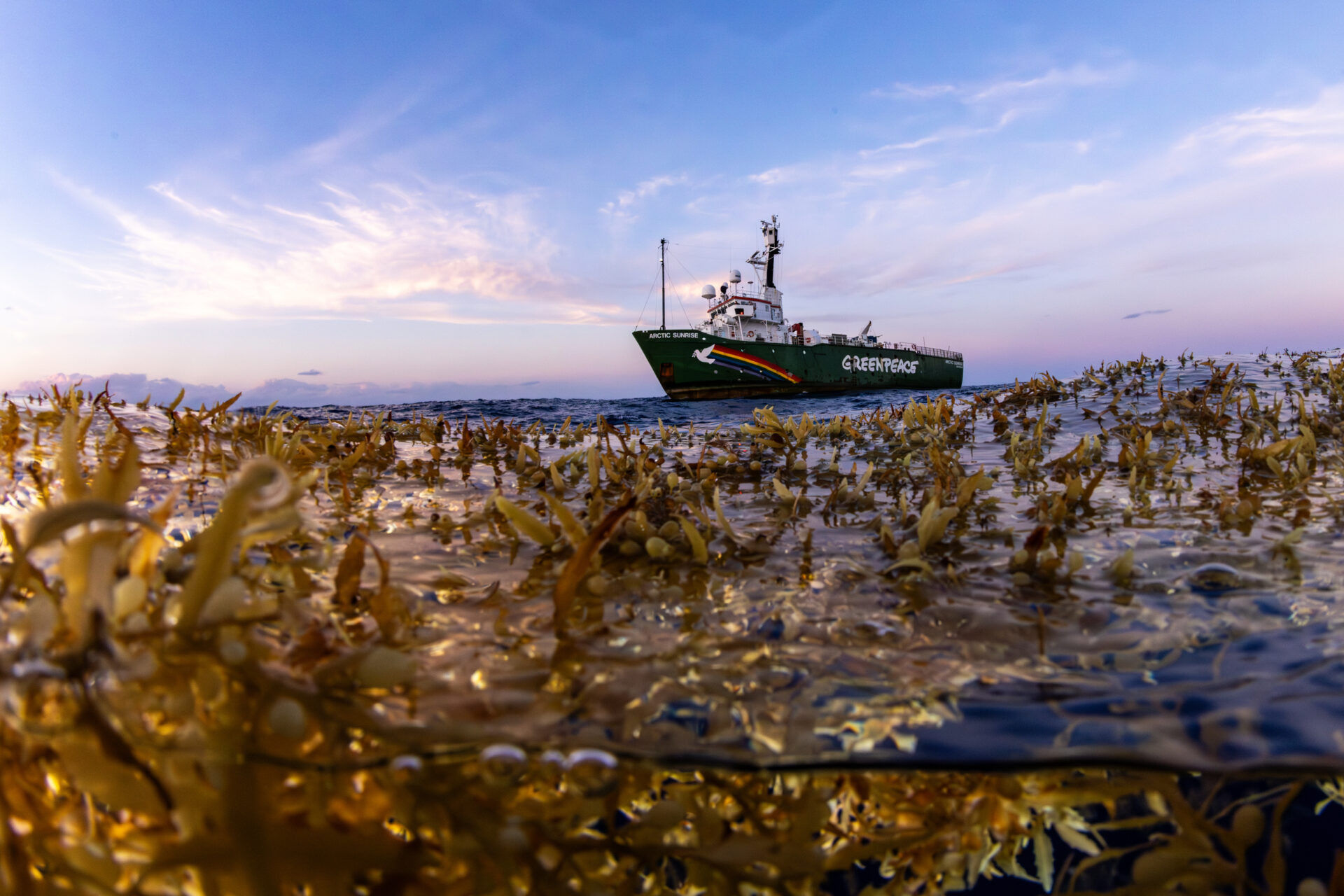
The discovery was made by researchers aboard the Green Peace vessel, Arctic Sunrise, which spent three weeks voyaging to the Sargasso Sea last May to collect samples of seawater for ‘eDNA’ analysis and carry out acoustic surveys of the area using hydrophones.
Analysis of these samples – carried our by researchers at the Universities of Edinburgh and Exeter – revealed the presence of approximately 40 vertebrate species across the area, representing a diverse range of roles in nature and critical steps in the food chain. Species found there spanned flying fish at the surface to deep-sea lanternfish.
Five species of marine mammals were detected in total, including the bottlenose dolphin, pantropical spotted dolphin, Gervais’ beaked whale, pygmy sperm whale, and the South American sea lion. Alongside them, modern bony fish from at least 14 families were recorded, such as flying fish, jacks, and trevallies.
Some of those detected could even be detected to a species level, such as the Sargassum frogfish, yellowfin tuna, and veiled angelmouth. Others could only be detected as far as their biological group. European eels, for instance, famously migrate to the Sargasso Sea to spawn, on an epic journey all the way from freshwater rivers in the UK and elsewhere in Europe.
Groups such as tuna and flying fish play critical roles in oceanic food webs and also support commercial and subsistence fisheries throughout the Atlantic. Greenpeace, alongside the Sargasso Sea Commission urge that with the detection of species listed by the IUCN as Near Threatened (like the Atlantic salmon) or Data Deficient (such as the Crevalle jack) the importance of the region as a ‘refuge for biodiversity’ can no longer be denied.
Campaigners are now calling for the Sargasso Sea to receive full protection under the Global Ocean Treaty.
In other news
A total of eight acoustic encounters were recorded during the survey. Two detections were of sperm whale groups, the first with four individuals and the second with two whales. Deep-diving sperm whales are globally designated as Vulnerable on the IUCN Red List of Threatened Species. They are highly migratory and dependent on travelling through open areas like the Sargasso. The remaining six acoustic detections were dolphin encounters.
Noelle Young, a sustainability solutionist and the Environmental Justice Delegate from Bermuda, said: “Bermuda’s identity is deeply tied to the health of the Sargasso Sea, a unique Atlantic ecosystem that is defined not by land boundaries but by ocean currents.
“Its floating mats of Sargassum seaweed are a vital habitat for marine creatures found nowhere else such as the Sargassumfish frog fish, tiny pygmy sperm whales, shrimp, crabs, flying fish and more. It is a spawning ground for American and European eels and an important route for highly-migratory and vulnerable humpback whales and sea turtles.
“Sadly this valuable marine environment is threatened by environmental change, industrial fishing and pollution, but there is hope. The Sargasso is a prime candidate for protection under the High Seas Treaty. This protection would improve the lives of local communities as well as precious wildlife, because the Sargasso Sea is also vital to our climate and economy. Civil society in Bermuda – from fishers and local businesses to scientists – are pushing for its protection and governments like the UK must join us in championing the Sargasso Sea as one of the first ocean sanctuaries under the Treaty.”
Since most of the Sargasso Sea lies in the high seas, outside national borders, tools for restricting human activity there have been limited in the past. The Treaty will make it possible for governments to create sanctuaries on the high seas – protected from all destructive activities – where marine life can recover and thrive. Greenpeace UK is calling on the UK government to propose the Sargasso Sea as one of the first ocean sanctuaries under the Global Ocean Treaty, as a part of a global network of protected areas.
Chris Thorne, senior oceans campaigner at Greenpeace UK, said: “The samples and recordings taken from right across the Sargasso Sea show how rich in biodiversity its waters are. We saw from our ship that the Sargasso Sea is a wildlife haven and this thorough scientific analysis now proves the incredible range of species which inhabit and pass through the Sargasso Sea. We’re all thrilled to know that pygmy sperm whales are resident in the region as they are notoriously elusive and difficult to see.”
The same research has shown that the Sargasso Sea is also facing growing pressure from shipping and industrial fishing fleets. High-impact fishing practices including the use of drifting longlines pose a major risk to the region and the life within it, while container ships and tankers routinely travel through the waters every day.
“In order to give the life of the Sargasso a fighting chance, and support Bermudians who depend on it, the UK and other governments must champion the Sargasso Sea as one of the first ocean sanctuaries under the Treaty and work with the government of Bermuda to manage it,” said Thorne.
Governments are meeting at the UN until 29th August, to continue talks about implementing the Global Ocean Treaty or High Seas Treaty. As it moves towards entering into force, with only eight more countries required to complete ratification before it commences, the next priority is how the Treaty can be used to create ocean sanctuaries covering 30% of the world’s oceans by 2030.
Greenpeace UK is calling for the just and equitable protection of the ocean, and urging progress on priority sites in the Atlantic and across the globe, including the Sargasso Sea.


"*" indicates required fields
Printed editions
Current issue
Back issues


Enjoy so much more from Oceanographic Magazine by becoming a subscriber.
A range of subscription options are available.
