The longest whale journey ever recorded links Australia to Brazil
An international team has documented humpback whales making record-breaking crossings between eastern Australia and Brazil, with one individual confirmed travelling 15,100 kilometres - the longest movement ever recorded for the species.
An international research team has documented humpback whales travelling more than 14,000 kilometres across open ocean, crossing between breeding populations in eastern Australia and Brazil. The findings, published in Royal Society Open Science, represent the longest confirmed movements ever recorded for the species.
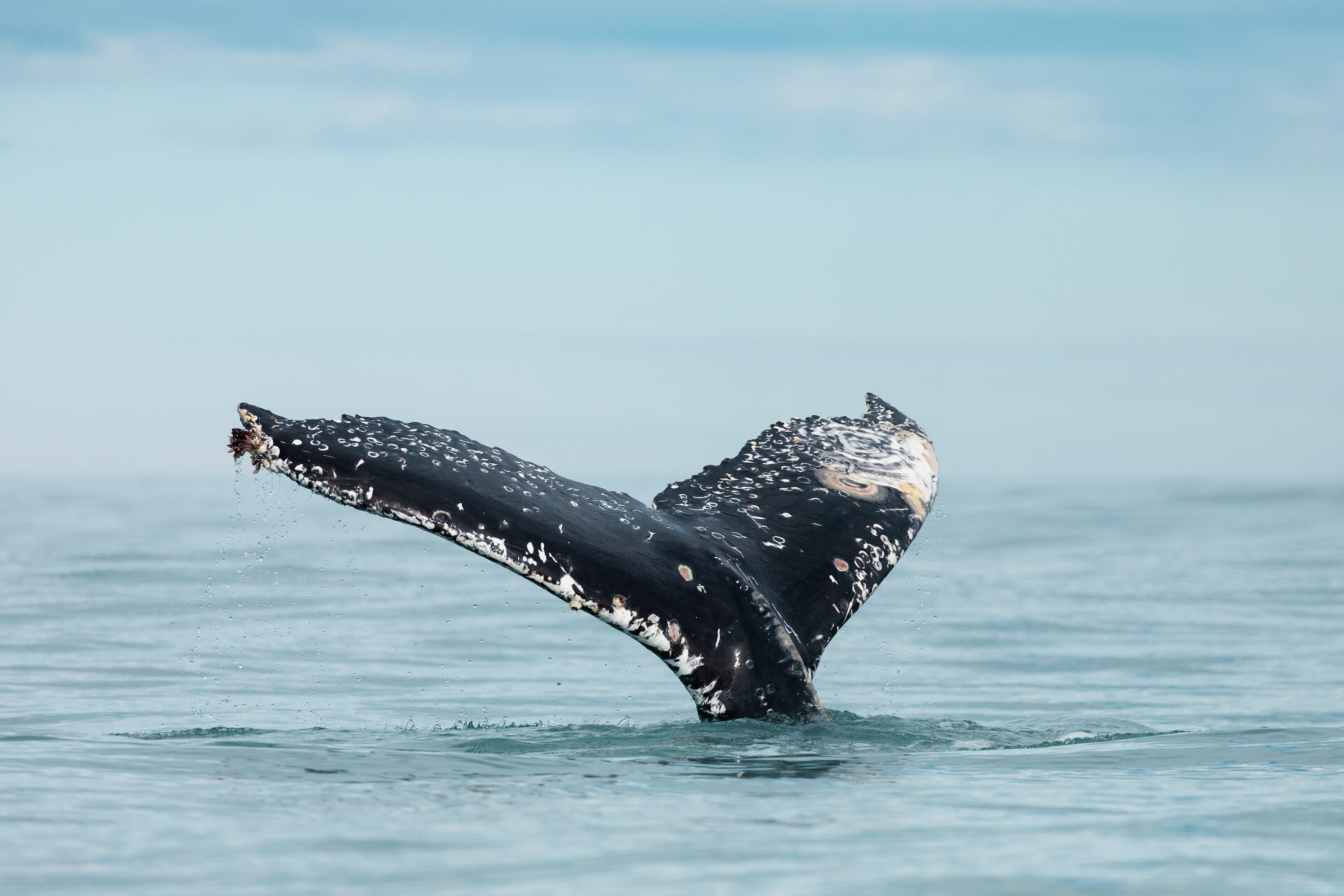
The breakthrough was made possible by comparing tens of thousands of photographs of whale flukes – the distinctive tail markings that act as a natural fingerprint for individual animals.
Drawing on a dataset of 19,283 high-quality fluke images collected between 1984 and 2025 from eastern Australia and Latin America, the team used automated image-recognition software to identify potential matches before independently verifying each one by eye. The photographs were contributed by both professional scientists and citizen scientists via the global platform Happywhale.
From nearly 20,000 individual whales spanning more than four decades of data, two animals emerged as having crossed between the two regions – a figure representing just 0.01% of identified individuals.
The first whale was photographed in Hervey Bay, Queensland in 2007, resighted in the same area in 2013, and then recorded off the coast of São Paulo, Brazil in 2019. The straight-line ocean distance between those two breeding grounds is approximately 14,200 kilometres – roughly equivalent to the distance from Sydney to London.
The second case involved a whale first photographed in 2003 at the Abrolhos Bank, Brazil’s primary humpback nursery off the coast of Bahia, within a boisterous group of nine adults. Some 22 years later – in September 2025 – the same animal was spotted alone in Hervey Bay, Australia, marking a confirmed displacement of 15,100 kilometres, the longest distance ever documented between sightings of the same individual humpback whale on record.
However, as only the start and end points of each journey were captured, the animals’ true routes – and therefore the actual distances swum – remain unknown.
“These whales were photographed decades apart, by different people, in opposite parts of the world, separated by two different oceans, and yet we can connect their journey,” said Stephanie Stack, a PhD candidate at Griffith University and co-lead author of the study.

In other news

The scale of the discovery, Stack noted, speaks to the power of sustained scientific investment. “Discoveries like this are only possible because of investment into long-term multi-decadal research programmes and international collaboration,” she said.
The role of citizen science proved equally pivotal. Dr Cristina Castro of the Pacific Whale Foundation, a contributor to the research, emphasised the broader significance of public participation: “This kind of research highlights the value of citizen science. Every photo contributes to our understanding of whale biology and, in this case, helped uncover one of the most extreme movements ever recorded.”
Though rare, these transoceanic crossings carry meaningful consequences for humpback whale populations. “Despite their rarity, these exchanges matter for the long-term health of whale populations,” Stack said. “Occasional individuals moving between distant breeding grounds can help maintain genetic diversity across populations and may even carry new song styles from one region to another – humpback whale songs are known to spread culturally across ocean basins, much like music trends in human populations.”
The findings also lend support to the so-called ‘Southern Ocean Exchange’ hypothesis – the proposition that humpback whales from different breeding populations periodically encounter one another on shared Antarctic feeding grounds, with some individuals subsequently following an unfamiliar migration route home and establishing themselves in an entirely new breeding region.
With climate-driven shifts now altering the Southern Ocean – including changes to sea ice extent and the distribution of Antarctic krill, the whale’s primary prey – researchers suggest such crossings may become increasingly common in the years ahead.
The study, ‘First evidence of bidirectional exchange between distant humpback whale breeding populations in eastern Australia and Brazil’, is published in Royal Society Open Science.


"*" indicates required fields
Printed editions
Current issue
Back issues
Enjoy so much more from Oceanographic Magazine by becoming a subscriber.
A range of subscription options are available.
