The mission to rescue world's most climate resilient coral reefs
The Wildlife Conservation Society has launched a landmark plan to conserve the world’s most climate-resilient coral reefs just as scientists warn that reefs in the west Atlantic will likely stop growing by the year 2040 owing to warming ocean temperatures.

The Wildlife Conservation Society has launched a landmark plan to conserve the world’s most climate-resilient coral reefs, drawing both on its 40-year history in conservation and position at the “cutting-edge” of new sciences to place its approach at the heart of global action.
Earlier this month, an international team of scientists – led by those from the University of Exeter – published a study concluding that coral reefs in the west Atlantic will stop growing by the year 2040 owing to climate change and warming ocean temperatures.
Published in Nature the study noted that 70% of the coral reefs around Florida, Mexico, and Bonaire will stop growing in the next decade while over 99% of them will cease to grow by 2100 if warming reaches 2°C or more above pre-industrial levels.
Coral reefs are biodiversity hotspots and lifelines for coastal communities, covering less than 1% of the ocean but sustaining more than 25% of marine species and supporting nearly one billion people. Yet, they are among the ecosystems most at risk from climate change. Some estimates suggest that half the world’s live coral has already been lost and that the world’s worst global bleaching event on record has now struck more than 80% of the planet’s reefs.
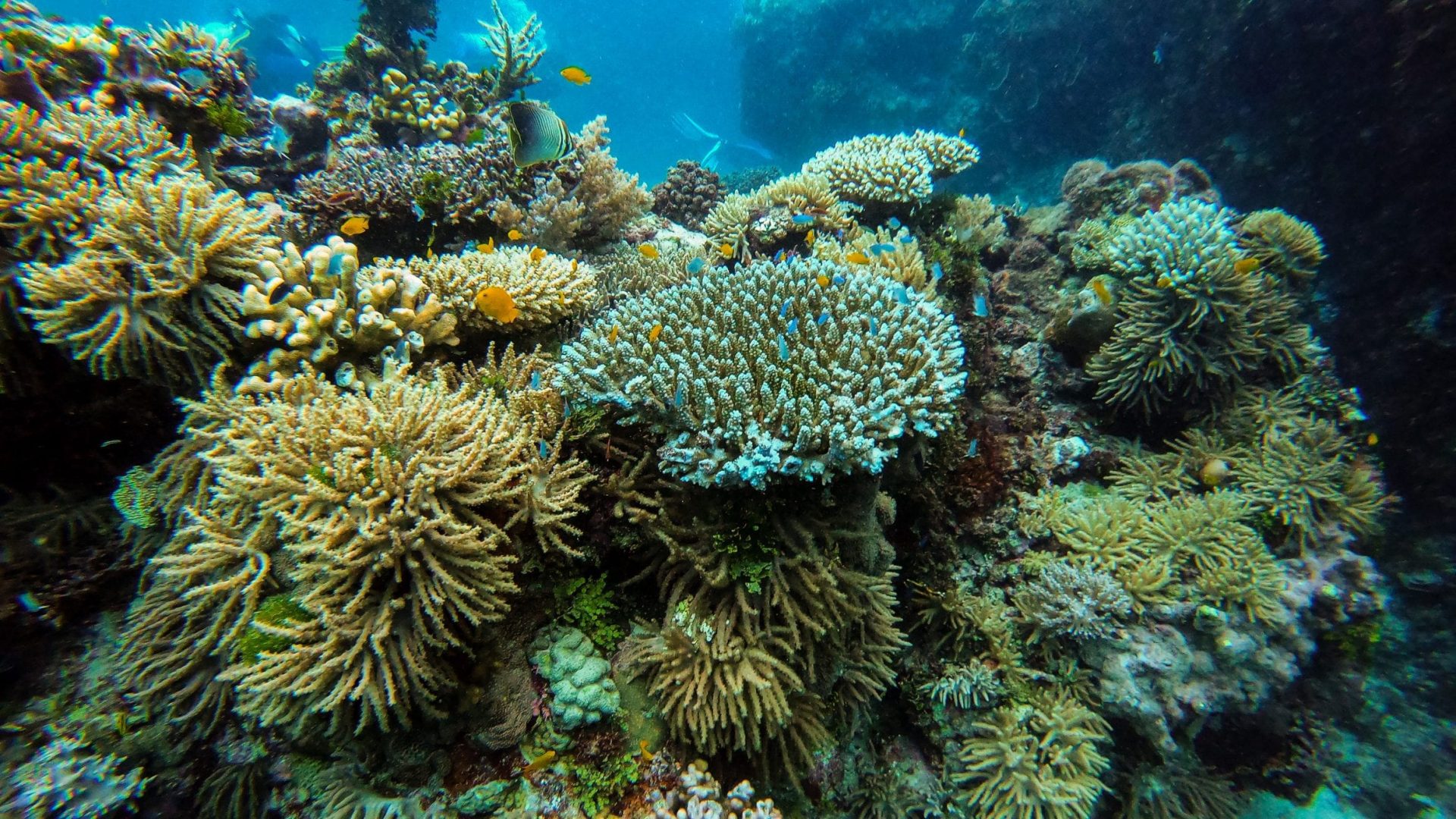
There are some coral species, however, that are defying the odds. And it will be these – these high integrity climate-resilient coral reefs (HICOR) – that will be at the heart of a new strategy for global conservation action.
“The world has likely already crossed 1.5°C of warming, and coral reefs are at a tipping point, but our science shows a clear path forward,” said Dr Stacy Jupiter, executive director of WCS’s Global Marine Programme. “Some coral reefs are defying the odds and have the ability to survive and fight back against the impacts of climate change – if we find them and protect them.”
To help turn the tide for coral, the Wildlife Conservation Society is focusing its new strategy on these high intensity climate-resilient coral reefs. These are reefs with enough live coral cover, species diversity, and reef fish biomass to avoid, resist, and recover from climate impacts. These reefs have been pinpointed as those “with the ecological integrity” needed to withstand climate impacts and serve as the foundations for nature’s global recovery.
“This strategy is about more than just preventing loss and saving coral reefs,” said Dr Emily Darling, director of Coral Reef Conservation at WCS who led on the strategy process. “It’s about building a future where oceans thrive, communities prosper, and hope endures. By focusing on the coral reefs most likely to withstand climate change, we can spark recovery, build a resilient future, and show what’s possible when science, collaboration, and commitment come together.”
In other news


A lot of the work will be focused on the development of a global map of high integrity climate-resilient reefs, pinpointing those most likely to survive climate change and guiding where the world should invest most protection and management.
The team will also help ensure that at least 30 new marine protected areas include high integrity climate-resilient reefs to expand protection for the reefs that matter the most, while scaling solutions – from co-managed fisheries to pollution reduction – to reduce reef threats across at least 100,000-square-kilometres of coastal areas.
The task at hand is a rather large one. The University of Exeter-led study – an analysis of 400 reef sites around Florida, Mexico, and Bonaire – suggests that under current CO2 emission scenarios, most Atlantic coral reefs will not only stop growing, but many will be eroded by the mid-century. At the same time, rates of sea level rise will increase, leaving reef growth severely lagging behind.
Speaking on this report, Dr Alice Webb from the University of Exeter, said: “The scale of action required to reverse current coral losses is significant.
“To have meaningful effects on limiting water depth increases, and restoration will need to occur in tandem with effective land and water management, and rapid climate mitigation actions. Actions to keep warming below 2°C are critical.”
Joe Walston, executive vice president for Global Conservation at Wildlife Conservation Society, has emphasised the need for optimism.
“In the face of unprecedented pressures on coral reefs, this strategy renews our focus on resilience,” said Walston. “By combining cutting-edge science, political action, and the co-creation of local solutions, we are investing in the reefs that have the greatest chance of surviving today. These reefs will not only endure but also drive recovery for the oceans and communities of tomorrow.”


"*" indicates required fields
Printed editions
Current issue
Back issues

Enjoy so much more from Oceanographic Magazine by becoming a subscriber.
A range of subscription options are available.
