Two-thirds of Indonesian whale sharks' injuries are human-caused
Researchers have found that 62% of the scars and injuries suffered by whale shark populations found primarily around the Bird’s Head Seascape off Indonesian West Papua are inflicted by preventable human causes such as fishing gear.

Almost two-thirds of the Indonesian whale shark population found off West Papua carry injuries from preventable human causes, a new international study has found, adding weight to the argument that “simple interventions” could significantly reduce the harms caused to the species local to the region.
Recognised as the largest living fish species on the planet, whale sharks are classified as endangered on the IUCN Red List of Threatened Species, having seen its global population decline by more than 50% over the last 75 years.
In the Indo-Pacific region, population numbers have plummeted by some 63%. It takes whale sharks up to 30 years to become sexually mature, meaning these populations can only recover slowly making the threats from hunting for fins, meat, and oil as well habitat loss and entanglement in fishing nets long-lasting.
An international team of researchers have now found that 62% of the scars and injuries suffered by whale shark populations found primarily around the Bird’s Head Seascape off Indonesian West Papua are inflicted by preventable human causes.
Speaking in Frontiers in Marine Science, lead conservation scientists at the Elasmobranch Institute Indonesia and lead author on the recent study, Edy Setyawan, said that scars and injuries were “mainly from anthropogenic causes” such as collisions with ‘bagans’ (the traditional fishing platforms with lift nets) and whale shark-watching tour boats.
“Relatively harmless minor abrasions were the most common,” he explained. “Serious injuries from natural causes such as predator attacks, or from boat propellers were much less common.”
Until now, most of the whale shark population studies in Indonesia (and elsewhere) have focused on short-term surveys or single locations, often with limited data on how long individuals remain in an area. This latest study instead compiles 13 years of data – from between 2010 and 2023 (the longest dataset available for whale sharks in Indonesia) – to study the presence of the species in Cenderawasih Bay, Kaimana, Raja Ampat, and Fakfak within the Bird’s Head Seascape – a region hosting a network of 26 marine protected areas and a hotspot for marine megafauna and tropical marine biodiversity.
In other news

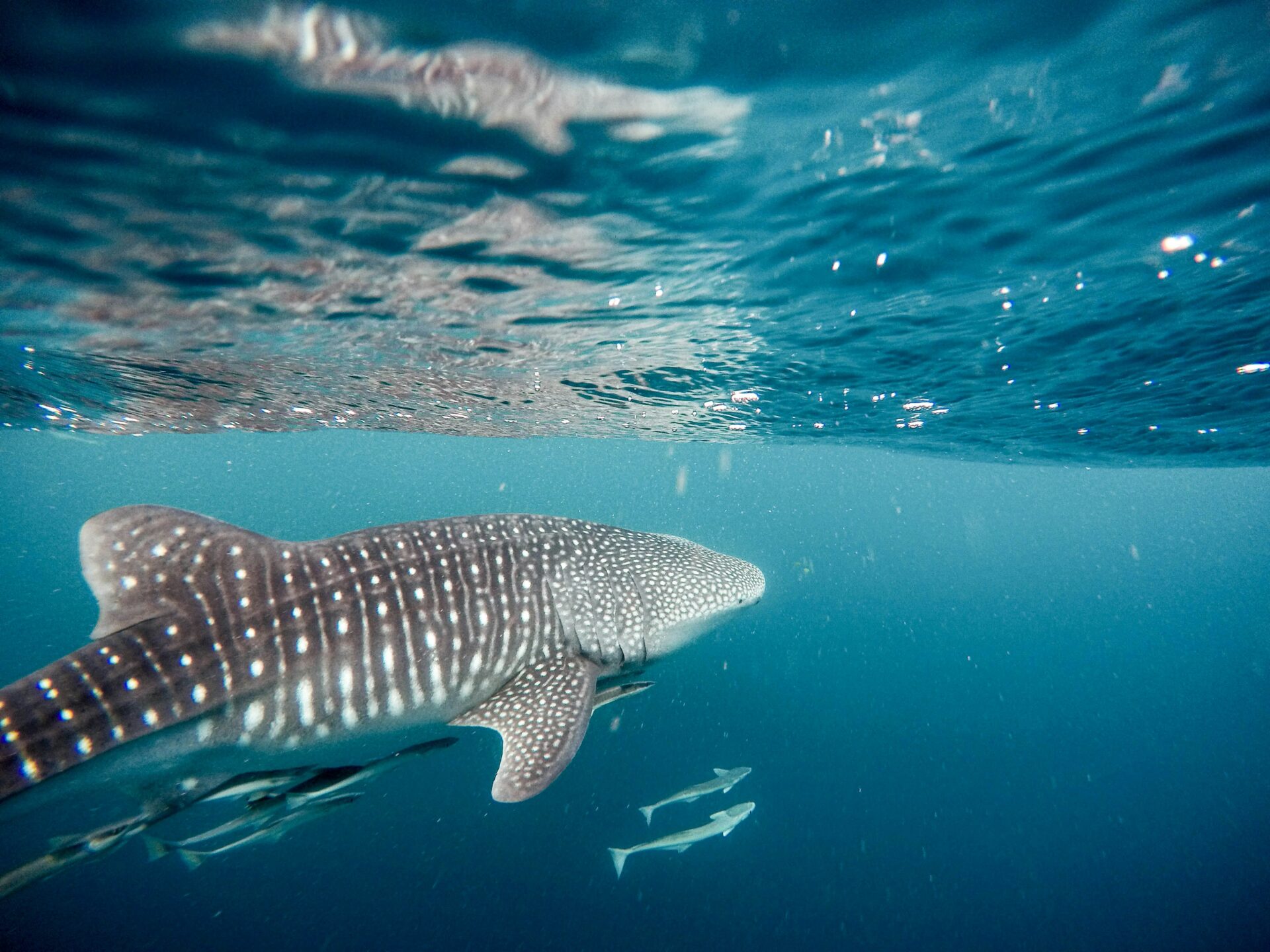
Distinguishable by the unique patterns of white spots and stripes each whale shark sports, the researchers were able to analyse photographs to observe a total of 268 unique whale sharks, 98% of which were sighted in Cenderawasih Bay and Kaimana. Whale shark sightings were almost exclusively seen near bagans, where they typically fed on baitfish such as anchovies, herring, and sprats. They were also observed to suck fish directly from bagans, which often damaged the nets.
Most sighted individuals were juveniles between four and five metres long, while 90% of those were male.
Of the 206 sharks recorded with injuries or scarring, 80.6% bore injuries that were attributed to human-made causes, while 58.3% had injuries that were likely from natural causes. It was noted that some individuals carried both anthropogenic and natural injuries.
“Over three-quarters of sharks had scars or injuries, mostly from fishing gear or other human contact,” said Setyawan. “Propeller strikes and predator bites were rare, but abrasions due to rubbing against bagans (floating fishing platforms and tourism boats) were common.” In fact, serious lacerations, amputations, and evidence of blunt trauma from anthropogenic causes were relatively rare, observed in 17.7% of individuals.
So, where are the females and older, sexually mature individuals to be seen?
“Previous studies from around the world have shown that adult whale sharks, especially females prefer the deep ocean where they feed on prey like krill and schooling fish, while the younger males stay closer to the shore in shallow, plankton-rich waters that help them grow quickly,” said the study’s co-author, Mochamad Iqbal Herwata Putra, a senior manager at the Focal Species Conservation Program of the national foundation, Konservasi Indonesia.
According to Seyawan, the long-term presence and high re-sighting rates of the whale shark population indicates that the Bird’s Head Seascape remains a vital refuge for young whale sharks. Many sightings and aggregation sites occur in an MPA and National Park, offering a foundation for better conservation. However, the high percentage of injured whale sharks shows that even in protected zones, fishing gear and tourism still pose a risk.
Setyawan now hopes that the study can form the basis for new steps to be taken to reduce the harm to the whale sharks.
“I’d like to see stricter regulations on the structure of bagans, where whale sharks aggregate, particularly along their edges to minimise risks of injuries on the sharks like abrasions on the sharks’ dorsal fins,” he said. “This should be accompanied by the development and strict implementation of tourism guidelines that limit boat traffic, enforce slow-speed zones, and promote responsible diving and snorkelling practices in whale shark watching and diving tourism.”
He added that these should not only be implemented for those populations in Bird’s Head Seascape, but also in other locations in Indonesia, such as Saleh Bay in Nusa Tenggara and Talisaya in Kalimantan Timur Provinces, where whale sharks also strongly associate with bagans.
The paper – Insights into the population demographics and residency patterns of photo-identified whale sharks Rhincodon typus in the Bird’s Head Seascape, Indonesia – has now been published in the scientific journal, Frontiers in Marine Science.


"*" indicates required fields
Printed editions
Current issue
Back issues



Enjoy so much more from Oceanographic Magazine by becoming a subscriber.
A range of subscription options are available.
