UK supermarket tuna has a hidden cost to human rights
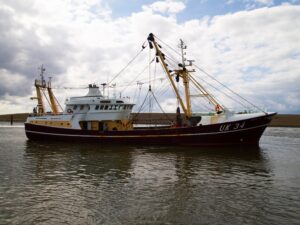
Exposing the harsh realities of life for West African crew aboard European tuna vessels, a new report from the Blue Marine Foundation has - among other human rights breeches - drawn attention to the instances of poor working conditions, withheld pay, and racism.

Poor working conditions, withheld payments, and racial discrimination are just some of the hardships and human rights breeches that Senegalese and Ivorian crew are being faced with while working on European tuna vessels, a new report has revealed this week.
Exposing the harsh realities of life for West African crew aboard European tuna vessels, the report has drawn attention to the matter that despite generating over €420 million in combined turnover in 2023, several European fishing companies have continued to pay crew a base salary below the rate set by the International Labour Organisation.
The report’s publication this week coincides with renewed negotiations between representatives of West African crew members and the European companies that employ them to work on board distant-water tuna purse seine vessels, bringing to light the true and hidden costs of the tuna sold in most UK supermarkets.
The current agreement between European fishing companies and unions representing Senegalese and Ivorian crew members was signed in September 2023 and only meant to last for six months while negotiations continued. Two years later and they are yet to be updated.
All the while, crew members have been working for a temporary minimum basic salary of 250,000 FCFA per month – which is approximately $414 US. This is far below the International Labour Organisation (LSO) minimum base wage for 2023 of $658 US per month.
If low pay wasn’t enough, the report has also exposed the many first-hand accounts of discriminatory treatment faced by many West African crew members, both on board and on shore. Accounts suggest that these issues were experienced to varying degrees on different vessels, ranging from insufficient medical care to unexplained dismissals, and from unfair employment terms to excessive working hours.
Jess Rattle, Head of Investigation at Blue Marine and co-author of the report, said: “Our time spent working in Senegal and Côte d’Ivoire has revealed a troubling pattern of racism and discrimination experienced by many crew members working on board the European fishing vessels that supply the tuna that lines our shelves.
“Some of these crew members gave decades of their lives to a fishing company before being let go without explanation, with others continuing to work gruelling hours at sea while still not being able to adequately provide for their families back home.
“We call on the fishing companies concerned to revise and improve the way in which their crew members are treated and have listed eight ways in which they can do so in our new report.”
In other news



In some instances, crew members have detailed times when payslips were often written in multiple languages, made overly complex, and contained opaque calculations and unexplained deductions, making it difficult to understand whether they were paid what they were owed.
These experiences are contrasted by the report’s financial analysis which underscored the significant profits generated by several of the European tuna fishing companies. The investigation found that the combined turnover of the companies analysed was more than €420 million [£364 million] in 2023.
In addition, several of them paid dividends to their shareholders in the past five years and these totalled almost €60 million.
Blue Marine Foundation is now calling for significant improvements in working and living conditions that align with internationally recognised labour standards. These include a guarantee of the minimum monthly wage as a base salary, as well as fair catch compensation and timely, regular salary payments with free, accessible means to send money home.
It’s also calling for compliance with International Labour Organisation standards on working hours, rest periods, and overtime pay; transparent and accurate social security, health, and retirement contributions; and the provision of sufficient, nutritious food and potable water that respects cultural and religious needs.
Ibra Diop, former crew member and current Secretary General of the Association of Industrial Fishing Professionals (APPI) in Senegal, said: “The West African sailors do the hardest and most exhausting jobs on board these European vessels, and yet many of them face discrimination, belittlement and verbal abuse while working.
“They deserve to be treated with dignity and respect, and to be paid fairly for their hard work which is why we are calling on the European fishing companies to adopt the ILO minimum base salary.”
The Hidden Cost of Tuna: Discrimination on Board European Fishing Vessels is available for download in English and French.


"*" indicates required fields
Printed editions
Current issue
Back issues
Enjoy so much more from Oceanographic Magazine by becoming a subscriber.
A range of subscription options are available.
