The glacier - everyone knows it. They know it so well, in fact, that nobody uses its full name, the Mendenhall Glacier. In 2023, 1.7 million people were projected to visit, drawn in by the majesty of the glacier or the promise of seeing humpback whales. As a tour guide taking people to see both, I saw them flock to those sites every single day. While people stood separated from the 13-mile-long glacier only by the Mendenhall Lake, they got to encounter one of the most beautiful and saddest natural scenes of our time - a dying glacier.
On whale watching tours, the people are separated from the scene of the dying glacier. Out on the boat, the Mendenhall peaks above the mountains on Juneau’s rare sunny days. Even when the clouds cover the ice, signs of the glacier are everywhere. On the ride out to find a whale, the water is tinted green, courtesy of the phytoplankton that bloom from the nutrient rich runoff coming from the glacier and spilling into the Inside Passage of Alaska.
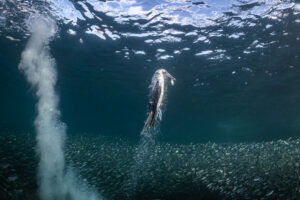
Whale watching guests never seem to care about the plankton or the glacier. That is, until they see a 50-foot humpback whale take a breath, blowing a ball of mist out of the water at 100 miles per hour. The reason the humpbacks flock to the Inside Passage has everything to do with the glacier and the glacier fed phytoplankton – they fuel nearly the entirety of the food chain here, allowing the waters to have enough food to feed about 600 humpback whales for roughly five months.
Every day I talked about these connections from the land to the sea. Every day I saw people gain their own sort of connection to these places. But the one thing I talked about and could never quite convince them of was the funeral march of the glacier. I would call it a slow funeral march for dramatic effect, but that is simply not the truth. It’s faster than it has ever been before; retreating at 160-180 feet per year.
That’s a level of change that typically happens over hundreds of years instead of just one. “Is it really changing… I mean is it actually melting?” many of them ask me and other guides. We try to then show them what the glacier has been trying to tell us for years. On hikes around the east side of the glacier, guides will stop along the way. One stop overlooks the lake where you can see icebergs floating across its surface. Here, I tell them how these are the last icebergs that will ever be seen in this lake because in one year, the glacier will no longer be touching the water.
Latest features



Continue reading
This story is exclusively for Oceanographic subscribers.
