Ancient corals and rare species found in Canada's deep ocean
A landmark joint expedition to the Southern Newfoundland Slope has revealed ancient coral colonies, extensive sea pen fields, and rich habitat for fish and species at risk in Canada's deep ocean.
Stretching more than 150 kilometres and plunging to depths of 1,300 metres, the submarine canyons of the Southern Newfoundland Slope have long sat at the edge of scientific understanding. Now, following a joint expedition by Oceana Canada and Fisheries and Oceans Canada (DFO), a clearer picture of the region is coming into focus; and what’s been found beneath the surface has surpassed scientists’ expectations.
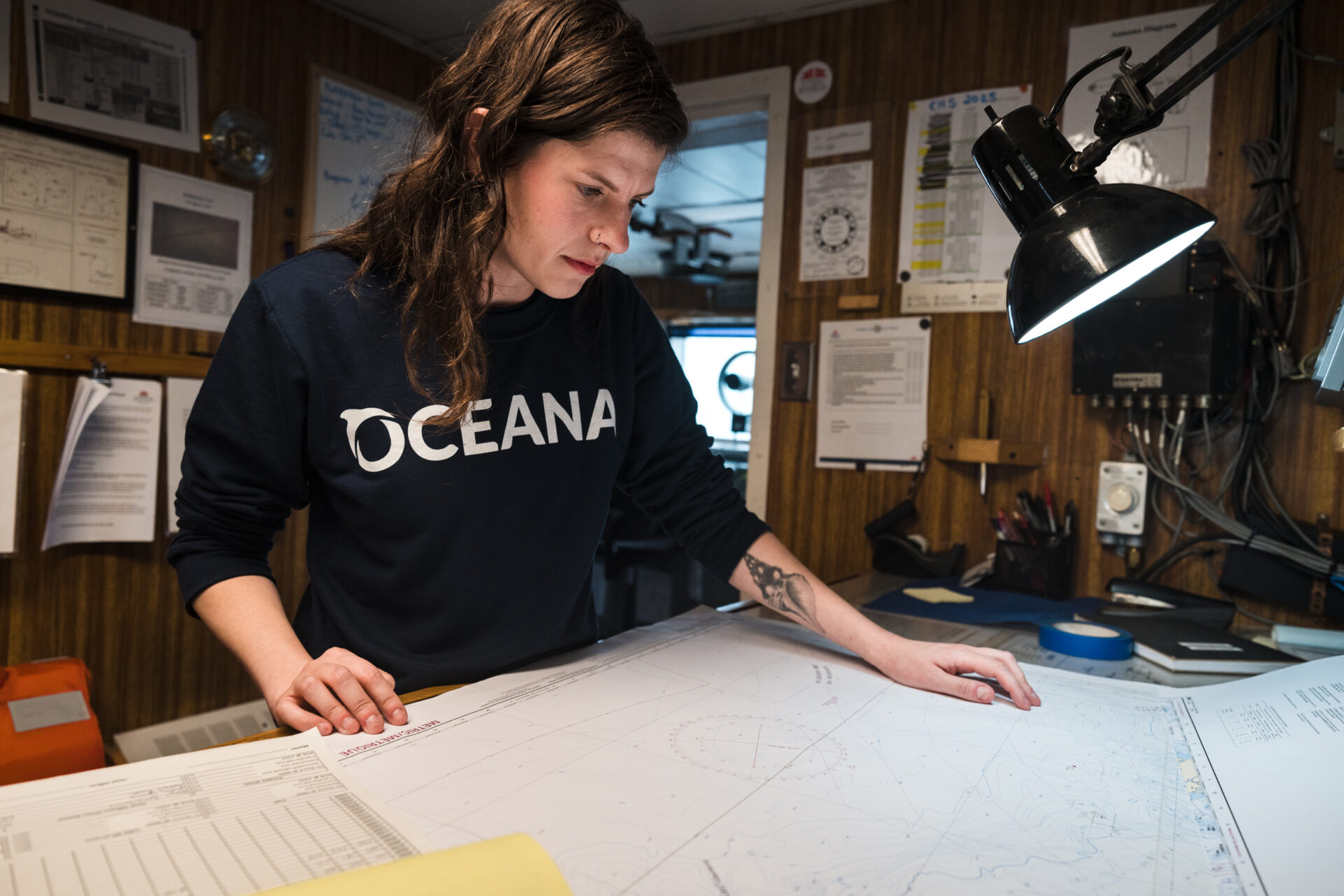
Over 21 days at sea across two voyages in July and October 2025, scientists deployed drop-camera systems, environmental DNA sampling equipment, and baited remote underwater video cameras to survey the seafloor far off the coast of Newfoundland and Labrador.
In doing so, they documented a ‘remarkable and complex’ deep-sea ecosystem, consisting of coral colonies no more than a metre in height yet estimated to be over century old; sea pen fields stretching more than a kilometre across a muddy seabed; and critical habitat for species including halibut, Atlantic cod, and redfish.
“When the camera reached the seafloor, we were looking at coral colonies more than a metre high – organisms that have been growing there for over a century, creating habitat for other species,” said Isabelle Jubinville, expedition science lead at Oceana Canada.
“At one site, hundreds of redfish were schooling together among soft corals on scattered boulders. In another, sea pen fields stretched more than a kilometre across the muddy bottom. These are habitats most Canadians have never seen and that science is only beginning to document in this kind of detail.”
The expedition also recorded a range of species at risk, among them cusk, northern wolffish, and smooth skate, as well as marine mammals including pilot whales, dolphins, and a blue whale observed at the surface. All of them are signs – the researchers have said – of strong productivity across multiple levels of the food web.

In other news

According to Statistics Canada, Canada’s oceans and coastal ecosystems generated more than $7.1 billion in ecosystem services in 2023, encompassing fisheries productivity, carbon storage, and nature-based economic activity. All of this, however, depends on the health of habitats like those now being mapped on the Southern Newfoundland Slope.
“The Southern Newfoundland Slope sits at the edge of one of the world’s most important fishing grounds, and until recently, we had a limited scientific picture of what was actually there,” said Josh Laughren, executive director of Oceana Canada.
“What this expedition revealed is extraordinary: ancient coral forests, vast sea pen fields, and ecosystems that support marine life across multiple levels of the food web. For the first time, Canada is beginning to see this ecosystem in meaningful scientific detail, and that understanding will shape how we think about our ocean for generations to come. These are systems that support fisheries, store carbon and generate long-term value for Canadians, even if they are largely out of sight.”
The expedition findings will be presented publicly on June 2 in Ottawa, at an event co-hosted by Oceana Canada and Canadian Geographic ahead of World Oceans Day. The gathering – titled Southern Newfoundland Slope: Discovery Beneath the Surface – will bring together marine scientists, Indigenous leaders, and ocean policy experts for a screening of expedition footage, a science presentation, and a panel discussion. Nathalie Provost, Secretary of State for Nature, will deliver opening remarks.
“Canadian Geographic has been telling Canada’s story for 95 years, including the health and biodiversity of our oceans and waterways,” said Alexandra Pope, editor-in-chief of Canadian Geographic. “We are proud to partner with Oceana Canada to help bring the Southern Newfoundland Slope into public view and share the discoveries unfolding beneath the surface of Canada’s deep ocean.”
Analysis of expedition data is ongoing, with Oceana Canada and DFO expected to release further findings as scientific review progresses.


"*" indicates required fields
Printed editions
Current issue
Back issues


Enjoy so much more from Oceanographic Magazine by becoming a subscriber.
A range of subscription options are available.
