Sign of record El Niño spark calls to protect sea turtles off California
The Center for Biological Diversity has warned NOAA it faces legal action if it fails to protect endangered loggerhead sea turtles from drift gillnets ahead of a potentially record El Niño.
With unusually warm waters already pushing into southern California and forecasters warning that a potentially record-breaking El Niño may be taking shape in the Pacific, a US conservation organisation is pressing federal authorities to protect endangered loggerhead sea turtles from one of the ocean’s most destructive fishing methods.
The Center for Biological Diversity has formally notified NOAA Fisheries of its legal obligation to close a large stretch of the Pacific coast to swordfish drift gillnets before endangered loggerhead sea turtles begin arriving to feed this summer.
The organisation’s letter – sent this week – sets a deadline of 1 June for the agency to act otherwise, it warns, it will face the prospect of litigation.
The urgency stems from an exceptional run of warm water conditions off the southern California coast, set against record-breaking sea surface temperatures recorded off San Diego on 38 days since the start of the year, and above-average warmth across most of the world’s oceans for the past four weeks.
As a result, NOAA has put the probability of El Niño developing by July at around 80%, and an enormous pool of abnormally warm water is already massing beneath the surface of the equatorial Pacific. Several leading weather services are projecting that Pacific sea temperatures could surge 2.5°C or more above average later this year – a threshold that has been breached only three times since reliable records began in 1982/83; 1997/98; and 2015/16.
It’s uncertain whether this event will reach these extremes. A crucial weakening of trade winds – capable of either amplifying or suppressing the El Niño phenomenon – has yet to materialise while scientists have cautioned that the interactions involved are notoriously complex and difficult to predict.
However, some signals have been striking enough that Adam Scaife, head of long-range prediction at the UK Met Office has said on record that this El Niño could be the strongest in decades.
“There’s definitely something coming,” he said. “We’re very confident about that, and it looks like it will be a big event.”

In other news



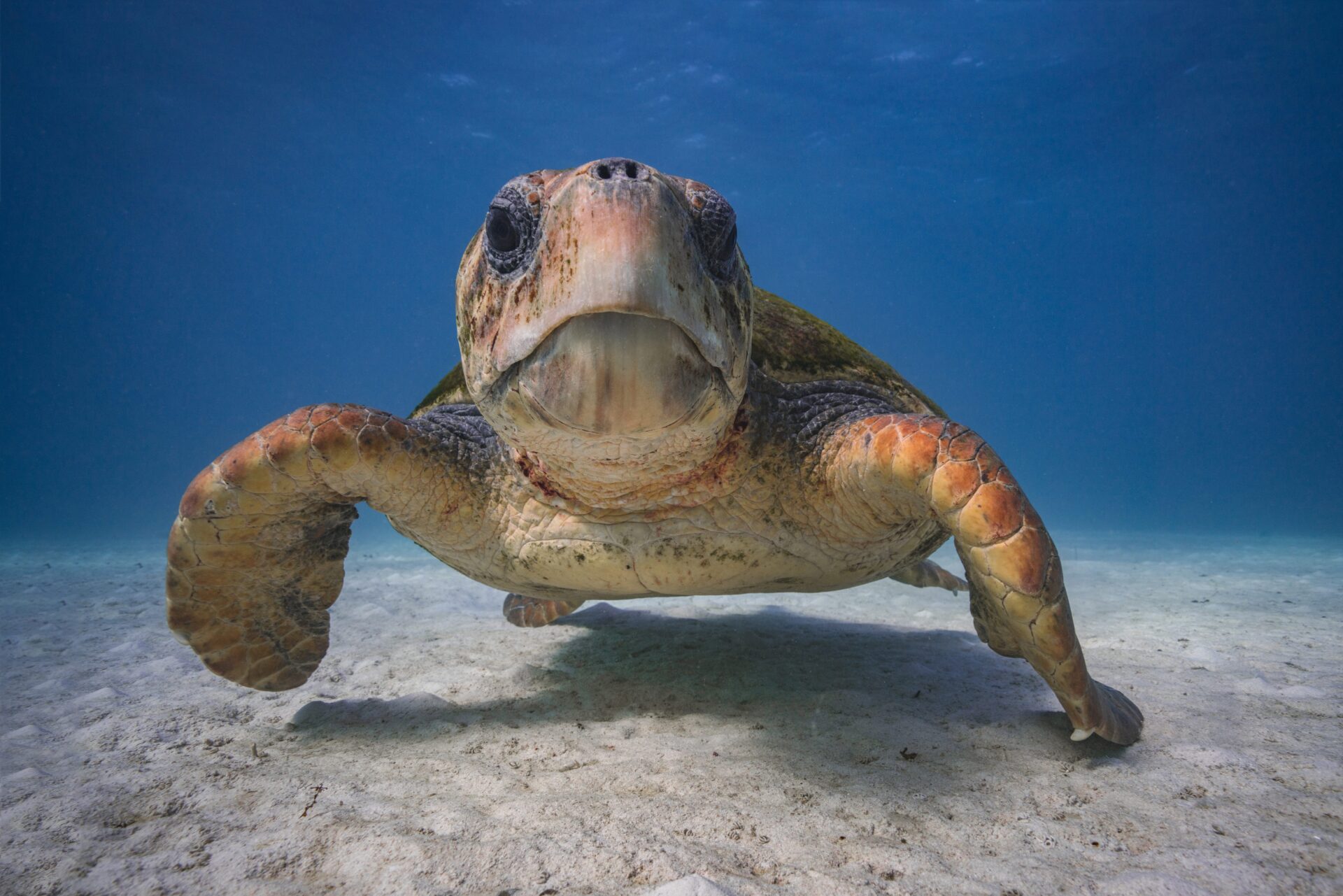
For loggerhead sea turtles, the consequences could be significant. In years of elevated water temperatures, scientists estimate that thousands of the animals move into southern California waters to feed. In cooler or average years, none are present at all. NOAA anticipates that El Niño conditions are likely to persist from June through to February 2027, driving further above-average warming as heated water pushes north from the equatorial Pacific – potentially drawing loggerheads into the region in unusually high numbers.
The Pacific Loggerhead Conservation Area, established in 2000, prohibits drift gillnet fishing across a 25,000-square-mile zone off California during June, July and August when warm conditions bring the turtles inshore. The swordfish drift gillnet fishery operates from 1 May to 31 January each year, though more than 90% of fishing activity typically takes place after mid-August. The conservation area was last activated in 2024.
Catherine Kilduff, a senior attorney at the Center for Biological Diversity, said the case for immediate action was now clear.
“Drift gillnets always wreak havoc on ocean life, but it’s especially critical they be pulled from California’s waters before endangered loggerheads arrive this summer,” she said. “Thankfully loggerheads have a built-in regulatory protection from these mile-long nets when ocean conditions bring the sea turtles to southern California to feed. Federal officials just need to establish the loggerheads’ conservation area, and they should do that immediately.”
The threat posed by drift gillnets extends well beyond sea turtles. The gear operates as a vast, near-invisible curtain in the water column, indiscriminately entangling whales, dolphins, seals, sea lions, sharks, and other ecologically significant fish alongside its target species of swordfish and thresher shark. For most animals caught, entanglement ends in drowning.
A broader legislative push to eliminate the practice is already underway. Under the Driftnet Modernization and Bycatch Reduction Act of 2022, NOAA Fisheries is required to phase out drift gillnet fishing gear entirely by the end of 2027.
Loggerhead sea turtles are among the greatest long-distance travellers of any sea turtle, with some individuals migrating more than 12,000 kilometres between nesting beaches. Those migrations bring them into contact with industrial fishing gear and conservationists argue the protections now in place must be enforced without delay.


"*" indicates required fields
Printed editions
Current issue
Back issues

Enjoy so much more from Oceanographic Magazine by becoming a subscriber.
A range of subscription options are available.
