Coral chorus: Scientists are building library of individual fish sounds
While it’s true that ecologists already use underwater sound recorders to monitor marine environments, capturing dense soundscapes filled with the thumps, pops, and snaps from shrimp and fish, they have lacked the ability to interpret these sounds to a species level.

Scientists are on the pathway to better understanding the sounds that individual fish species make – a task made all the more challenging by the hustle, bustle, and – yes – the noise, of a happy and healthy coral reef ecosystem. The trick? Combining underwater sound recording with 360° video technology.
If it sounds easy, it really isn’t.
While it’s true that ecologists already use underwater sound recorders to monitor marine environments, capturing dense soundscapes filled with the thumps, pops, and snaps from shrimp and fish, they have lacked the ability to interpret these sounds to a species level.
Reefs are, after all, crowded spaces filled with individuals from hundreds of species – very few of which have had sounds accurately attributed to them.
Now, researchers from the conservation technology non-profit FishEye Collaborative have teamed with those from Cornell University and Aalto University to develop a new tool that will do just that. What’s more is the findings have now been published in the British Ecological Society journal, Methods in Ecology and Evolution.
“When it comes to identifying sounds, the same biodiversity we aim to protect is also our greatest challenge,” said Dr Marc Dantzker, lead author of the research and executive director of FishEye Collaborative. “The diversity of fish sounds on a coral reef rivals that of birds in a rainforest. In the Caribbean alone, we estimate that over 700 fish species produce sounds.”
The tool itself has been dubbed an Omnidirectional Underwater Passive Acoustic Camera (or UPAC-360 for short) and it allows them to identify the sources of individual sounds before attributing them to 46 fish species from the coral reefs of Curaçao in the Caribbean.
Before the study, more than half of these species were never known to make sound.
In other news

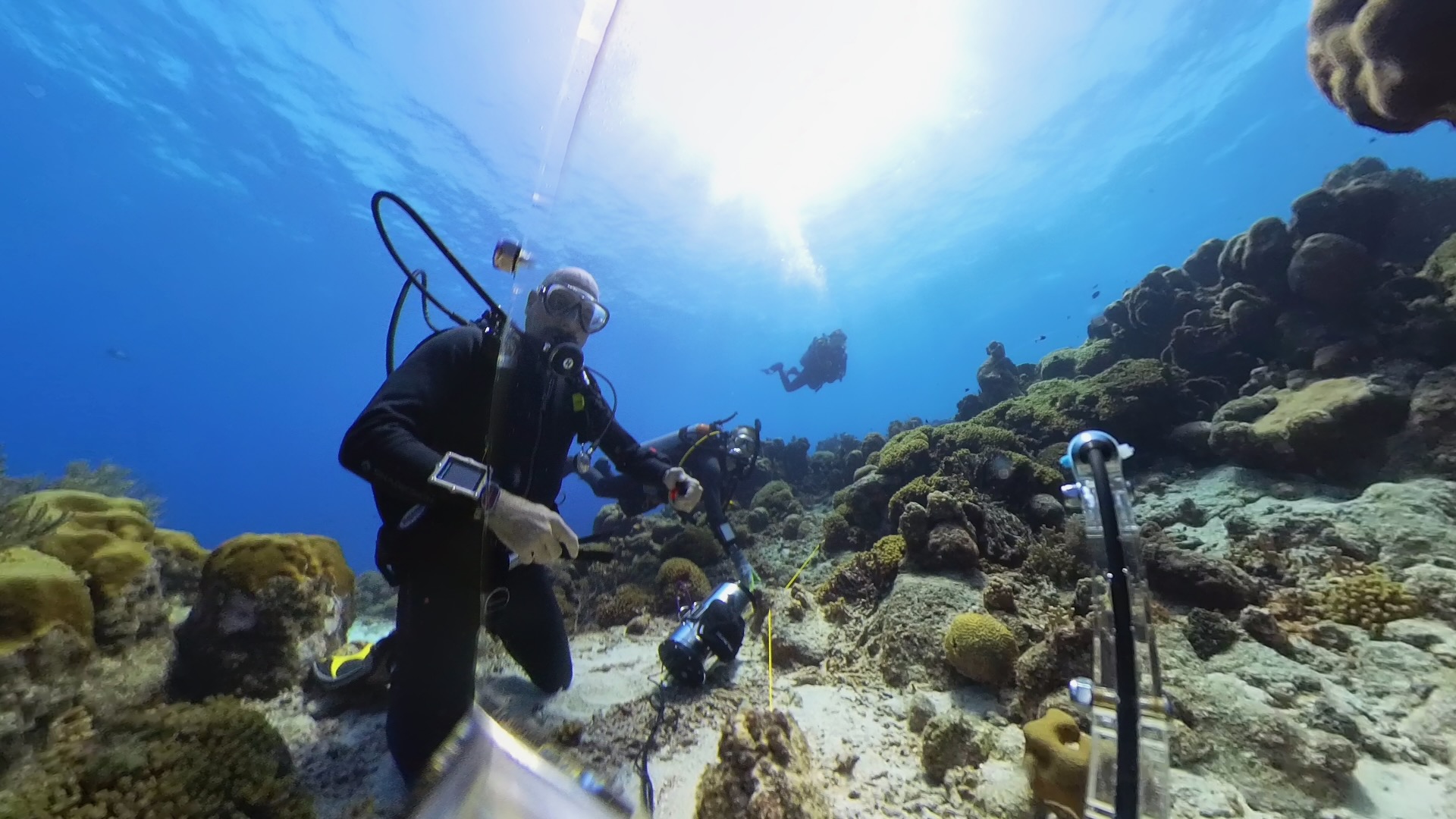
The research findings represent the most extensive collection of fish sounds ever published. That collection is still growing, and has been made available to everyone.
According to the team behind the project, these identified sounds can now be used to automatically train machine learning systems to detect fish species in underwater recordings – something similar to how birds can be identified through smartphone apps today, such as the Cornell Lab of Ornithology’s Merlin.
“We are a long way from being able to build ‘Merlin’ for the oceans, but the sounds are useful for scientists and conservationists right away,” says Dr Aaron Rice, a senior author of the study.
Dr Dantzker added that by identifying which species make which sounds, “we are making it possible to decode reef soundscapes, transforming acoustic monitoring into a powerful tool for ocean conservation.”
Another strength of the technology is that it can be placed in reefs and left to collect data without the need for a diver or boat to be present.
Dr Rice, a senior author of the study, said: “The fact that our recording system is put out in nature and can record for long periods of time means that we’re able to capture species’ behaviours and sounds that have never before been witnessed.”
Coral reefs are biodiversity hotspots. Shallow tropical coral reefs cover just 0.1% of the ocean floor but support 25% of all marine species. However, they’re suffering global declines caused by pressures including climate change, pollution, and unsustainable fishing.
The ability to effectively monitor these ecosystems is now more important than ever.
“These reefs are declining rapidly, threatening not just biodiversity, but also the food security and livelihoods of nearly a billion people who depend on them,” said Dr Dantzker.
“In response, governments and NGOs are investing billions in reef protection and restoration. That’s not enough, so we must ensure that we spend these limited funds effectively. We need to track how reefs are responding both to the stressors and the interventions.”
Matt Duggan, one of the study’s co-authors and a Ph.D candidate working on the project, added: ““Until now, the “loudest” species, like dolphins, whales, and snapping shrimp, have overshadowed the many other voices in the sea. By discovering the identity of these hidden voices, acoustics will become a powerful indicator of reef health and resilience, and a strategy to monitor wider and deeper.”
Although the results are the most extensive collection of such fish sounds ever published, they still represent a fraction of the total species in the reef. With this new technique, however, the door to decoding the whole reef has now been opened.


"*" indicates required fields
Printed editions
Current issue
Back issues


Enjoy so much more from Oceanographic Magazine by becoming a subscriber.
A range of subscription options are available.
