Coral cores reveal truth about record Sargassum in Atlantic
Each summer, sprawling mats of Sargassum seaweed drift across the tropical Atlantic, washing ashore in vast heaps that choke Caribbean coastlines, repel tourists, and smother coastal ecosystems. Yet in the open ocean, these golden-brown rafts are vital.

Each summer, sprawling mats of Sargassum seaweed drift across the tropical Atlantic, washing ashore in vast heaps that choke Caribbean coastlines, repel tourists, and smother fragile coastal ecosystems. Yet in the open ocean, these golden-brown rafts are vital – providing food and refuge for fish, crabs, turtles, and countless other marine creatures.
Now, new research led by the Max Planck Institute for Chemistry has uncovered a crucial piece of the puzzle driving this oceanic phenomenon, and one that may reshape how scientists forecast Sargassum events in the future.
By early June this year, satellite data estimated nearly 38 million tons of Sargassum drifting toward the Caribbean, the Gulf of Mexico, and northern South America – the largest bloom ever recorded. These “Great Atlantic Sargassum Belts,” first observed in 2011, have grown in size and frequency, transforming once-clear tropical waters into murky, algal slicks that stretch for thousands of kilometres.
For years, scientists pointed to deforestation, agricultural runoff, and Saharan dust as possible nutrient sources fuelling this explosive growth. But none could fully explain the dramatic increase in biomass over the past decade.
To unravel the mystery, researchers turned to an unexpected archive – Caribbean corals. Like trees, corals record environmental changes in their growth layers. By analysing nitrogen isotopes preserved in coral skeletons spanning the past 120 years, the team reconstructed long-term trends in nitrogen fixation – the process by which certain bacteria convert atmospheric nitrogen into a form usable by marine life.
Their results, published in Nature Geoscience, revealed two striking peaks in nitrogen fixation during 2015 and 2018 – the same years that Sargassum blooms reached record levels. The connection was unmistakable: since 2011, nitrogen fixation and Sargassum biomass have risen and fallen in lockstep.
In other news

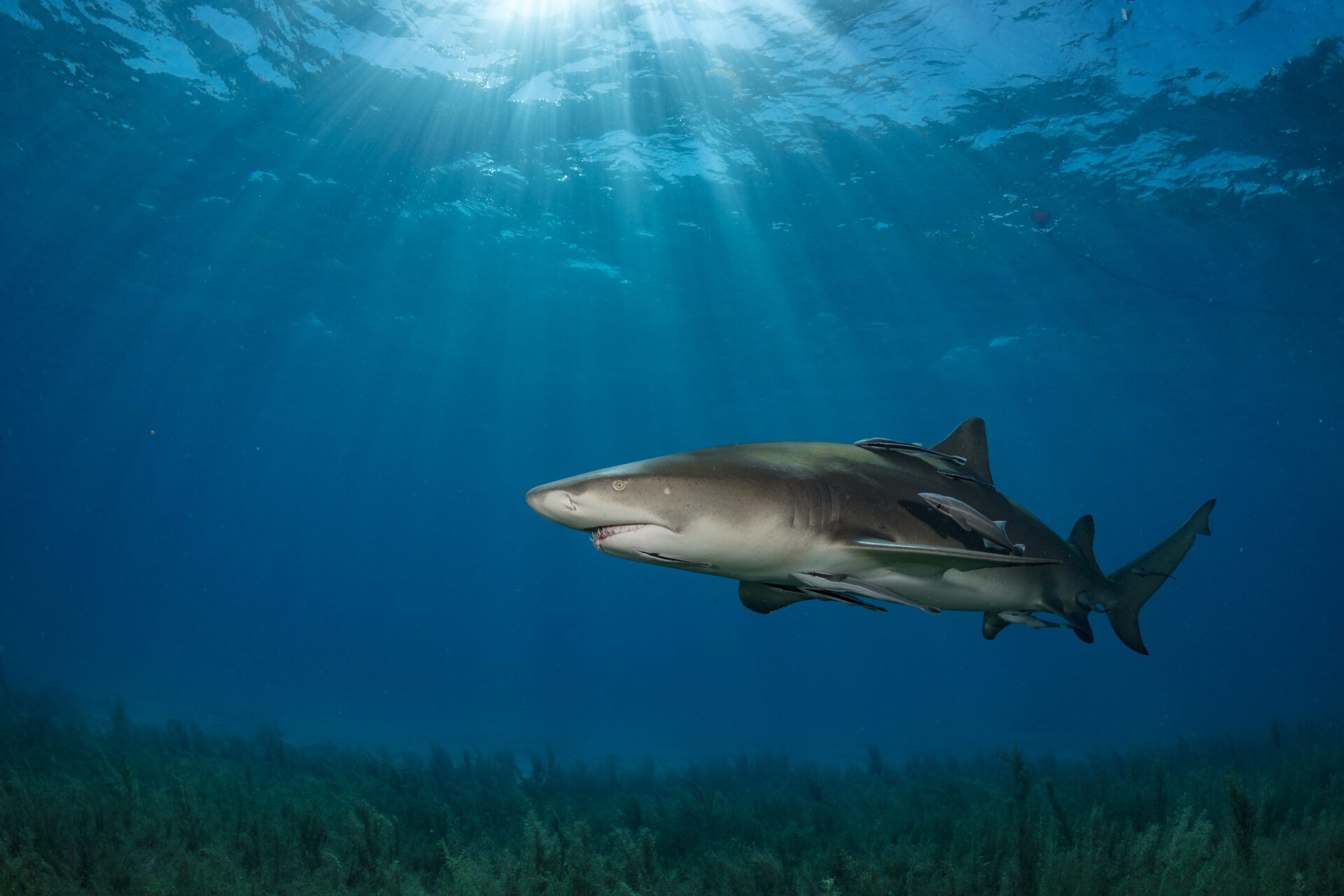
The key, researchers found, lies in a symbiotic relationship between Sargassum and nitrogen-fixing cyanobacteria that live on its surface. When phosphorus-rich deep waters are brought to the surface by strong equatorial winds – a process known as upwelling – cyanobacteria thrive. In turn, these microbes supply the algae with nitrogen in the otherwise nutrient-poor tropical Atlantic.
“This symbiosis gives Sargassum a clear competitive edge,” said Jonathan Jung, lead author and doctoral researcher at the Max Planck Institute for Chemistry. “It explains why the algae can expand so rapidly, even in regions where other species struggle to grow.”
By ruling out alternative nutrient sources, such as Saharan dust and river discharge from the Amazon and Orinoco, the team concluded that phosphorus upwelling – amplified by shifting wind patterns and sea-surface temperatures – is the dominant trigger for recent bloom events.
It’s thought that these findings could now open the door to predictive models that link Sargassum growth to large-scale climatic patterns. Cooler sea-surface temperatures in the tropical North Atlantic, paired with warmer conditions to the south, alter air pressure and wind systems, enhancing the upwelling of nutrient-rich waters.
“Monitoring these atmospheric and oceanic changes will allow us to anticipate major Sargassum events months in advance,” said senior author Alfredo Martínez-García, who leads the Marine Geochemistry group in Mainz. “Understanding the deep-sea nutrient supply is essential if we want to forecast – and eventually mitigate – the coastal impacts.”
The team is now expanding its coral-based analyses across multiple Caribbean sites to refine their reconstruction of historical nutrient cycles. These new records, they hope, will reveal how global warming might alter upwelling patterns and, in turn, the future of Sargassum in the Atlantic.
“Our mechanism explains the variability of Sargassum growth better than any previous model,” said Jung. “But the story is still evolving – and the ocean always keeps a few secrets.”


"*" indicates required fields
Printed editions
Current issue
Back issues
Enjoy so much more from Oceanographic Magazine by becoming a subscriber.
A range of subscription options are available.