Ecosystem collapse a security threat, so where is the ocean?
A new report from Defra has finally identified wide scale ecosystem collapse as the national and international security threat that it is, citing fragilities in food security, displacement, and environmental fallout. But the report still makes little mention of the ocean.

A newly released assessment making clear in no uncertain terms that the rapid loss of biodiversity across the globe is both a national and international security emergency has been welcomed as a critical chance to shift our understanding of ecological degradation, if governments – and not least the UK’s own – can take the swift and direct action required.
Silently launched last week, the report has been framed using the same analytical tools applied to military and geopolitical threats, concluding that global ecosystem collapse poses a serious risk to UK food security, economic stability, and international security.
It strongly echoes sentiments that were raised at the end of last year when leading voices in UK conservation action and environmental science called together a national emergency briefing in London, of which some 150 members of Parliament were in attendance.
For marine conservationists, the publication of the report last week is a welcome development and a chance to shine some much-needed light on an issue growing more severe by the day, yet one that exposes some major gaps in how the ocean is treated within national security thinking.
“It’s positive that it has been published. I think it’s a very stark assessment which obviously shows that global biodiversity loss and ecosystem collapse are heading our way,” said Sophie Benbow, director of marine at the international NGO, Fauna & Flora. “So, if governments – like the UK and beyond actually acknowledge and recognise that, then it has the potential for positive change. But the ocean is not well represented in the report.”
That omission, says Benbow, is a missed opportunity at a moment when marine ecosystems are increasingly central to climate stability, food systems and geopolitical risk.
The assessment does lay out – and in relative detail – how ecosystem degradation, from rainforest collapse to the loss of coral reefs and mangroves – could amplify global instability through food shortages, displacement, disease and economic shocks. But while it acknowledges the ocean as a site of risk, critics argue it stops short of outlining how marine systems could form part of the solution.

In other news
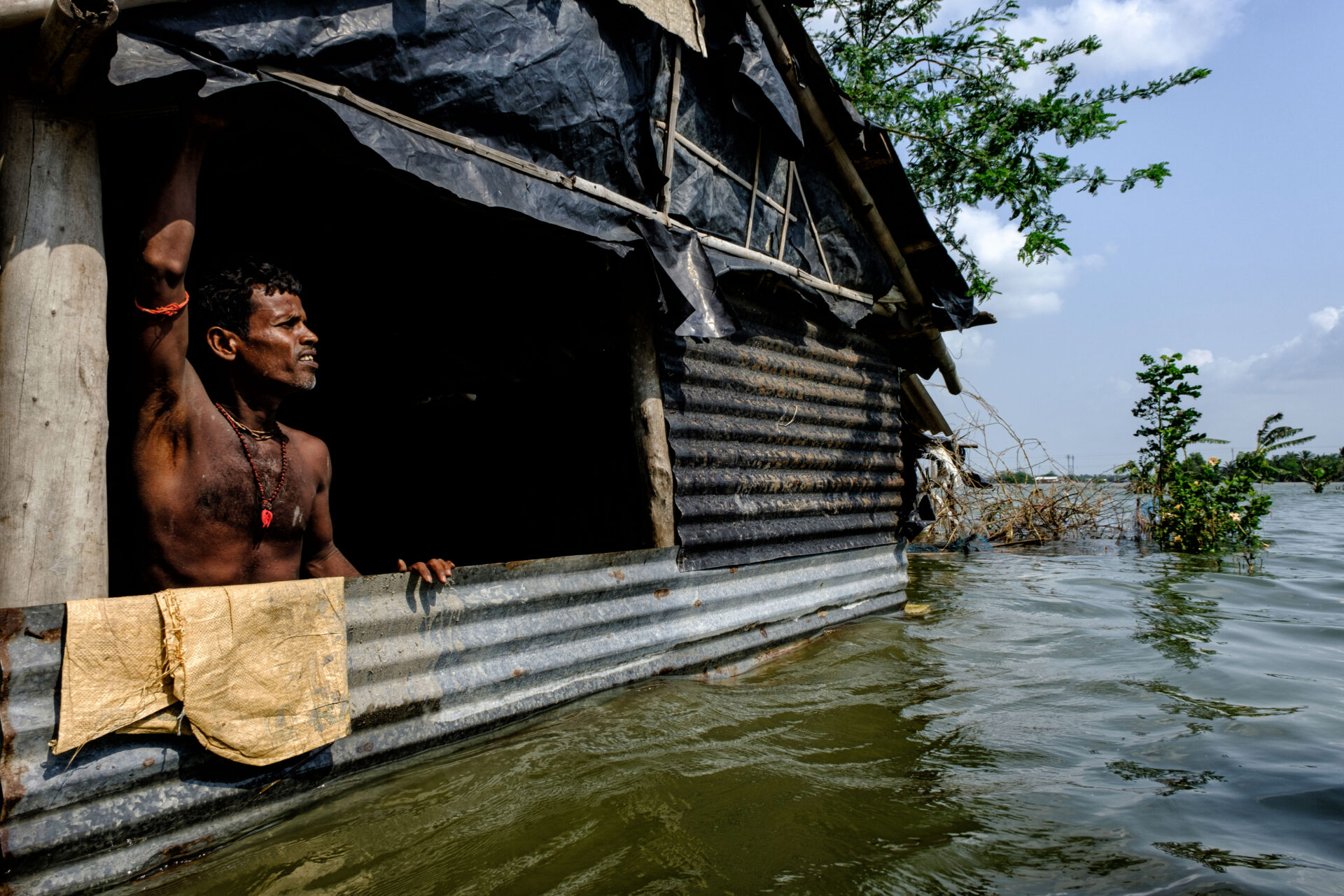
Drawing on evidence from climate science, ecology, economics, and security analysis, the report finds that every major global ecosystem is already degrading, with many approaching thresholds beyond which they may no longer function or recover on human timescales.
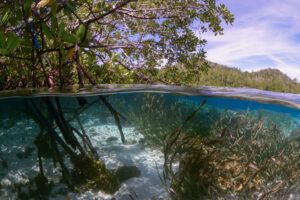
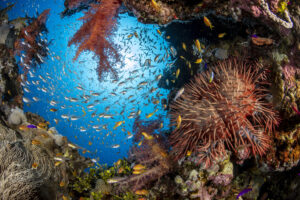
Particular concern is directed at ecosystems that combine exceptional biodiversity with a central role in regulating the Earth system, including the Amazon and Congo rainforests, boreal forests, the Himalayan “water towers”, and the coral reefs and mangroves of South East Asia.
Disruption or collapse across these regions would trigger cascading impacts – intensifying water stress, crop failures, coastal flooding, fisheries loss, disease spread, carbon release, and shifts in global weather patterns.
Crucially, the assessment makes clear that the UK is not insulated from these dynamics. Current food systems depend heavily on imported food, feed, fertilisers, and other critical inputs. As ecosystems deteriorate and competition for resources intensifies, the report cautions that without major investment in resilience the UK will struggle to maintain both food security and economic stability.
The risks extend well beyond agriculture. Ecosystem degradation is amplifying floods, droughts, heatwaves, and wildfires, undermining public health and contributing to displacement, economic shocks, and geopolitical instability.
Yet, the role the ocean plays has still not been taken into consideration. Earlier this month, scientists – for the first time – factored climate-driven damage to the ocean into the social cost of carbon, underscoring the extent of the role the ocean plays in buffering environmental damage and the scale to which it has been overlooked.
Unlike climate policy, which has clearer cross-departmental coordination, responsibility for the ocean in the UK is scattered across government.
“There isn’t a single ministry or government department that leads on all things ocean,” said Benbow. “You have a protected area group, the fisheries group, the blue economy group, and it’s clear that they are not always talking to each other.”
According to Benbow, this fragmentation undermines the UK’s ability to treat the ocean as strategic infrastructure – despite its role in carbon storage, food production, coastal protection and climate regulation.
“We need a clear and strategic approach to how cross-departmental ocean policy can come together in a more holistic approach to understanding how the ocean can and should be a part of the solution.”
The issue is, the UK has frequently positioned itself internationally as an “ocean champion”, yet Benbow argues that domestic action rarely – if ever – matches the rhetoric.
“The UK likes to call itself an ‘ocean champion’ But Defra hasn’t taken the opportunity to showcase how the ocean should be part of the solution and how the crises that we’re facing are impacting the ocean as well,” she said.
While the report flags the loss of mangroves and seagrass in Asia as a security risk, it largely avoids examining how UK marine policy could be reformed to deliver similar protections at home. It hasn’t escaped anyone’s notice that the UK is still to ratify the High Seas Treaty, despite having announced its intention more than six months ago.
“We permit destructive fishing activity in many of our marine protected areas and we aren’t really on track to meet the 30×30 commitment in any meaningful way, either,” said Benbow.
Despite these obvious shortcomings, Benbow sees the report as a strong evidence base – one that could be used to justify more ambitious regulation and reform if political will follows.
“I would like to see the UK government take this report from Defra – which is a sound, evidence based assessment – and use that in supporting, changing, and bringing in regulation or legislation that can actually make the changes that we need to see.”
Such changes are becoming increasingly urgent as climate-driven shifts in marine ecosystems are already being observed around UK waters. Around the British and European coastlines, fish populations have been in a state of critical flux, while the return of bluefin tuna off the Cornish coast alongside the – now official – explosion in common octopus – are reshaping both fisheries and livelihoods.
For NGOs and environmental organisations across the UK and globally, the challenge now is not making the public more aware, there is a growing consensus that public awareness is already heightened. The issue is in driving the political courage to bring about lasting and effective change.
“We should help the governments to make the changes that don’t just bring them votes because the general public is more aware than that,” said Benbow. “We need to strike this balance between the government’s economic priorities and this global emergency.”
As the UK’s own security assessment now makes clear, ecosystem collapse is no longer a distant environmental concern. Whether the ocean is fully integrated into the national response may determine how resilient – or exposed – the country proves to be in the decades ahead.


"*" indicates required fields
Printed editions
Current issue
Back issues


Enjoy so much more from Oceanographic Magazine by becoming a subscriber.
A range of subscription options are available.
