Elusive no longer? Stingray tracking sees transformation
While biologging has been previously applied to marine species like turtles and sharks, others such as skates and stingrays have so far been overlooked - an oversight that has raised some levels of concern among many marine scientists.

A new and non-invasive method of tracking animals in the wild is transforming the way scientists study movement, behaviour, and social interactions between skates and stingrays, and proving a crucial piece of the puzzle in better protecting some of the most critically endangered species.
It’s called ‘biologging’ and although it’s been around for some time and widely applied to marine species such as turtles and sharks, other species such as skates and stingrays have so far been overlooked. It’s an oversight that has raised some levels of concern among scientists.
Batoid species – like skates and rays – play critical roles in marine food webs, yet they are increasingly at risk of extinction. Meanwhile, their behaviour remains poorly understood largely because studying them in the wild has – so far – been challenging.
Unlike sharks, the unique body shape of a ray – as well as its lack of prominent dorsal fins and its ultra smooth skin – has often made it too difficult to attach tracking devices securely. But, researchers from Florida Atlantic University’s Harbour Branch Oceanographic Institute have found a way, becoming the first to successfully develop and field-test a multi-sensor biologging tag on the elusive whitespotted eagle ray (Aetobatus narinari).
A species found in tropical and subtropical coastal waters, the whitespotted eagle ray feeds primarily on hard-shelled prey such as clams and conch, can grow to as much a two metres in wingspan, and weigh several hundred kilograms. Although known for long-distance migrations, they often linger in coastal habitats and lagoons – which makes them an ideal candidate to test new and emerging biologging technology.
It’s with an innovative design therefore that these new tags have been able to remain securely attached to the species, even in strong currents. It’s resulted in the longest documented attachment times for external tags on pelagic rays – with some lasting up to 60 hours.
With the study’s findings now published in the journal Animal Biotelemetry, this is the first time a biologging system like this has been successfully used on a stingray species that feeds on hard-shelled prey.
In other news


“These animals are powerful, fast-moving, and live on dynamic high-energy environments, which makes tagging them a real challenge,” said Matt Ajemian, Ph.D, senior author and an associate research professor and director of the Fisheries Ecology and Conservation Lab (FEC) at FAU Harbor Branch. “Our goal was to create a system that could be applied in seconds, stay on during natural behaviours, and collect rich, multi-dimensional data.
“We’re now able to observe not just where these rays go, but how they feed, how they move through their habitats, and how they interact with other species – insights that were virtually impossible to capture before.”
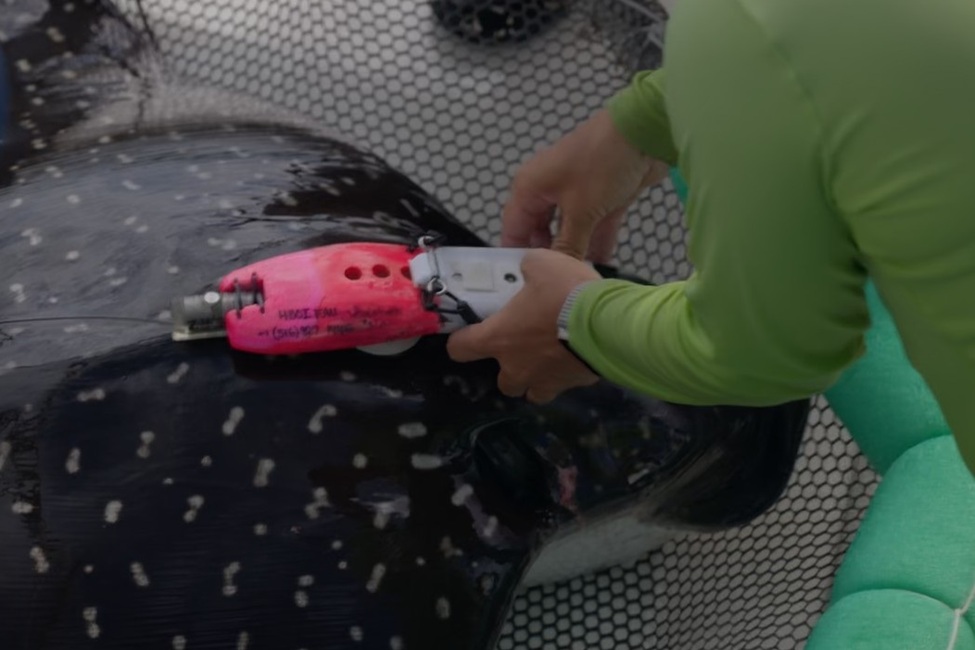
The custom-built tag integrates motion sensor, video camera, underwater microphone, satellite transmitter, and acoustic tracker with a fast ‘minimally-invasive attachment system’ that makes use of silicone suction cups and specially designed straps secured near the ray’s spiracles.
It’s a design that could just mark a turning point in the study of elusive marine species such as pelagic rays.
“We’ve shown that complex behaviours – like the crunching of clams – can be identified using sound and movement data alone, even without video. This opens up exciting possibilities for long-term ecological monitoring using simpler, more efficient tags,” said Cecilia M Hampton, corresponding author and Ph.D student in the FEC lab at FAU Harbor Branch.
“It’s not just about observing feeding – we’re beginning to map out entire behavioural landscapes, from foraging strategies to social dynamics. These insights are vital for understanding how rays respond to environmental change and how best to protect them.”
Looking ahead, the researchers say their tagging system could be adapted to other ray species, with slight modifications to account for differences in body size and spiracle shape.
“As biologging technologies advance, combining data streams like movement, sound, and video – and applying machine learning for behavioural classification – could turn rays into mobile surveyors of ocean health and benthic habitats,” said Ajemian.


"*" indicates required fields
Printed editions
Current issue
Back issues
Enjoy so much more from Oceanographic Magazine by becoming a subscriber.
A range of subscription options are available.
