Fungi at the plastic party: Researchers find microplastic munching microbes
Researchers at the University of Hawaii have made an exciting discovery which could help tackle plastic pollution in the ocean: Fungi with plastic degradation superpowers. And some, they argue, can even be trained to do it faster.

Our oceans are littered with plastic particles, some smaller than tiny grains of sand, and the impact of this pollution has become increasingly apparent. Not only have microplastics – particles smaller than 5mm in size – been detected in the air, soil, water and our bloodstreams, but they’ve also recently been found in the placentas and blood of fetuses, raising concern about their impact on our health.
While plastics are cheap and have some benefits for consumers, they don’t decompose and merely break down into microplastics.
According to the Ellen MacArthur Foundation, there could be more plastic in the ocean than fish by 2050, while the amount of plastic particles in the ocean is expected to double in the next 15 years. This is expected to have devastating impact on marine species, as well as human health.
To tackle this crisis, researchers are tirelessly working to find solutions, and researchers at the University of Hawai‘i at Mānoa have now made an exciting discovery. They found that many fungi species that can be found in Hawai’i nearshore environment have the ability to degrade plastic. And some, they argue, can even be trained to do it faster.
“Plastic in the environment today is extremely long-lived, and is nearly impossible to degrade using existing technologies,” said Ronja Steinbach, who led this research as a marine biology undergraduate student in the UH Mānoa College of Natural Sciences.
“Our research highlights marine fungi as a promising and largely untapped group to investigate for new ways to recycle and remove plastic from nature. Very few people study fungi in the ocean, and we estimated that fewer than one percent of marine fungi are currently described.”
A variety of microbes, including bacteria and terrestrial fungi, have already been found to degrade plastics in the past and researchers hope they’ll be able to scale up this biotechnology in the near future. The team of researchers from the UH Mānoa School of Ocean and Earth Science and Technology (SOEST) focused their attention on their large collection of fungi they isolated from sand, seaweed, corals, and sponges in Hawai’i’s nearshore.
“Fungi possess a superpower for eating things that other organisms can’t digest (like wood, or chitin), so we tested the fungi in our collection for their ability to digest plastic,” said Anthony Amend, Pacific Biosciences Research Center professor, who leads the lab where the new fungi research was conducted.
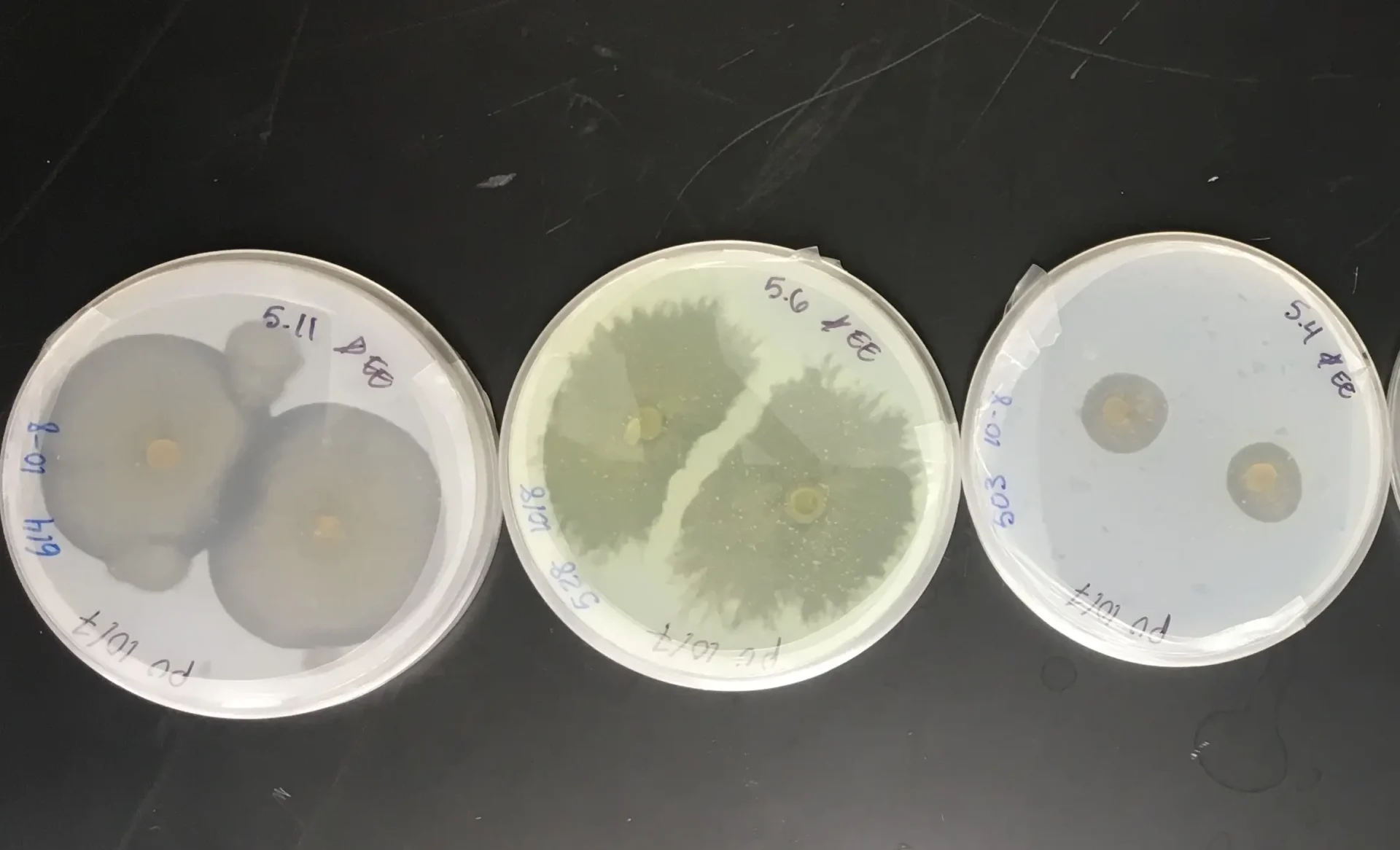
The team filled small Petri dishes with a common plastic, called polyurethane, and measured whether and how fast the fungi consumed plastic.
“We were shocked to find that more than 60% of the fungi we collected from the ocean had some ability to eat plastic and transform it into fungi,” said Steinbach.
“We were also impressed to see how quickly fungi were able to adapt. It was very exciting to see that in just three months, a relatively short amount of time, some of the fungi were able to increase their feeding rates by as much as 15%.”
The researchers thus were able to ‘train’ the microbes that grew the fastest to transform plastic into fungi quicker. Over time, with greater exposure to the polyurethane, the fungi adapted to eat plastic faster and more efficiently.
In other news


The exciting research will now be expanded to test whether the tested microbes or other types of fungi can eat plastics that are harder to degrade. The researchers are also trying to find out – at a cell and molecular level – how these magic microbes degrade these compounds exactly.
“We hope to collaborate with engineers, chemists, and oceanographers who can leverage these findings into actual solutions to clean up our beaches and oceans,” added Steinbach.


"*" indicates required fields
Printed editions
Current issue
Back issues
Enjoy so much more from Oceanographic Magazine by becoming a subscriber.
A range of subscription options are available.
