Is Cook Inlet's industrial noise costing beluga's their young?
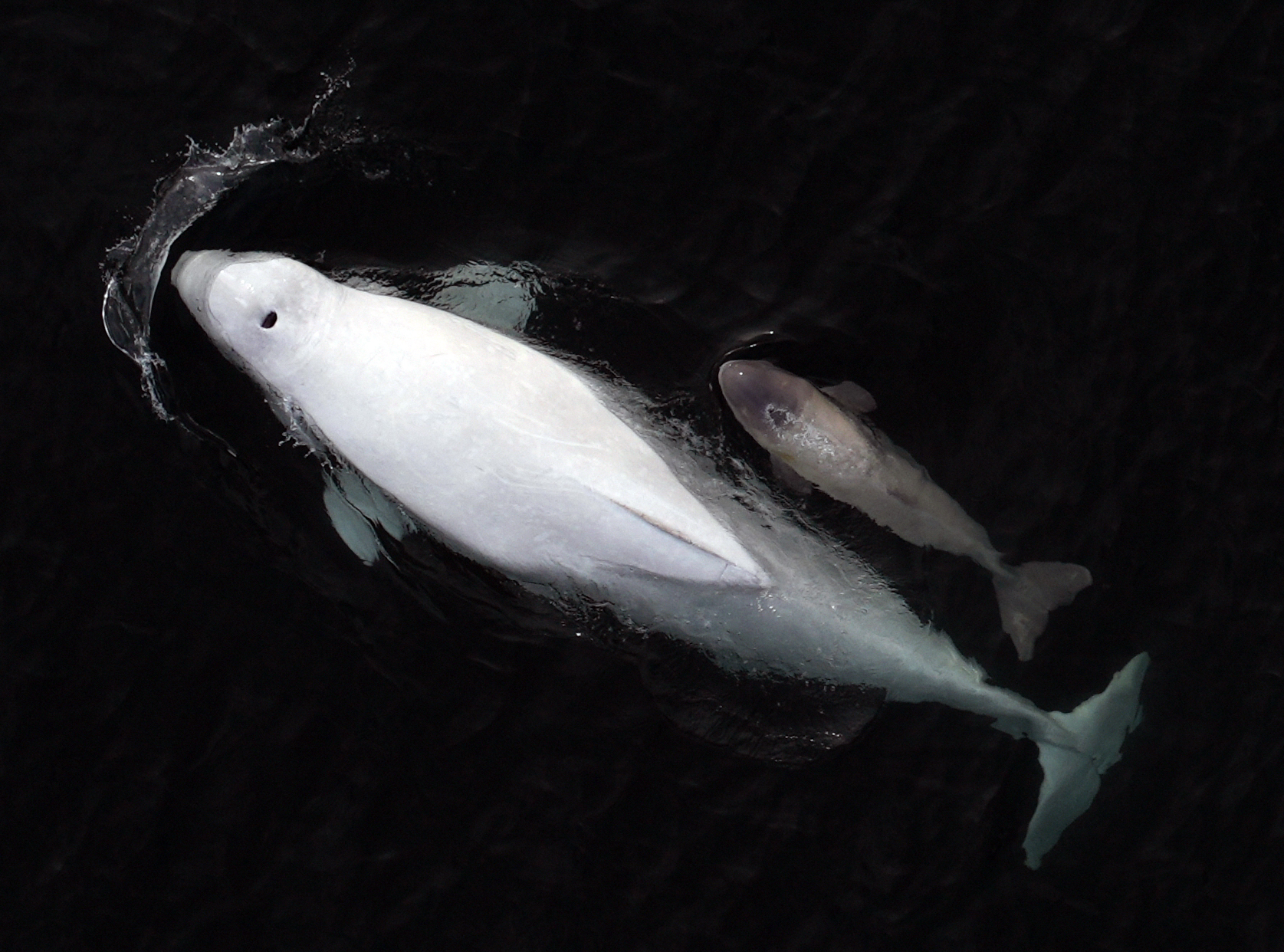
New research reveals that Cook Inlet's dwindling beluga population relies on specific calls to keep mothers and calves in contact - calls that are routinely masked by commercial shipping noise in their primary foraging grounds.
New strides made towards decoding the calls of one of the world’s most endangered beluga populations has found that industrial noise is likely to be disrupting the communications that whales around Alaska’s Cook Inlet rely on for survival.
In the late 1970s, nearly 1,300 beluga whales moved through the waters of Alaska’s Cook Inlet. Today, fewer than 300 remain. Despite almost two decades of recovery efforts, the population has refused to rebound, indicating a web of pressures still to be understood.
One of those pressures is noise. A new study from the University of Washington, published in Behavioral Ecology and Sociobiology, recorded more than 1,700 calls across 21 distinct behavioural encounters, mapping the social and environmental contexts in which different call types are produced. According to those researchers, these findings have been both illuminating and – in places – deeply concerning.
“We knew that human-generated noise was masking their calls, but we didn’t know what those calls were used for,” said Arial Brewer, a doctoral student in aquatic and fishery sciences at the University of Washington and lead author of the study.
“This study gave us important insights into the world of beluga communication and how it is disrupted by industry and development.”
Among the most significant findings is the identification of a specific call type – a combined call – that Cook Inlet belugas produce when calves are present. Researchers believe that this is, in all likelihood, how mothers and calves maintain contact in waters where visibility is almost zero.
Critically, an earlier study conducted in 2023 found these combined calls are precisely the type most reliably drowned out by commercial shipping noise.
“We don’t have the data to directly connect noise and calf separation,” said Brewer. “But if a mother whale can’t acoustically keep in contact with her calf, that could be a huge problem.”

In other news


The study also found that call rates increased immediately before a behavioural transition – a shift from socialising to travelling, for instance – suggesting the whales coordinate movements through sound. Calling also increased as the tide came in, and individual call rates decreased in larger groups, hinting at a form of acoustic etiquette among the whales.
Cook Inlet is one of the most industrially active stretches of water in Alaska. The whales’ primary foraging grounds for salmon sit in close proximity to Anchorage’s airport, the Port of Alaska and a military base. These are – unsurprisingly – the same areas generating the most noise.
“Their main foraging hot spots for salmon are in the northern part of the inlet, near Anchorage, and in close proximity to the airport, the Port of Alaska, and the military base. I think there are ways to adapt but it’s tricky for them and noise pollution is far from the only threat,” said Brewer.
“The Port of Alaska could explore similar strategies to mitigate the impact of industry. We can’t halt shipping, but we’re trying to understand what we can do to manage these critical habitats, especially when the animals are nearby.”
In Puget Sound, large commercial vessels are already asked to slow when Southern Resident killer whales are nearby – a programme introduced after research showed shipping noise was interfering with the whales’ ability to hunt. The researchers suggest the Port of Alaska could explore comparable measures for Cook Inlet.
For a population this small and this slow to recover, the stakes are high. Beluga whales are long-lived and slow to reproduce. If shipping noise is disrupting the mother-calf bond – even if only occasionally – it represents a pressure that conventional recovery efforts may be failing to account for.


"*" indicates required fields
Printed editions
Current issue
Back issues

Enjoy so much more from Oceanographic Magazine by becoming a subscriber.
A range of subscription options are available.
