Marine protection boosts heatwave recovery for kelp forests
Marine Protected Areas can boost the recovery of globally important kelp forests following marine heatwaves, offering weight to the argument for marine protection as a means of supporting ecosystem resilience to climate change.

Marine Protected Areas can boost the recovery of globally important kelp forests following marine heatwaves, offering yet more weight to the argument for marine protection as a means of supporting ecosystem resilience in the face of climate change.
Using four decades of satellite images, researchers from the University of California, Los Angeles (UCLA) have looked into the impacts Marine Protected Areas are having on kelp forests along the coast of California.
They found that although the overall effect of Marine Protected Areas (MPAs) on kelp cover was modest, the benefits became clear in the aftermath of marine heatwaves in 2014 to 2016, when kelp forests within MPAs were able to recover more quickly, particularly in southern California.
“We found that kelp forests inside MPAs showed better recovery after a major climate disturbance compared to similar unprotected areas,” explained Emelly Ortiz-Villa, lead author of the study and a PhD researcher at UCLA Department of Geography.
“Places where fishing is restricted and important predators like lobsters and sheephead are protected saw stronger kelp regrowth. This suggests that MPAs can support ecosystem resilience to climate events like marine heatwaves.”
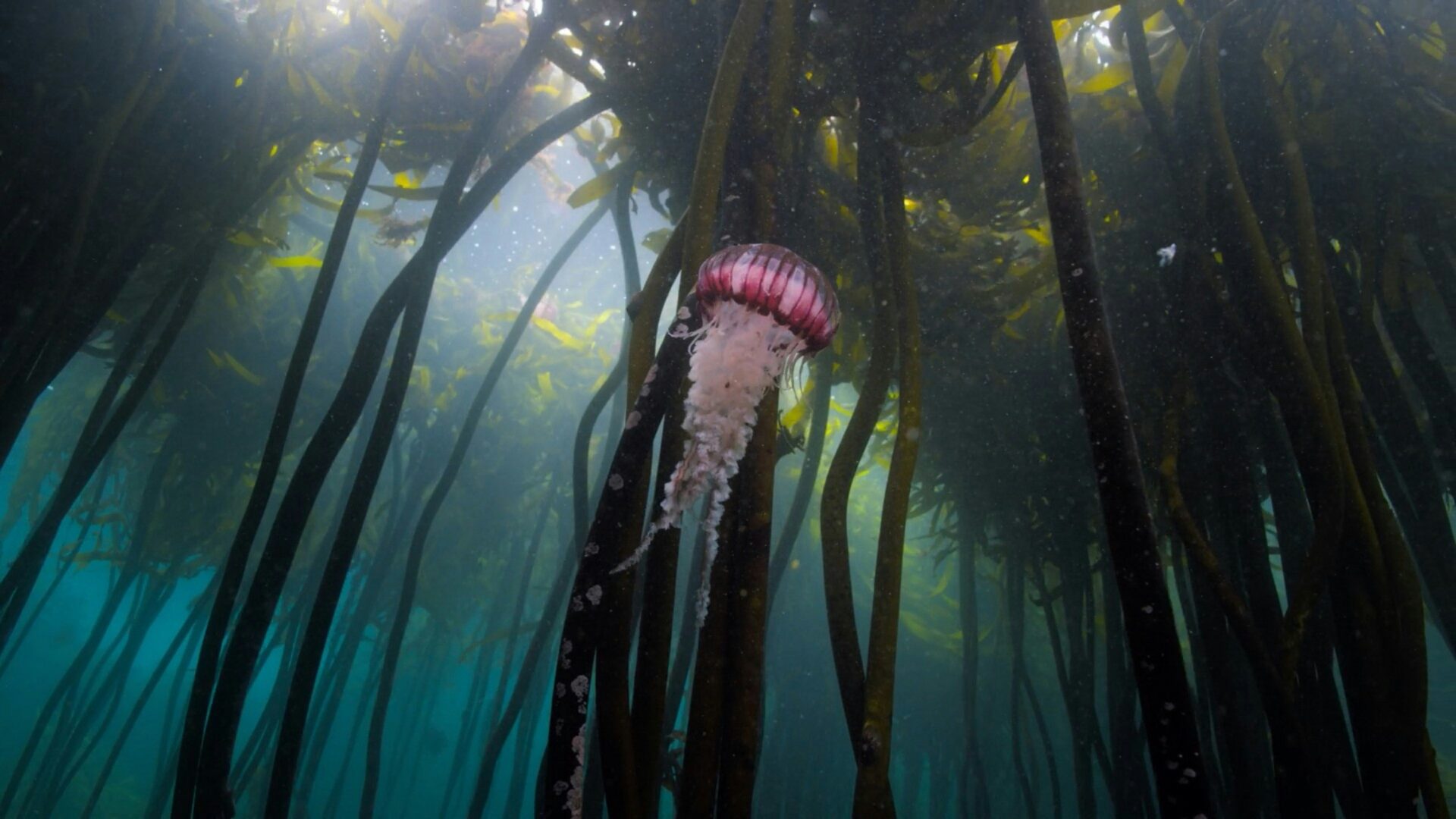
Kelp forests are found around coastlines all over the world, particularly in cool, temperate waters such as the pacific coast of North America, the UK, South Africa, and Australia. They are havens for marine wildlife, including commercially important fish, and are one of the most productive habitats on Earth. They are also efficient in capturing carbon and protecting coastlines by buffering against wave energy.
However, kelp forests across the west coast of North America have declined in recent years due to pressures such as marine heatwaves, made more frequent and intense with climate change, and predation from increasing numbers of sea urchins, which have benefitting from population collapses of sea stars, which predate them.
In other news

Professor Rick Stafford, chair of the British Ecological Society Policy Committee, who was not involved in the study, said: “It’s great to see these results and they clearly show that local action to protect biodiversity and ecosystem function can help prevent changes caused by global pressures such as climate change.
“However, it also demonstrates the need for effective MPAs. In this study, all the MPAs examined regulated fishing activity, and this is not the case for many sites which are designated as MPAs worldwide – including many in the UK.”
MPAs are designated areas of the ocean where human activity is limited to support ecosystems and the species living there. These protections vary widely and while some areas are no-take zones, others have few restrictions or lack comprehensive management and enforcement. Many even allow destructive practices like bottom trawling.
To understand the effects MPAs were having on kelp, the researchers used satellite data from 1984 to 2022 to compare kelp forests inside and outside of 54 MPAs along the California coast. By matching each MPA with a reference site with similar environmental conditions, they were able to test whether MPAs helped kelp forests resist loss or recover from extreme marine heatwaves which took place in the North Pacific between 2014 and 2016.
“Our findings suggest that kelp forests could be a useful indicator for tracking the ecological health and climate resilience of protected areas and should be included in long-term monitoring strategies,” said Emelly Villa.
Kyle Cavanaugh, a senior author of the study and professor in the UCLA Department of Geography and Institute of the Environment and Sustainability, said: “Kelp forests are facing many threats, including ocean warming, overgrazing, and pollution. These forests can be remarkable resilient to individual stressors, but multi-stressor situations can overwhelm their capacity to recover. By mitigating certain stressors, MPAs can help enhance the resilience of kelp.
“Our findings can inform decisions about where to establish new MPAs or implement other spatial protection measures. MPAs will be most effective when located in areas that are inherently more resilient to ocean warming, such as regions with localised upwelling or kelp populations with higher thermal tolerance.”
The paper – entitled ‘Marine protected areas enhance climate resilience to severe marine heatwaves for kelp forests‘ – has been published in the Journal of Applied Ecology.


"*" indicates required fields
Printed editions
Current issue
Back issues



Enjoy so much more from Oceanographic Magazine by becoming a subscriber.
A range of subscription options are available.
