New study splits West Coast killer whales into two populations
West Coast transient killer whales - long known as the stealthy, mammal-hunting cousins of the more famous resident orcas - are not one cohesive population but, in fact, two distinct subpopulations: inner and outer coast transients.

New research has redrawn the social and ecological map of one of the Pacific’s most enigmatic predators. West Coast transient killer whales – long known as the stealthy, mammal-hunting cousins of the more famous resident orcas – are not one cohesive population after all. A 16-year study has revealed they are in fact two distinct subpopulations: inner and outer coast transients.
The findings, published this week in PLOS One, are based on more than 2,200 carefully documented encounters stretching from British Columbia to California. Together, they challenge long-held assumptions about the lives and movements of these powerful apex predators.
“I’ve been thinking about this possibility for 15 years,” said marine ecologist Josh McInnes, lead author of the study and researcher at the University of British Columbia’s Institute for the Oceans and Fisheries (IOF). “Now we can say with confidence that the West Coast transients are split along an east-west divide. They eat different things, hunt in different areas, and very rarely spend time with one another.”
The research team paints a vivid picture of two ways of life shaped by geography and prey. The inner coast transients – around 350 animals – frequent nearshore inlets, bays, and sheltered waterways, often within six kilometres of land. Their diet leans toward smaller marine mammals such as harbour seals and harbour porpoises. They travel in tight-knit pods, usually five or so individuals, navigating the maze of the Salish Sea like urban commuters.
“They’re like city dwellers,” said IOF professor and study co-author Dr. Andrew Trites, who directs UBC’s Marine Mammal Research Unit. “They’re experts at manoeuvring through busy, complex environments.”
By contrast, the outer coast transients – roughly 210 strong – roam the deep blue edges of the continental shelf, often venturing 120 kilometres offshore. They patrol submarine canyons and open waters, targeting larger prey such as California sea lions, northern elephant seals, Pacific white-sided dolphins, and even grey whale calves. Their hunting groups are larger too, averaging nine individuals.
“The outer coast whales are more like backcountry explorers,” said Trites. “They thrive in the rugged wilderness of the open ocean.”
In other news

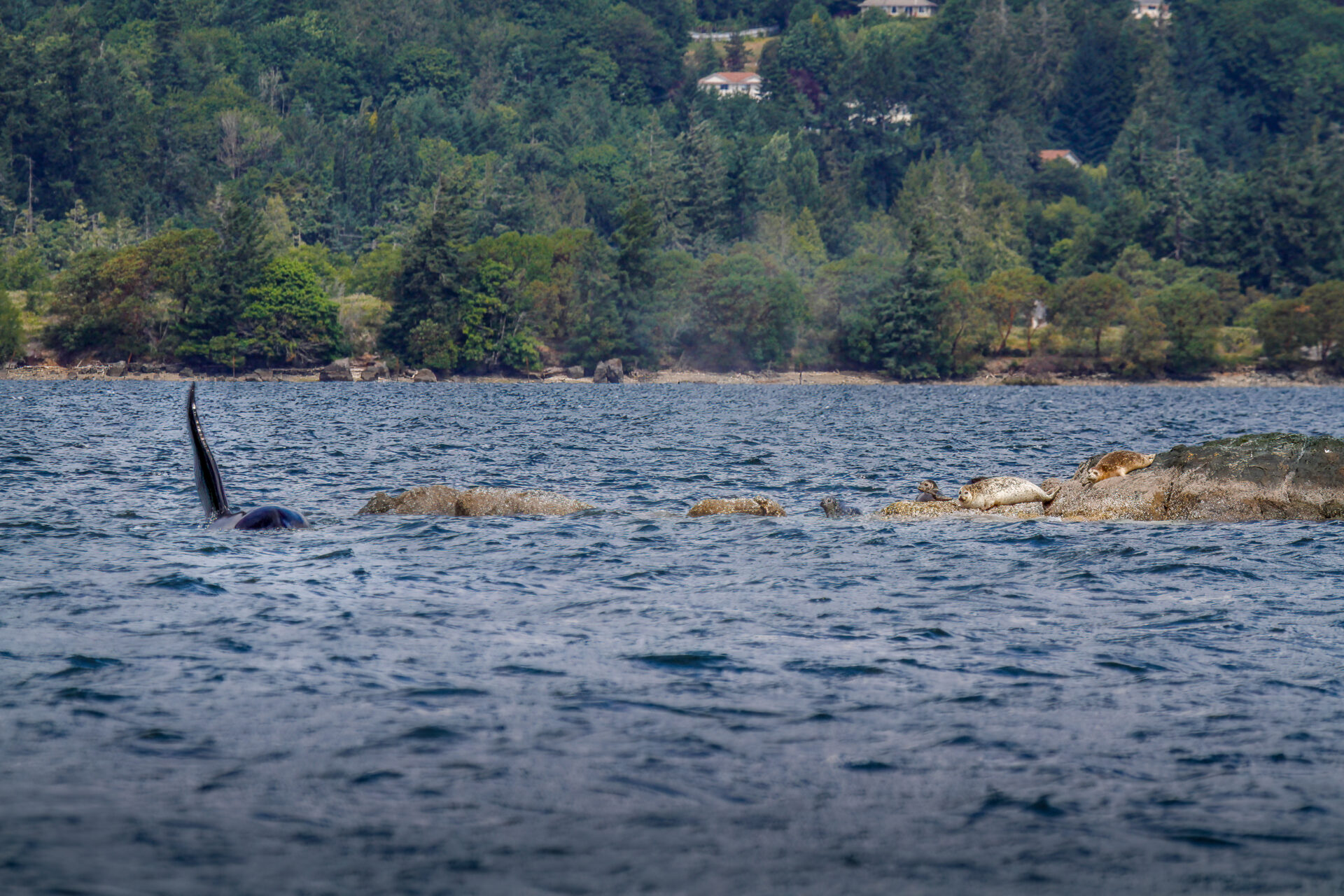
To uncover these distinctions, researchers undertook a social network analysis using thousands of identification photos collected between 2005 and 2021. Images came from scientific surveys, public sightings, and community science contributions. Each photograph added a point of connection – revealing who associated with whom, and where.
“We essentially built friendship maps for killer whales,” Trites explained. “That let us see how their social lives aligned with geography.”
The patterns were unmistakable. Despite overlapping ranges that stretch from Southeast Alaska to Southern California, the two sub-populations rarely mingle – interactions were recorded in less than one percent of encounters. In a few rare meetings, McInnes noted, outer coast males behaved aggressively toward inner coast whales, slapping their dorsal fins and charging.
The reasons for the divide remain uncertain. Habitat specialisation, prey availability, and historical human impacts – such as seal culls and marine mammal harvests – may all play a role. And given the vast, hard-to-study nature of the offshore Pacific, researchers suspect there may be even more subpopulations beyond current observation.
What’s clear is that conservation strategies will need to evolve. Though both groups fall under the umbrella of “West Coast transients,” their distinct diets, behaviours, and habitats mean a one-size-fits-all approach won’t work.
“These two communities of transient killer whale inhabit very different worlds and lead distinctly different lives,” continued Trites. “Protecting them requires management plans that reflect their unique needs and the specific threats they face.”
For McInnes, the study is both the culmination of years of fieldwork and a starting point for deeper inquiry. “We’re only beginning to understand the complexity of these animals’ social worlds,” he said. “The ocean still holds many secrets – and the killer whales are among its most fascinating storytellers.”


"*" indicates required fields
Printed editions
Current issue
Back issues


Enjoy so much more from Oceanographic Magazine by becoming a subscriber.
A range of subscription options are available.
