Once giants, Baltic cod have been 'fished into minnows'
Measuring at over a metre long and weighing up to 40kg, cod was once a giant. Not only in size, but in abundance, too. Today, a fully grown cod could just about fill a plate. Well, it would, had fishing cod not been banned since 2019 due to the collapse of stocks.

What were once among the giants of the ocean, the cod (Gadus morhua) has – in just a span of four decades – shrunk significantly in size, presenting a clear example of how overfishing is not only decimating fish stocks, but disrupting their genetic make-up, too.
At the heart of the problem – researchers from the GEOMAR Helmholtz Centre for Ocean Research Kiel have suggested – is human influence; conclusions that have been drawn over the long-term consequences of intensive fishing.
Measuring at over a metre long and weighing up to 40kg, cod was once a giant. Not only in size, but in abundance, too; factors which – along with the herring – made it one of the Baltic Sea’s staple fish. Today, however, a fully grown cod could just about fill a plate. Well, it would – that is – had fishing cod not been banned since 2019 due to the collapse of stocks.
Published this week in Science Advances, researchers at the GEOMAR Centre have now demonstrated for the first time that decades of intensive fishing, combined with environmental changes, have had serious consequences on the fish’s genetic makeup.
“Selective over-exploitation has altered the genome of the eastern Baltic cod,” said the study’s lead author, Dr Kiwi Young Han who earned her doctorate on this topic as a biologist in the Marine Evolutionary Ecology research group at GEOMAR.
“This is evident in the decline in average size, which we were able to attribute to lower growth rates. At the genetic level, we were able to demonstrate for the first time that heavy fishing pressure can trigger an evolutionary response in the genome of overfished stocks.”
The researchers have identified specific variants in genetics associated with body growth that shows signs of directional selection over a period of time. Meanwhile, a change in the genome that plays an important role in adaptation to environmental conditions has also showed a directional selection pattern.
And what this means, is that the genetic basis of the cod’s ‘shrinking’ has been proven. Humans have indeed left their mark on the fish’s genome.
In other news
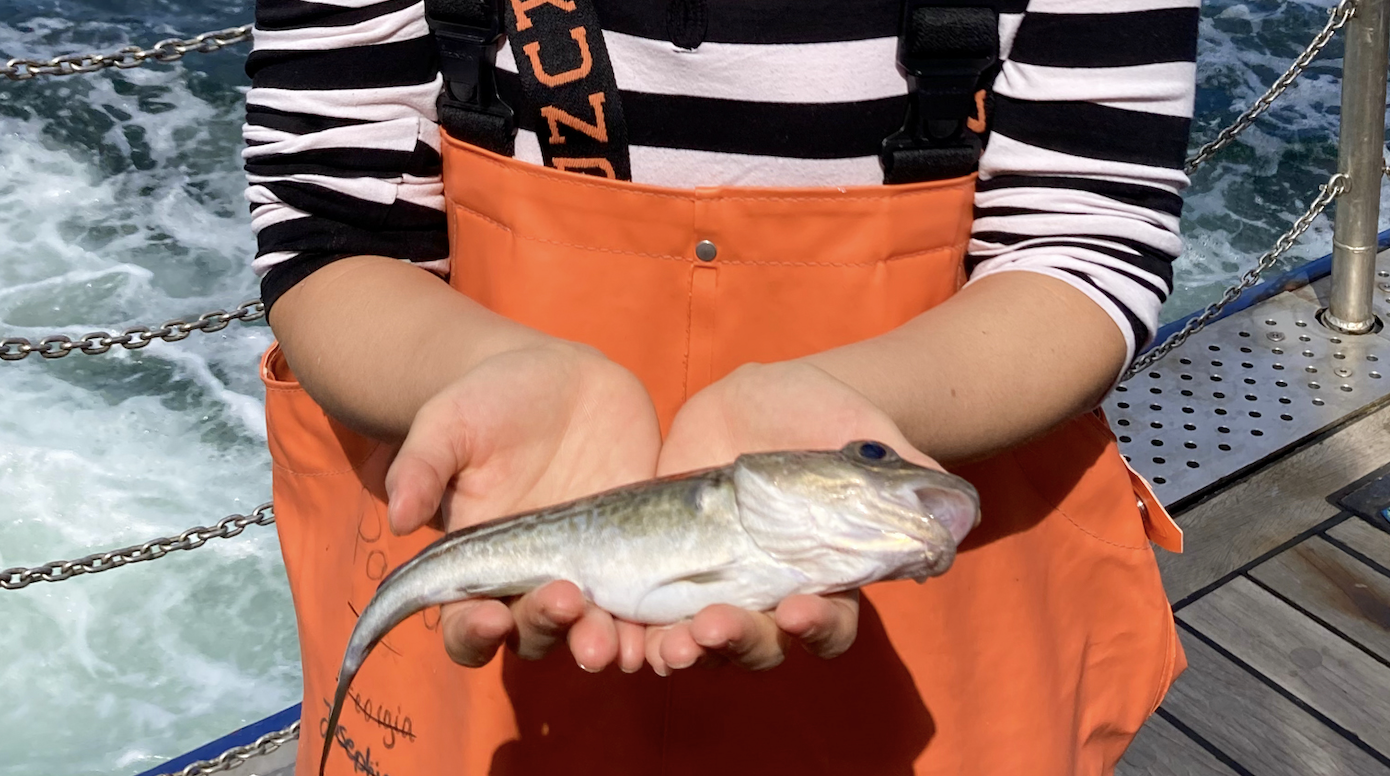
The method of collecting this evidence is an interesting one. To draw their conclusions, researchers decided to analyse ear calculi from 152 cod caught in the Bornholm Basin between 1996 and 2019. These ‘otoliths’ allow age to be determined based on growth rings – comparable to those of trees.
The samples were collected as part of the Baltic Sea Integrative Long-term Data Series of the GEOMAR Marine Evolutionary Ecology research group – a long-term monitoring programme conducted each year since 1996. This allowed scientists to trace the genetic journey of the cod before the collapse of the eastern Baltic cod population.
“Using a combination of chemical otolith analysis and high resolution DNA sequencing, we investigated how the growth and the genetic composition of Baltic cod have changed under fishing pressure over 25 years,” read a statement from the research team.
The key finding of the research is that data revealed systematic differences in the genome between slow-growing and faster-growing individuals, and that the latter are actually almost extinct today, compared to 30 years ago. This is because cod, which grow slowly and are able to reproduce at a smaller size, had a survival advantage under high fishing pressure.
“If the largest animals are preferentially caught over the years, this gives the smaller, faster-maturing individuals an evolutionary advantage,” said Dr Thorsten Reusch, head of the Marine Ecology research department at GEOMAR. “What we are observing is human-triggered-evolution – fishing-induced selection. This is scientifically exciting, but ecologically – of course – highly dramatic.”
This selection has “serious consequences” for the recovery of stocks. The gene variants for faster growth and later maturation may no longer be present, and the smaller fish, now programmed for early sexual maturity, produce fewer offspring.
“Evolutionary changes occur over many generations: recovery will take much longer than decline, if it is even possible,” said Reusch. “We can also see this in our current length data form the 2025 ALKOR expedition, which shows no recovery in size distribution despite years of fishing bans.”
According to Kwi Young Han, the results show just how profound human influence is on the lives of wild populations, reaching down to the genetic level.
“It makes clear that sustainable fishing is far more than an economic issue, It’s about preserving biodiversity, and that also means preserving genetic resources.”


"*" indicates required fields
Printed editions
Current issue
Back issues
Enjoy so much more from Oceanographic Magazine by becoming a subscriber.
A range of subscription options are available.
