Orcas feasting on great whites another tell-tale of climate change?
The research team recorded two separate hunts in which the whales worked together to chase, corner, and invert their prey - a manoeuvre that triggers 'tonic immobility'. Once the shark was subdued, the orcas extracted its liver "with surgical precision."

In a rare and dramatic encounter off Mexico’s Baja California coast, researchers have documented a pod of orcas hunting and consuming juvenile great white sharks – mirroring a behaviour that has, until now, remained somewhat exclusive to orca inhabiting the waters off South Africa.
The predators, part of a group known as Moctezuma’s pod, were filmed flipping young great whites upside-down to induce paralysis before extracting and sharing the sharks’ nutrient-rich livers. The coordinated hunts, observed in 2020 and 2022, suggest the pod may be exploiting a local nursery of inexperienced juvenile sharks.
“These orcas are showing remarkable intelligence and adaptability,” said marine biologist Erick Higuera Rivas, project director at Conexiones Terramar and Pelagic Life, and lead author of the study published in Frontiers in Marine Science. “It’s a testament to their advanced cognition – they’ve learned, refined, and shared a technique that allows them to hunt one of the ocean’s top predators.”
The research team recorded two separate hunts involving five orcas each. In both cases, the whales worked together to chase, corner, and invert their prey – a manoeuvre that triggers a trance-like state known as ‘tonic immobility’. Once the shark was subdued, the orcas extracted its liver with surgical precision before abandoning the carcass.
“This temporary paralysis leaves the shark completely defenceless,” explained Higuera. “It allows the orcas to access the liver – an organ rich in energy – with minimal risk of injury.”
In the first recorded event, in August 2020, the pod killed two juvenile great whites in quick succession. A second hunt, filmed in August 2022, followed the same chilling sequence: pursuit, inversion, disembowelment, and consumption.
By examining the injuries, scientists believe the orcas have developed a specialised method to safely induce tonic immobility – a technique likely more effective against smaller, less experienced sharks.
“This is the first time we’re seeing orcas repeatedly targeting juvenile white sharks,” said Dr. Salvador Jorgensen of California State University, a co-author of the study. “Adult white sharks usually flee entire regions when orcas appear, but juveniles may not yet recognise the threat. We don’t yet know whether their flight response is instinctual or learned.”
In other news
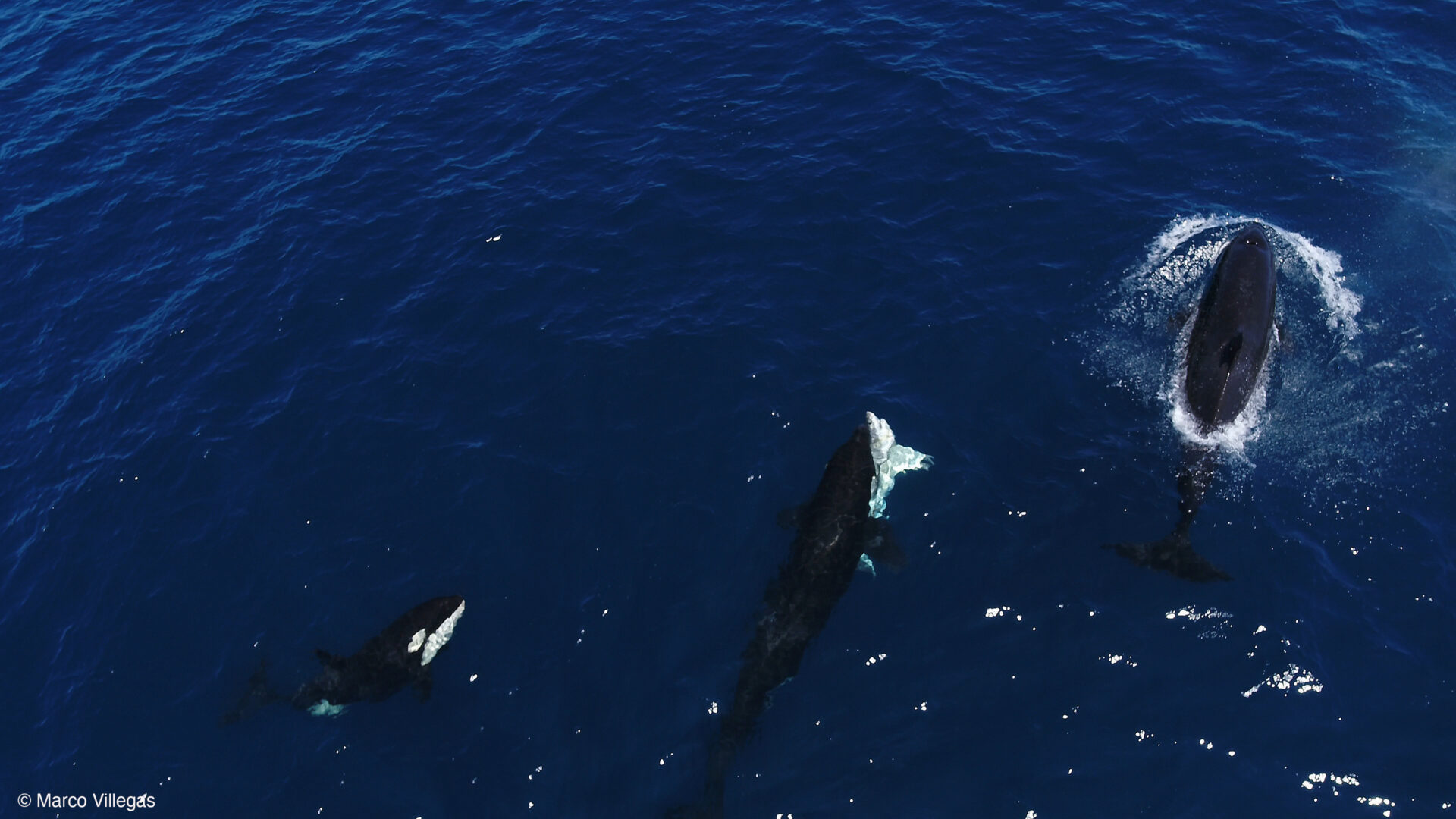
Moctezuma’s pod – named for one of its most distinctive members – has previously been documented hunting rays, whale sharks, and bull sharks. Researchers suspect that recent ocean-warming events, including El Niño, may have altered white shark nursery zones, bringing more juveniles into the Gulf of California… and into the orcas’ hunting grounds.
The findings hint that great white sharks may face more consistent predation pressure from orcas than previously thought. Still, researchers caution that the observations are limited and call for broader, long-term studies of orca diet and behaviour in the region.
“So far, this pod has only been observed feeding on sharks and rays,” said Dr. Francesca Pancaldi of the Instituto Politécnico Nacional Centro Interdisciplinario de Ciencias Marinas, a co-author on the paper. “By better understanding their feeding patterns and habitats, we can help inform conservation plans that protect both predators and prey in these changing ecosystems.”
The footage adds a new dimension to our current understanding of orca behaviour while highlighting the shifting balance between predator and prey in an ocean undergoing rapid change.
“As warming waters reshape the Pacific, we’re seeing not just shifts in where animals live, but how they think, hunt, and survive,” said Higuera. “These orcas remind us that intelligence in the ocean isn’t ours alone – it’s thriving, adapting, and evolving right before our eyes.”


"*" indicates required fields
Printed editions
Current issue
Back issues

Enjoy so much more from Oceanographic Magazine by becoming a subscriber.
A range of subscription options are available.
