Portuguese man o' war turn out to be four separate species
Long believed to be a single, globally distributed species drifting across the open ocean, the bluebottle - known as the Portuguese man o’ war - is actually a group of at least four distinct species, each with its own unique morphology, genetics, and distribution.

Long believed to be a single, globally distributed species drifting freely across the open ocean, the bluebottle – also known as the Portuguese man o’ war – has been revealed to be a group of at least four distinct species, each with its own unique morphology, genetics, and distribution.
Uncovered by an international research team led by scientists at Yale University, the University of New South Wales, and Griffith University, the genetic discovery is being heralded as something of a revelation to the marine biology community.
It was made when researchers began sequencing the genomes of 151 Physalia specimens from around the world. Now published in the journal Current Biology it found “strong evidence of reproductive isolation” among five genetic lineages.
“The genetic data clearly show they’re not only different, they’re not even interbreeding despite overlapping ranges,” said Professor Kylie Pitt, a professor at Griffiths University.
The bluebottle is uniquely suited to long-distance travel, using its gas-filled float and muscular crest to catch the wind and sail the sea surface. Using an integrative approach, the team matched genomic lineages with four distinct physical forms identified from thousands of citizen-science images submitted to iNaturalist.org.
Interestingly, this isn’t the first time the suggestion that the bluebottle was in fact four morphological separate species has been made. The idea was originally proposed in the 18th century and again in the 19th century but dismissed each time.
Using today’s advances in science, however, the suggestions have indeed been verified by modern genomic evidence.
In other news

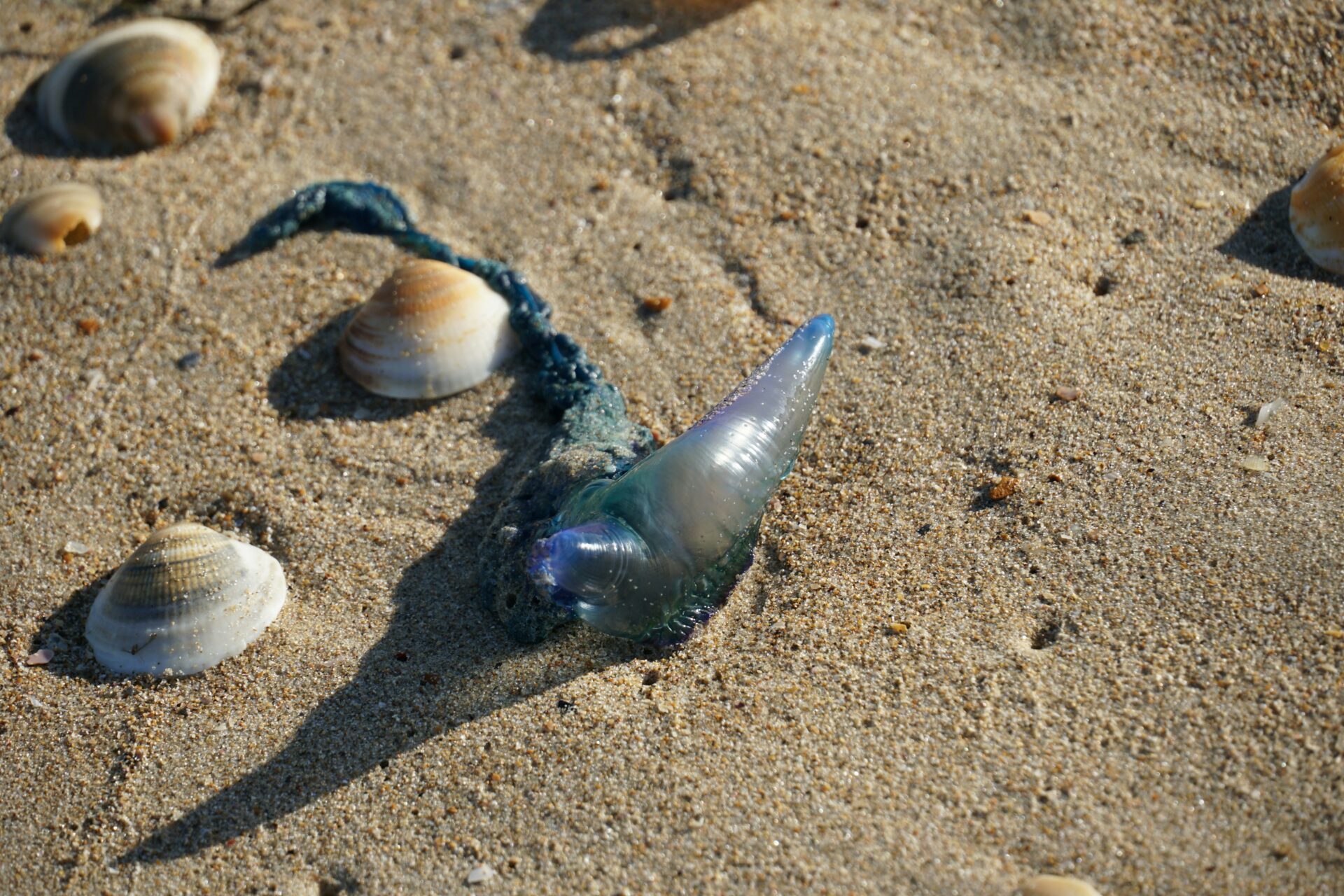
The study describes the four species Physalia physalis, P. utriculus, and P. megalista alongside a newly identified species, Physalia minuta found in New Zealand and Australia.
Each species is further subdivided into genetically distinct subpopulations shaped by regional winds and ocean currents, according to advanced ocean circulation modelling.
“There’s this idea the open oceans are all connected, and it’s just one species of bluebottle and they’re all globally connected because they drift with the wind and the current – but that’ absolutely not the case,” said Professor Pitt. “And what’s really interesting in Eastern Australia, is that we have multiple species that have evolved despite potentially co-existing.”
It’s left scientists with some big questions to answer, including why is it that they have developed into separate species when inhabiting a shared environment? And what was the selection process that led to the differentiation of the species?
The researchers behind this discovery has said that future investigations into the physical, environmental, and biological processes that generated and maintained this genetic variation would “be crucial in recalibrating science’s expectations towards open-ocean biodiversity.”
The study – Population genomics of a sailing siphonophore reveal genetic structure in the open ocean – has now been published in the journal Current Biology.


"*" indicates required fields
Printed editions
Current issue
Back issues
Enjoy so much more from Oceanographic Magazine by becoming a subscriber.
A range of subscription options are available.
