Sea sponge discovery pushes animal origin back 100 million years
Researchers at Uppsala University’s Museum of Evolution have unveiled a new order of marine sponges. The group, named Vilesida, doesn’t just rewrite sponge taxonomy but may push the origin of animals back by 100 million years.

In a breakthrough shaking up the sponge branch of the animal tree, researchers at Uppsala University’s Museum of Evolution have unveiled an entirely new order of marine sponges. The group, formally named Vilesida, doesn’t just rewrite sponge taxonomy but might just push the origin of animals back by a staggering 100 million years.
Sponges have long challenged biologists with their deceptive simplicity; many species lack formal classification, and discoveries of new families – let alone entirely new orders – are rare. Only a dozen animal orders have been described globally in the past five years. The new study, published in the Zoological Journal of the Linnean Society, positions Vilesida as a once-in-a-generation find.
“Although Vilesida sponges closely resemble their relatives, molecular data tell a different story,” says lead author Julio Díaz, postdoctoral researcher at the Museum of Evolution. “These lineages diverged in the Mesozoic – over 150 million years ago – fundamentally reshaping our understanding of sponge evolution and early animal history.”
Vilesida species inhabit an impressive geographical range, from Caribbean reefs to Pacific waters, and across the Atlantic and Mediterranean. The research team also identified a new family (Vilesidae), a new genus (Murus), and two new North-East Atlantic species.
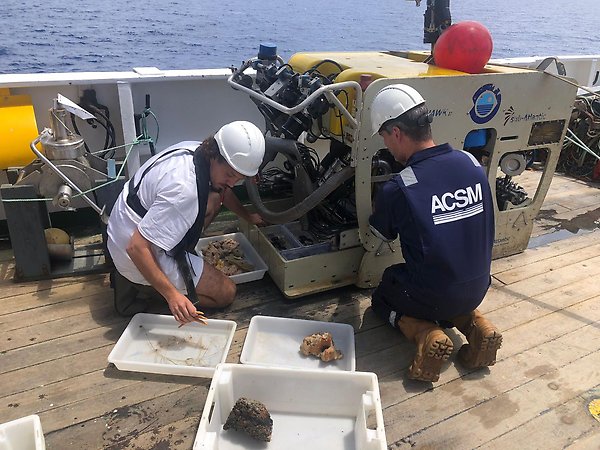
Key specimens were collected from Spanish deep-sea environments using trawls, dredges, and remotely operated vehicles. Back in the lab, researchers deployed genetic sequencing and chemical profiling to confirm that the collected sponges represented a lineage distinct from all known groups.
In other news

What sets Vilesida apart, however, is its chemistry. The sponges produce unusual sterols, organic compounds known for their ability to lower ‘bad’ LDL cholesterol – specifically 24-isopropylcholesterols – as major components of their cell membranes. These sterols mirror fossil biomarkers found in Ediacaran rocks older than 600 million years, long suspected to indicate early animal life.
“These sterols are a perfect match with the oldest known animal biomarkers,” explains Paco Cárdenas, curator at the Museum of Evolution and senior author of the study. “Our results strengthen the sponge biomarker hypothesis, suggesting sponges – and therefore animals – originated far earlier than previously believed.”
This emerging picture aligns with a recent PNAS paper by members of the same research team, which also tied ancient sterol signatures to early sponges.
The implications of the Vilesida discovery reach beyond evolutionary timelines. Sterols of the type produced by the new sponge order have already drawn attention for their pharmaceutical potential, with past studies highlighting antimicrobial, anticancer, and antiviral properties.
“Now that we’ve named these sponges and mapped their habitats, chemists and pharmacists can more readily pursue these compounds,” Cárdenas notes. “Vilesida may prove as medically valuable as it is evolutionarily significant.”
As researchers continue to unravel the molecular and ecological roles of the new order, Vilesida stands poised to redefine not only sponge biology, but perhaps the very origins of animal life in Earth’s oceans.


"*" indicates required fields
Printed editions
Current issue
Back issues

Enjoy so much more from Oceanographic Magazine by becoming a subscriber.
A range of subscription options are available.
