Sharp decline in coral leaves Great Barrier Reef "volatile"
“These results provide strong evidence that ocean warming, caused by climate change, continues to drive substantial and rapid impacts to Reef coral communities," Professor Selina Stead, the CEO of the Australian Institute of Marine Science has warned.

The Great Barrier Reef has experienced the largest annual decline in coral cover in two of its three regions since monitoring by the Australian Institute of Marine Sciences commenced some 39 years ago, a new report has revealed this week.
The decline has been predominantly driven by climate change-induced heat stress that compounded the 2024 mass bleaching event and led to devastating levels of coral mortality. The regions’ coral cover has also suffered the impact of cyclones and crown-of-thorns starfish outbreaks.
From Cape York to Cooktown in the northern region, coral cover has dropped by a quarter, from 39.8% to 30%; while in the central region – Cooktown to Proserpine – it has declined by 13.9% (from 33.2% cover to 28.6%.
In the southern region – Proserpine to Gladstone – it has dropped by almost one third, from 38.9% to 26.9%.
Australian Institute of Marine Sciences Long-Term Monitoring Programme leader, Dr Mike Emslie, said the effects of the substantial losses in regional hard cover were cushioned by the record high levels before the bleaching.
“This year’s record losses in hard coral cover came off a high base, thanks to the record high of recent years,” he said. “We are now seeing increased volatility in the levels of hard coral cover.”
It’s been described as a “phenomenon” to have emerged over the last 15 years and points, according to Dr Emslie to “an ecosystem under stress.”
“We have seen coral cover oscillate between record lows and record highs in a relatively short amount of time, where previously such fluctuations were moderate,” he continued. ‘Coral cover now sits near the long-term average in each region. While the Great Barrier Reef is in comparatively better condition than many other coral reefs in the world following the global mass coral bleaching event, the impacts were serious.”
In other news

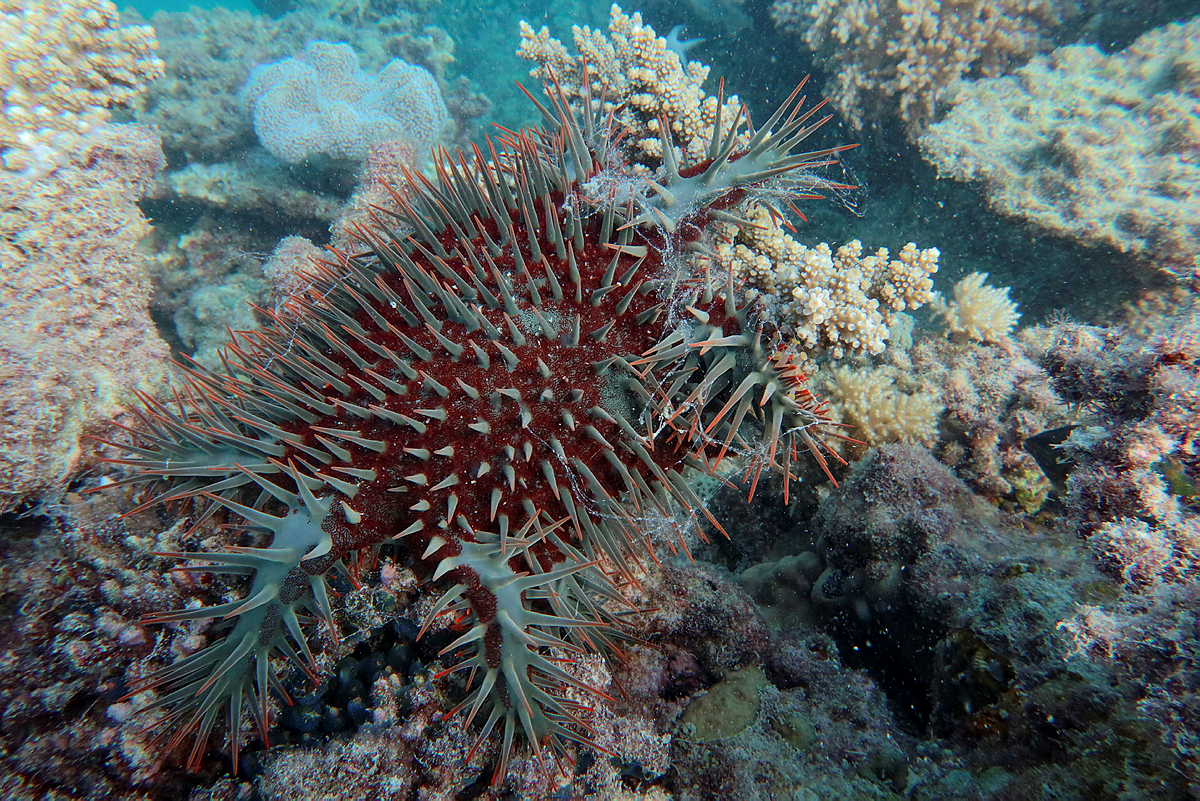
Scientists have said that coral reefs dominated by the Acropora species were among the most impacted by mass coral bleaching and the two cyclones.
“We have said in the past that these corals are the fastest to grow and are the first to go, as they are susceptible to heat stress, cyclones, and are a favourite food of crown-of-thorns starfish, and this year’s results illustrate that,” he said.
“This is also the first time we’ve seen substantial bleaching impacts in the southern region, leading to the largest annual decline since monitoring began.”
All these findings were drawn from results of the Long-Term Monitoring Programme’s annual reef survey from August 2024 to May 2025 assessing the impact of the 2024 mass bleaching event. It surveyed a total of 124 coral reefs.
Most reefs (77) recorded hard coral cover between 10% and 30%, while 33 reefs had hard coral cover between 30% and 50%. Two reefs had more than 75% and two reefs less than 10%.
The 2024 mass bleaching event was part of a global event that began in 2023 in the Northern Hemisphere. It was the fifth mass bleaching on the Great Barrier Reef since 2016 and had the largest spatial footprint recorded, with high to extreme bleaching prevalence across the three regions.
Professor Selina Stead, CEO of the Australian Institute of Marine Sciences, said: “This year, Western Australian reefs also experienced the worst heat stress on record. It’s the first time we’ve seen a single bleaching event affect almost all the coral reefs in Australia.
“Mass bleaching events are becoming more intense and are occurring with more frequency, as evidenced by the mass bleaching events of 2024 and 2025. This was the second time in a decade that the Reef experienced mass bleaching in two consecutive years.
“These results provide strong evidence that ocean warming, caused by climate change, continues to drive substantial and rapid impacts to Reef coral communities. The future of the world’s coral reefs relies on strong greenhouse gas emissions reduction, management of local and regional pressures, and development of approaches to help reefs adapt to – and recover from – the impacts of climate change and other pressures.”


"*" indicates required fields
Printed editions
Current issue
Back issues

Enjoy so much more from Oceanographic Magazine by becoming a subscriber.
A range of subscription options are available.
