Marine Life

Silent witness: Coral pinpoints start of deforestation in Borneo

Using coral cores obtained off the coast of Borneo in Southeast Asia, the researchers have been able to pinpoint the beginning of industrial deforestation and demonstrate its impact on marine ecosystems. These findings are published in Scientific Reports.

03/07/2025
Words by Rob Hutchins
Photography by Francesco Ungaro
Additional photography by Annie Spratt

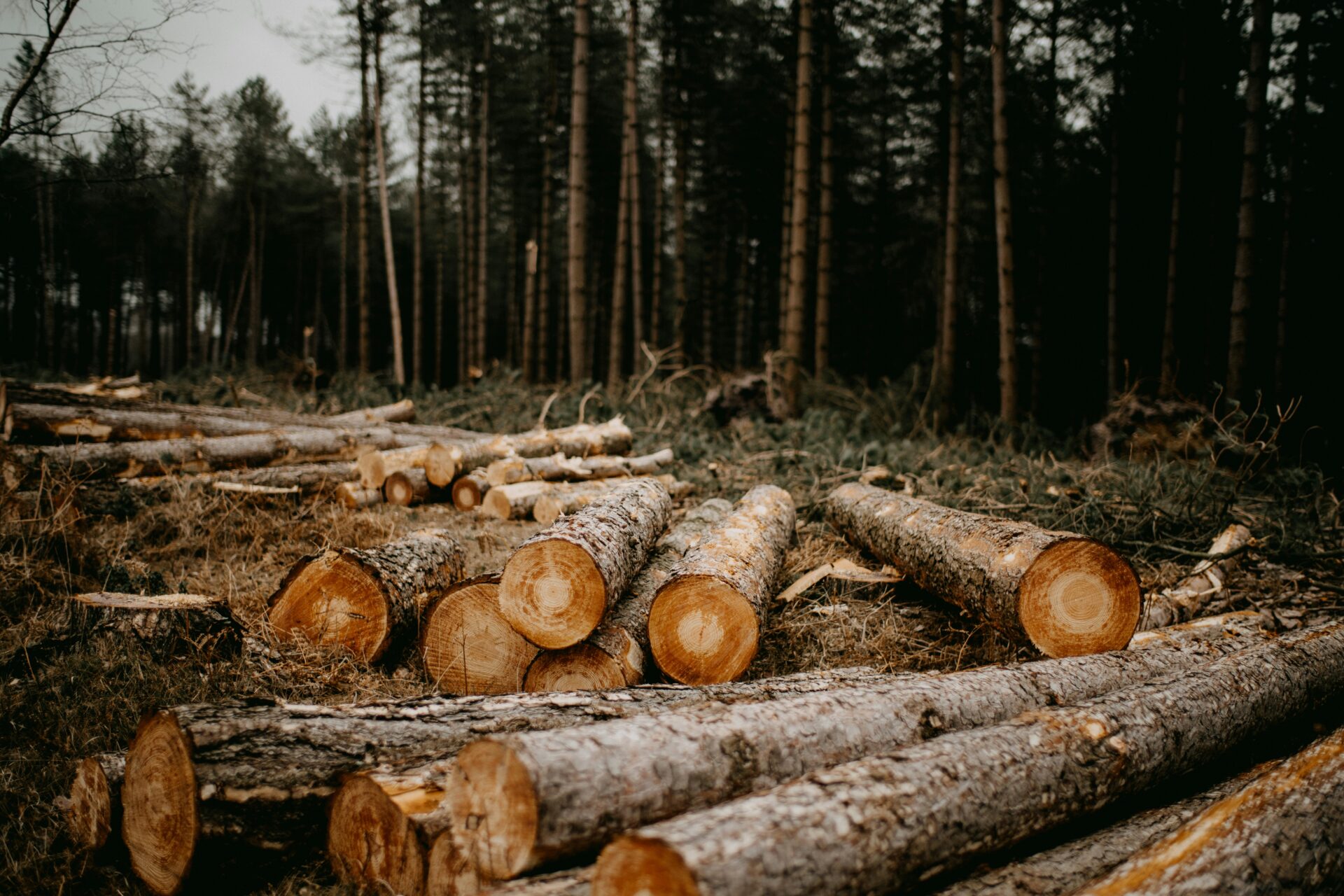
Scientific sleuths at the University of Leicester in the UK have managed to trace industrial deforestation of the Malaysian rainforest back to its very beginning, by measuring the long-lasting impact on coastal ecosystems etched into the skeletons of corals.

Using coral cores obtained off the coast of Borneo in Southeast Asia, the researchers have been able to pinpoint the beginning of industrial deforestation and demonstrate its impact on marine ecosystems. These findings have since been published in the journal, Scientific Reports.

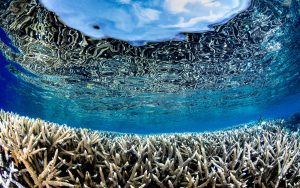
Building on a previously published pilot study in which corals were found to be useful archives of past deforestation-induced sediment discharge, it turns out that massive corals – such as the ones used in this study – can be used to fill gaps in environmental data, thanks to their ability to absorb a variety of trace elements found in surrounding seawater into their calcium carbon skeleton during their growth.

The measurement of these trace elements can then be linked to environmental conditions such as temperature, sediment, and hydrology.

And it’s using this method that researchers have traced industrial deforestation all the way back to its very beginning in 1950, by looking at the decreasing soil stability.

The study itself brought together researchers from the UK, Malaysia, and Australia, including Professor Jens Zinke, Dr Arnoud Boom, and former Leicester PhD student Walid Naciri, from the University’s School of Geography, Geology and the Environment.

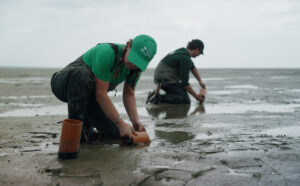
Professor Zinke sampled coral cores using underwater pneumatic drills and obtained several metre-long cores from multiple coral colonies located at different distances from the main river mouth flowing into the coastal coral reef ecosystem, Miri-Sibuti Coral Reef National Park.

Laser analysis then focused on the ratio of trace elements barium and calcium (Ba/Ca) locked in coral skeletons. Barium is what is released from fine mud particles in river water once the river meets the salty ocean water. The coral Ba/Ca ratio is used as a proxy for sediment erosion long before any instrument was able to record it. 
Results of 100-year-long Ba/Ca records showed that sediment concentrations in surrounding reef waters remained low from the beginning to the middle of the 20th century. After 1950, records show an increase in Ba/Ca indicative of an increase in sediment discharge, which is linked with decreasing soil stability due to the start of industrial deforestation leading to enhanced soil erosion.

Traces of organic carbon dissolved in river waters are now being studied by Leicester PhD student Hannah Kingsland to better understand interactions between tropical land and coastal ecosystems.

Former PhD student at Leicester and co-author on the study, Walid Naciri, said: “Our findings allow us to make several conclusions: deforestation has an impact on the adjacent coastal system because Ba/Ca records show increasing trends; knowing pre-deforestation baseline conditions helped us to understand its impact; industrial deforestation started impacting coastal ecosystems around 1950; and assessments of deforestation impacts need to include all affected land-ocean ecosystems.”

Naciri believes the study now provides the motivation needed among governments to “strive to reduce deforestation by proposing alternative means of income for local populations” while the global community “eases demand on palm oil and pulpwood.”

“These initiatives must be accompanied by tropical forest restoration in an effort to reduce sediment discharge, restore crucial ecosystems, and increase carbon uptake,” said Naciri.

The paper – titled ‘Corals Ba/Ca records uncover mid-twentieth century onset of land use change associated with industrial deforestation in Malaysian Borneo’ – has now been published in the journal Scientific Reports.

Dr Arnoud Boom, from the University of Leicester School of Geography, Geology and the Environment, said: “We have literally found a fingerprint for the onset and impact of industrial deforestation that led to enhanced soil erosion in Malaysian Borneo, affecting the Miri-Sibuti Coral Reef National Park. And all thanks to the massive corals which lived long enough to provide us with this record.”

Words by Rob Hutchins
Photography by Francesco Ungaro
Additional photography by Annie Spratt

Printed editions

Current issue

Back issues

Enjoy so much more from Oceanographic Magazine by becoming a subscriber.
A range of subscription options are available.