Warming ocean is big 'turn off' for critically endangered angelsharks
Warming ocean temperatures are becoming a major turn-off for female critically endangered angelsharks now prioritising staying cool over visiting crucial breeding grounds when things get too hot, a study from the University of Lancaster has found.

Warming ocean temperatures are becoming a major turn-off for female critically endangered angelsharks that are now prioritising staying cool over visiting crucial breeding grounds when things get too hot, a new study from the University of Lancaster has concluded.
The changes observed are creating a potential mismatch in the mating behaviours between the sexes of angelshark – the focus of the study – that could, experts have warned, ‘have severe consequences for the future of the species.’
Led by researchers at the University, the team of scientists – comprising experts from the Angel Shark Project: Canary Island and Zoological Society London) – used acoustic trackers to discover that prolonged warming of seas around the Canary Islands is disrupting the reproductive behaviours of female angelsharks.
During a period of unusual and extreme high sea temperatures in 2022, the researchers found female angelsharks were absent from the species’ traditional mating grounds within the La Graciosa Marine Reserve, located off the coast of Lanzarote and recognised as the largest marine reserve in Spain.
That year, sea surface temperatures in the study rose to more than 23.8°C and remained above 22.5°C for nearly three times longer than in previous years. Crucially, these very high temperatures persisted throughout the entire angelshark mating season, which traditionally starts late autumn, when seas should be cooler.
While the female angelsharks appeared to be put off by warmer seas, however, the males were not deterred and returned to the sites in November as normal, in search of mating opportunities.
Dr David Jacoby, a lecturer in zoology at Lancaster University and Principal Investigator of the study, said: “These more frequent and extreme heatwaves are potentially the wildfires of the ocean and are having untold effects on marine species.
“With angelsharks we observed important sex differences in behaviour, with the females being disproportionately influenced by sea temperature rises causing them to be absent from their traditional mating sites during this extended period of warming.
“The males were much more resilient to temperature rises and stuck to their regular patterns of arrival and departure, seemingly prioritising mating despite these temperature extremes.”
In other news




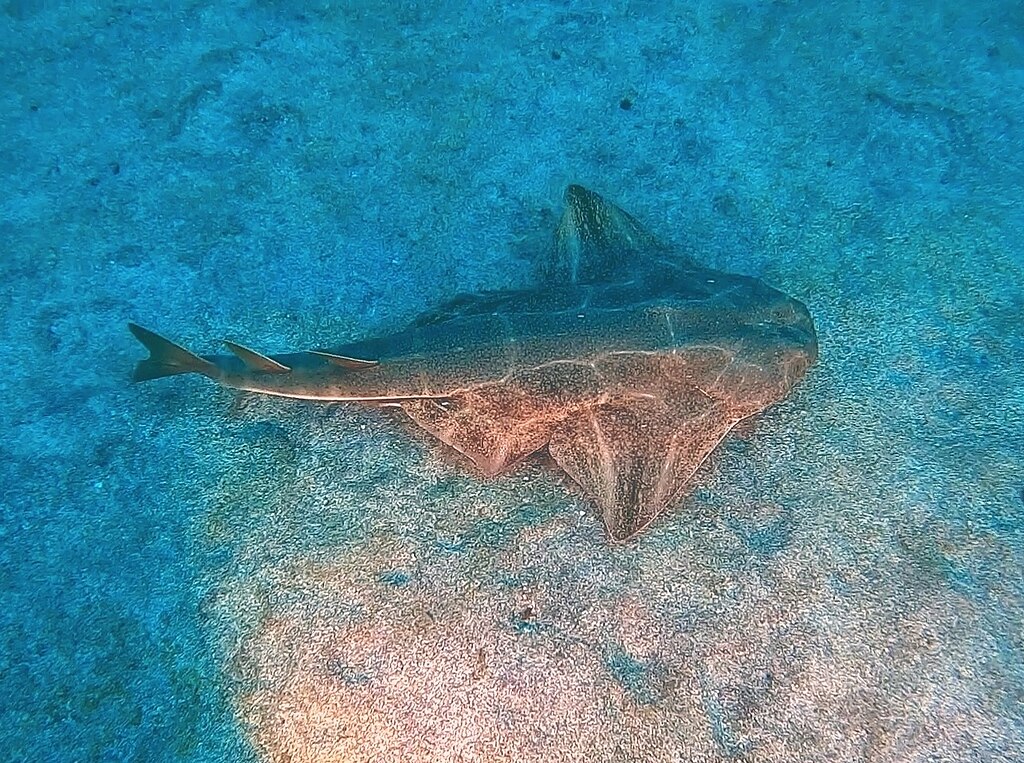
The Canary Islands are at the southern extreme of angelshark distribution and the archipelago is a uniquely large stronghold for the species listed as Critically Endangered by the International Union for Conservation of Nature.
Between 2018 and 2023, the research team were able to monitor the movement and distribution of over 100 individual angelsharks using acoustic tracking and link these data to environmental conditions. Prior to 2022, both male and female angelsharks presence in the marine reserve consistently peaked in November and December each year.
However, in 2022 male angelshark numbers peaked as usual, but female numbers remained low all year round. The study showed that female angelshark presence is strongly linked to temperature, and that 22.5°C may be an approximate upper thermal limit for females.
Scientists believe the reason female angelsharks are prioritising staying cool over mating is likely due to their biology. Female angelsharks have more energetically demanding lifestyles because of reproductive biology, and as a result, are more sensitive to temperature as they need to regulate metabolic processes and energy expenditure.
But researchers are concerned that these disruptions to reproductive behaviours in angelsharks could have severe consequences for the future of the species.
“The fact that environmental extremes are driving differing male and female arrival times at coastal mating sites is of particular concern for this Critically Endangered species,” said the study’s lead author, Dr Lucy Mead, a researcher at ZSL’s institute of Zoology at Lancaster University.
“Angelsharks – as with most other sharks – are ectothermic, which means their body temperature directly depends on surrounding water temperatures. It seems that male angelsharks prioritise mating even when conditions are unfavourable, while females prioritise staying within their preferred temperature range.
“The Canary Islands are already at the warmer end of tolerable temperatures for angelsharks, and with significant warming projected here, our concern is that key areas may become inhospitable for females.”
These findings will, of course, have important implications for how we might the conservation of such a highly threatened species, particularly in a world in which sea temperatures are rising.
Eva Meyers, co-lead of the Angel Shark Project and researcher at the Leibniz Institute for the Analysis of Biodiversity Change, said: “These findings are a reminder of how climate extremes are already reshaping the behaviour of threatened marine species. This study highlights exactly why long-term monitoring of critical habitats in the Canary Islands must be a key pillar of any effective marine biodiversity recovery plan.
“The Canary Islands are one of the main strongholds for this species – safeguarding these waters is more urgent than ever.”
All of this research is outlined in the paper ‘Rapid ocean warming drives sexually divergent habitat use in a threatened predatory marine ectotherm’ now published in Global Change Biology. It has been supported by Shark Conservation Fund, Oceanorio de Liboa, Loro Parque Fundacion, Save our Seas Foundation, and the Zoological Society of London among others.


"*" indicates required fields
