Why are scientists watching krill from space?
WWF, the University of Strathclyde and the British Antarctic Survey (BAS) have teamed up to work on a pioneering project to monitor krill from space.

Krill (Euphausia superba) – small, shrimp-like animals – are known as climate’s tiny superheroes. Growing up to about 6cm in length, they are a key species in Antarctic marine ecosystems that play an important role in drawing down and storing vast quantities of carbon in the ocean depths, helping to stabilise the planet’s climate.
Living in dense swarms of up to 10,000 krill in each cubic metre of water, they feed many predators, including fish and squid, seals, penguins and whales, including blue whales. Even though they form an integral part of the Southern Ocean food web, the species has become vulnerable to climate change and unsustainable fishing methods.
To safeguard one of the planet’s most vital species and inform decision makers, WWF, the University of Strathclyde and the British Antarctic Survey have now joined forces to determine whether we can monitor Antarctic krill from space.
The unique ‘Krill from Space’ project was launched at UNFCCC COP 26 in Baku in November of 2020. As part of the project, researchers are working on a method to observe how many krill are in the ocean around Antarctica with the help of satellites. The new method will compare light patterns, combined with current and historical satellite and remote sensing data, to better understand the distribution and population of krill across time and space. It will also monitor changes in these vital creatures.
Dr Cait McCarry, from the University of Strathclyde, has just returned from an expedition to Antarctica where she was sampling live krill to monitor how much light seawater absorbs, depending on how many krill are in it. The findings will then help researchers determine how the krill density alters the ocean’s colour which will allow them to monitor krill populations from satellites in space.
She said: “We start with seawater, then we add in a krill and take a measurement [of how much light the water absorbs]. Then we add another krill and take another measurement.”
Rod Downie, chief polar advisor at WWF-UK, added: “Antarctic krill are the Superheroes of the Southern Ocean. These tiny, unsung heroes are the beating heart of the Southern Ocean, sustaining incredible marine life.
“They are the reason why humpback whales migrate thousands of miles every year to feed in the icy waters around Antarctica. And they are climate heroes too, playing a critical role in drawing down carbon from the ocean surface.
“But climate change and unsustainable fishing are putting them at risk. With sea ice declining and industrial fishing growing, we urgently need to better manage the fishery and protect krill habitats within a network of marine protected areas. ‘Krill from Space’ may give us a new tool to help monitor and safeguard this vital species.”
In other news

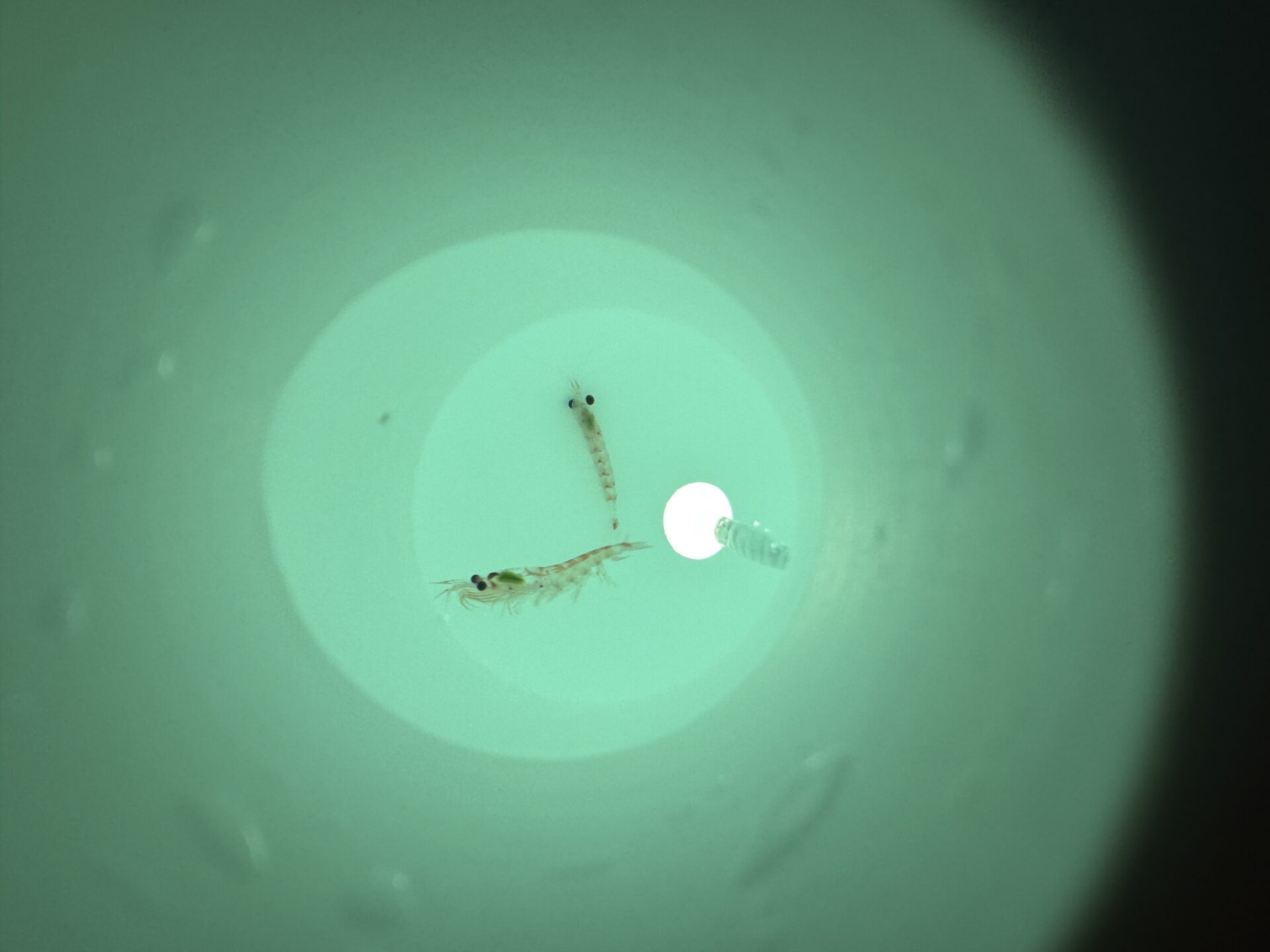
Antarctic krill may be no bigger than your little finger, but collectively they’re a powerhouse. Every day, these tiny crustaceans transfer 0.3 million tonnes of carbon to the deep ocean – equivalent to the UK’s daily CO2 emissions by eating and excreting phytoplankton and by regularly shedding their exoskeletons.
But as sea temperatures rise and Antarctic krill nurseries lose their protective sea ice – essential for krill nurseries – their populations are shrinking and shifting south.
Krill are the cornerstone of the Antarctic food web above the sea floor and protecting them is critical for maintaining both biodiversity and climate stability, which is essential for the planet and for people.
David McKee, Reader in the Department of Physics at Strathclyde, said: “Ocean colour satellites have provided daily global monitoring of the world ocean since 1997. However, it is only very recently that we have been able to identify a signal associated with the pigment that turns krill red.
“This is a ground-breaking effort to develop a new way to monitor krill swarms at the surface where they are known to occur in huge patches that are important feeding grounds for whales and other important marine species.
“We are delighted to be partnering with the WWF and BAS on this project. In time we hope to be able to support international conservation and sustainable management of this most important Antarctic species.”


"*" indicates required fields
Printed editions
Current issue
Back issues
Enjoy so much more from Oceanographic Magazine by becoming a subscriber.
A range of subscription options are available.
