Humpbacks’ high-frequency sensitivity reveals new noise pollution impacts
Previously thought to be low-frequency hearing specialists, new research has found that humpbacks react to noise at the top end of human’s hearing range, shedding a light on how increasing ocean noise impacts the whales.
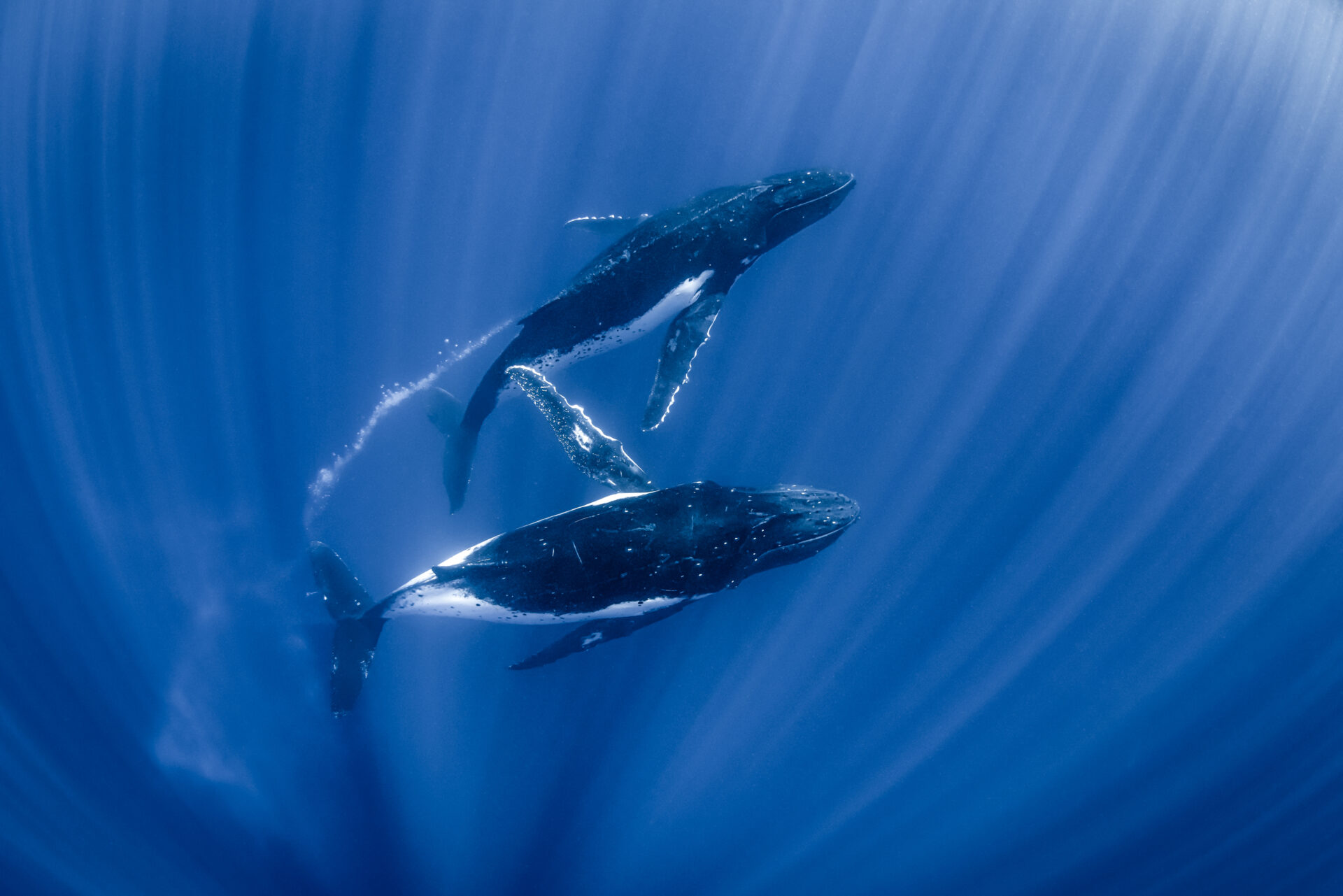
Humpback whales are sensitive to higher frequency sounds than previously thought, bringing new understanding to how ocean noise disturbs these ocean giants.
Researchers from the University of Queensland found that humpbacks are sensitive to noise at the top end of a human’s hearing range, challenging the idea that the animals are low-frequency hearing specialists.
The team conducted hearing tests across four whale migration seasons, from 2021-2024, in the ocean off the Australian coast. Until this research, estimates of humpback hearing sensitivity were inferred based on the anatomy of their ears.
In a process called behavioural observation audiometry (BOA), frequency-modulated upsweeps were broadcast from a boat positioned in the path of a migrating whale group but too far away to be heard.
As the group approached and came within hearing range, observers watched for deviations in the whale’s course or a change in speed, and/or dive behaviour to indicate the sound was heard.
This was repeated for eight to 10 different groups before the frequency of the upsweeps was changed, and the whole process repeated.
“The whales typically responded by temporarily slowing down or speeding up and turning away to avoid the source vessel and this behavioural change-point was noted,” said Rebecca Dunlop, Associate Professor from UQ’s School of Environment.

In other news

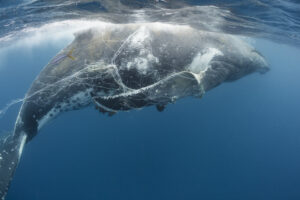

They found that the majority of humpback’s hearing range overlaps with the estimates from anatomical models, but they found that their response to 22 kHz was the first direct evidence that humpbacks are highly sensitive to high frequencies.
Ocean noise has increased considerably over the last few decades, and melting polar ice caps is only increasing the ships on our oceans.
Sonar systems, engine noise and industrial activities can disrupt the soundscape for humpback whales – masking their calls, causing chronic stress and disrupting migration.
In the modern Arctic, underwater noise comes not just from large ships, but also increasingly from snowmobiles, aircraft and small boats that do not appear on existing satellite tracking systems. These new sources produce high frequency sounds, above the regulatory bands currently used by international bodies.
Earlier this year, a study from the University of Bath outlined this growing noise, and called for different regulations to limit the adverse impacts on its marine life.
Humpback whales, who migrate to high-latitude Arctic waters between June and September, are therefore affected by this growing level of high-frequency noise in these polar waters.
“With better understanding of humpback hearing, we can better protect them and minimise human interference in their lives,” Dunlop added.


"*" indicates required fields
Printed editions
Current issue
Back issues


Enjoy so much more from Oceanographic Magazine by becoming a subscriber.
A range of subscription options are available.
